
Paul Frank Cork for NOGA
Paul Frank Cork is a table series that reflects an important shift in Paul T. Frankl’s design during the late 1940s, when strict geometry gave way to a freer and more organic expression. The series brings together material, form, and function in a cohesive whole defined by balance, flexibility, and a distinct design legacy, with a focus on both use and spatial variation.
3 products
Paul Frank Cork
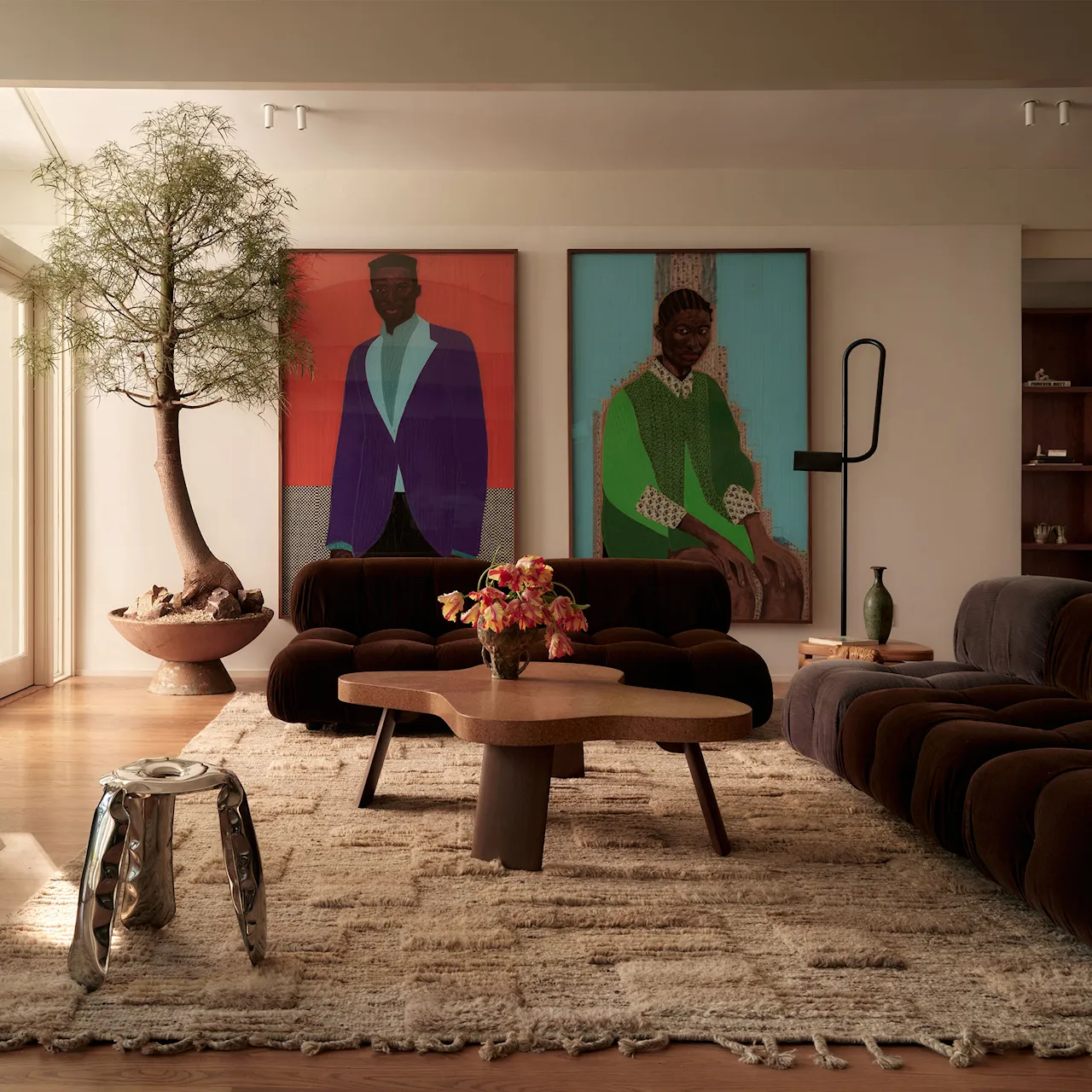
Paul Frank Cork is a table series based on Paul T. Frankl’s designs from the late 1940s, produced from original drawings for the Johnson Furniture Company. The series is characterized by organic forms, cork as a surface material, and a construction where stability is combined with a more open and flexible expression.
What defines the series
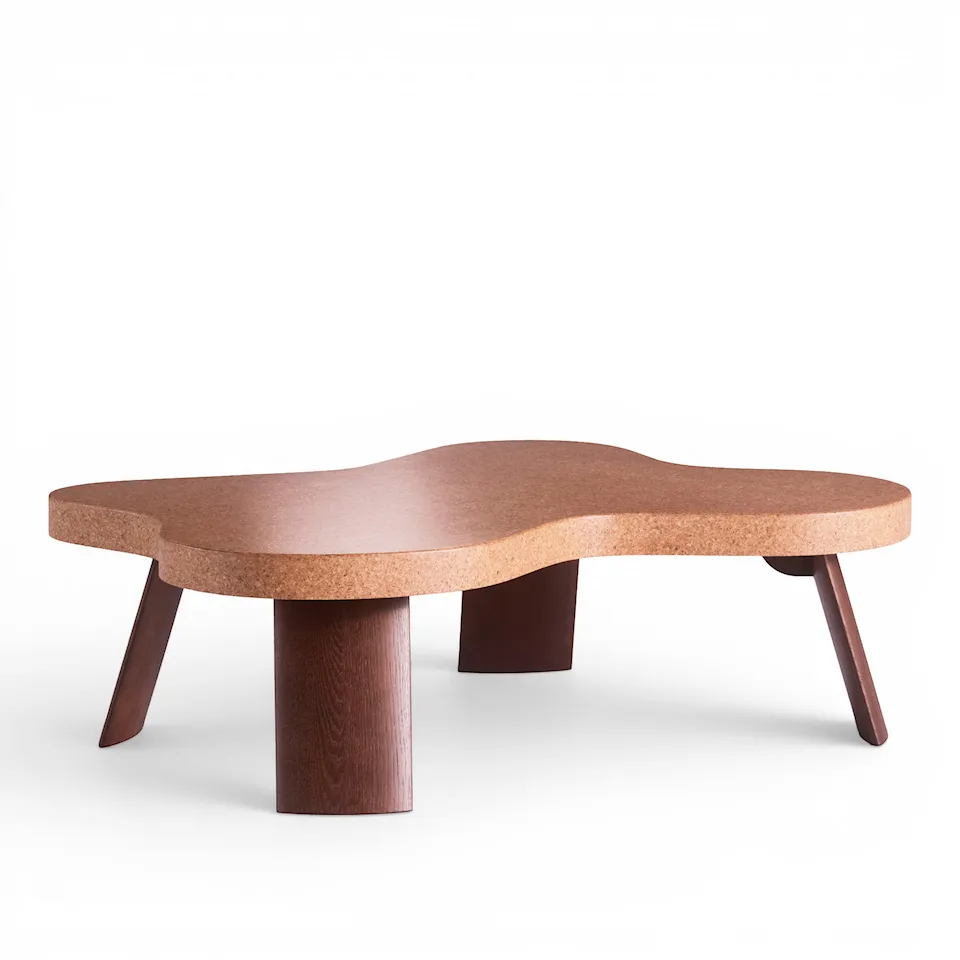
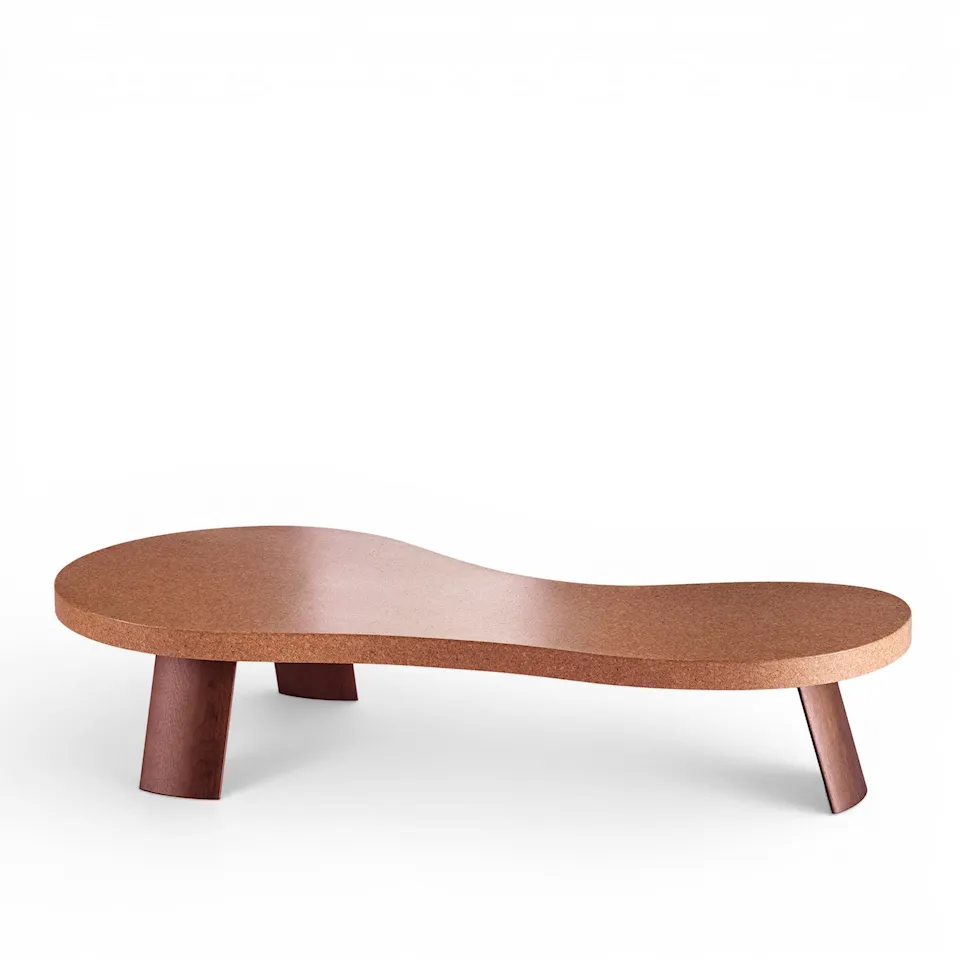
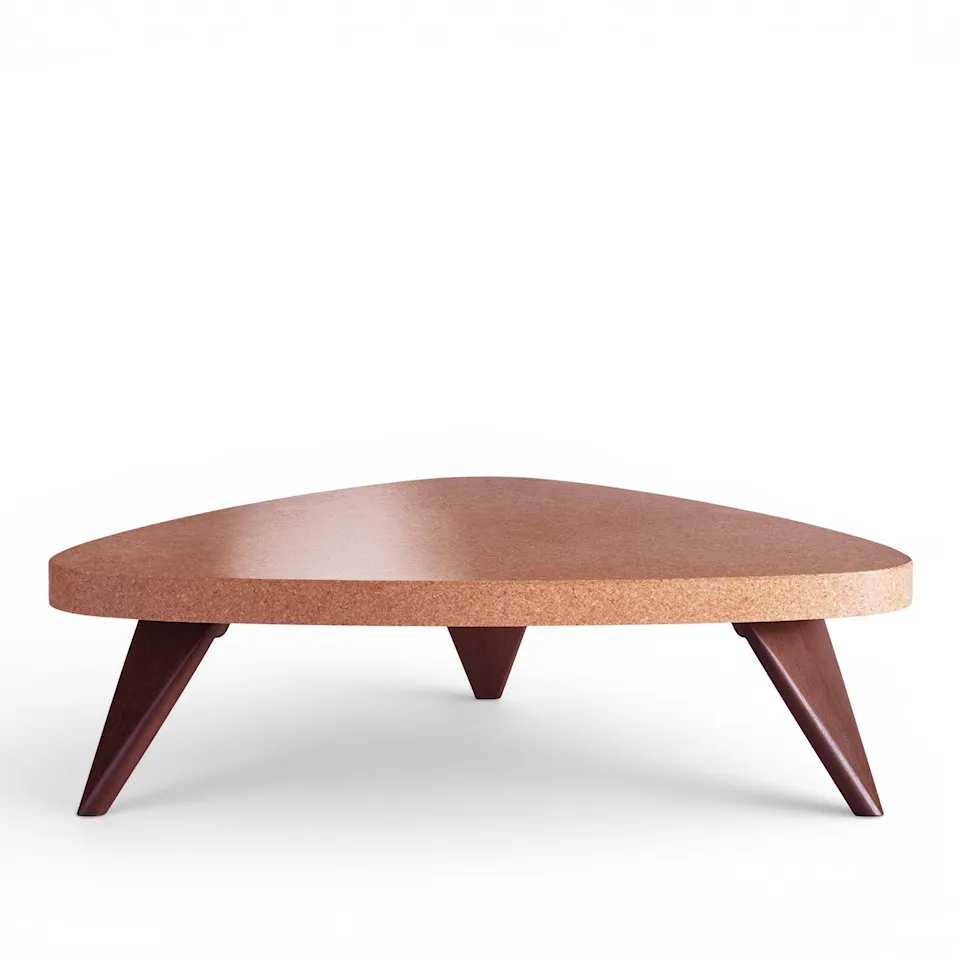
The Paul Frank Cork series consists of tables with free, irregular shapes that mark a clear development in Frankl’s design language. Strict geometry is replaced by more organic contours, while the construction retains a clear structure. The result is tables that feel balanced, yet less static in their expression.
A central aspect of the series is the choice of material. The tabletops are made of cork, a material that differs from more conventional options such as solid wood or stone. Cork has a softer, slightly porous surface with a visible texture, giving it a matte and tactile quality. Unlike lacquered wood, which has a hard and smooth finish, or stone, which is cold and dense, cork offers a more subdued feel and good resistance to marks and wear. The material requires minimal maintenance and ages with an even patina.
The base is defined by outward-angled legs that provide stability while contributing to a more open visual expression.
Variants, proportions, and use
The series includes the Amoeba Table, Bigfoot Table, and Plectrum Table, all based on the same core principle but varying in shape and proportion.
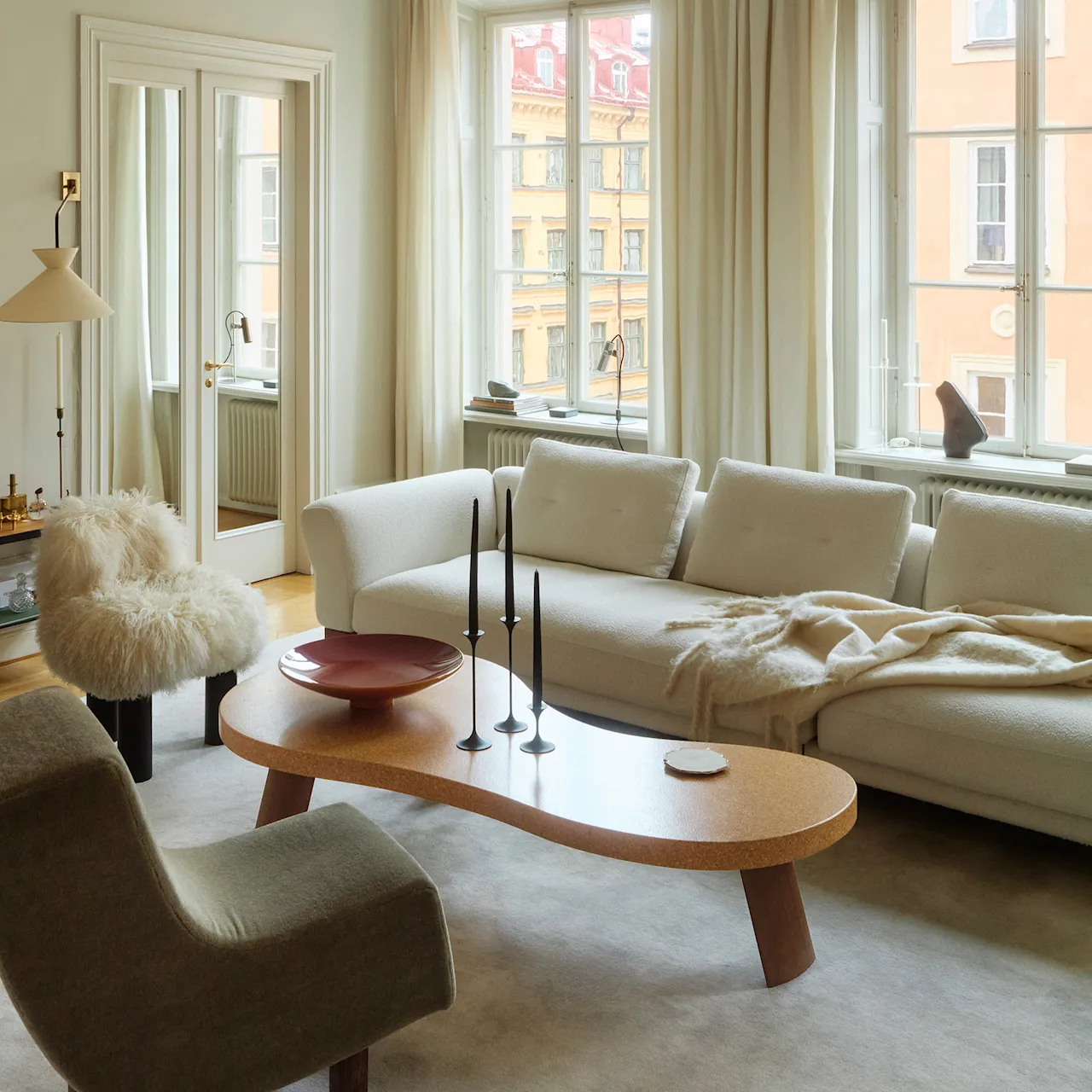
The Amoeba Table has a more expansive and irregular form, making it suitable as a central coffee table in larger seating arrangements. The Bigfoot Table is more compact in its geometry and feels stable in smaller spaces. The Plectrum Table has a more directional shape, making it useful in corners or as a complement in more defined layouts.
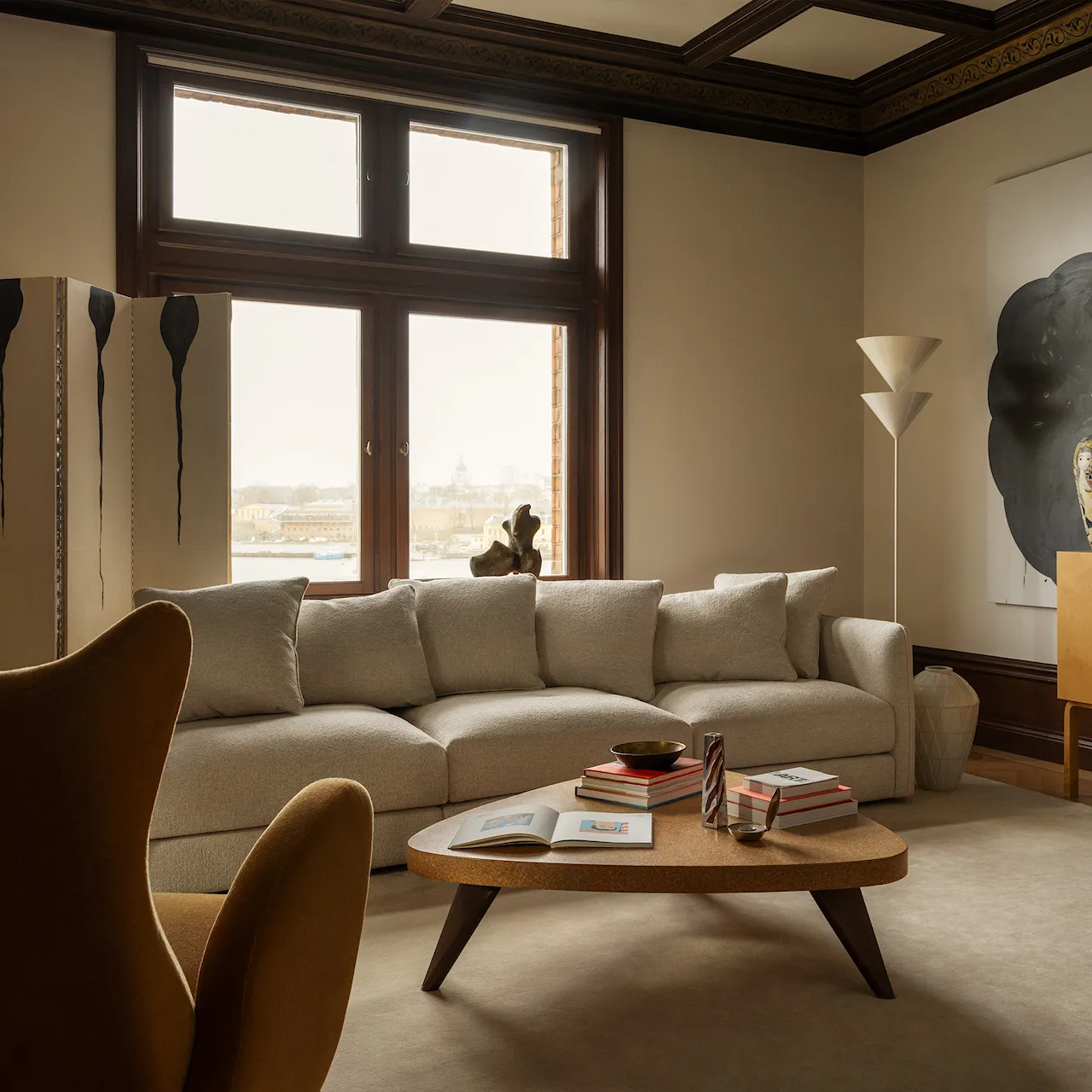
The tables were originally developed as cocktail tables, a type of furniture suited to a more informal way of socializing. Their shape allows them to be used from multiple sides and easily integrated into different spatial contexts.
Designer and influences
Paul T. Frankl was a key figure in American modernism, and the Paul Frank Cork series clearly demonstrates his ability to combine function with a more experimental design language. Influences from Scandinavian designers such as Alvar Aalto and Kaare Klint are evident in the softer lines and more organic approach to form.
At the same time, the details are consistent with Frankl’s own design tradition, where each element has a clear function within the whole.
Production and design legacy
The tables in the Paul Frank Cork series are produced based on original drawings from the 1940s and are authorized by the heirs of Paul T. Frankl. The series represents a period when American design moved toward greater freedom in form, without compromising function or construction.
In contemporary interiors, the tables are often used to break up linear environments. The organic shapes create variation and act as clear focal points, while remaining easy to combine with other materials and furnishings.