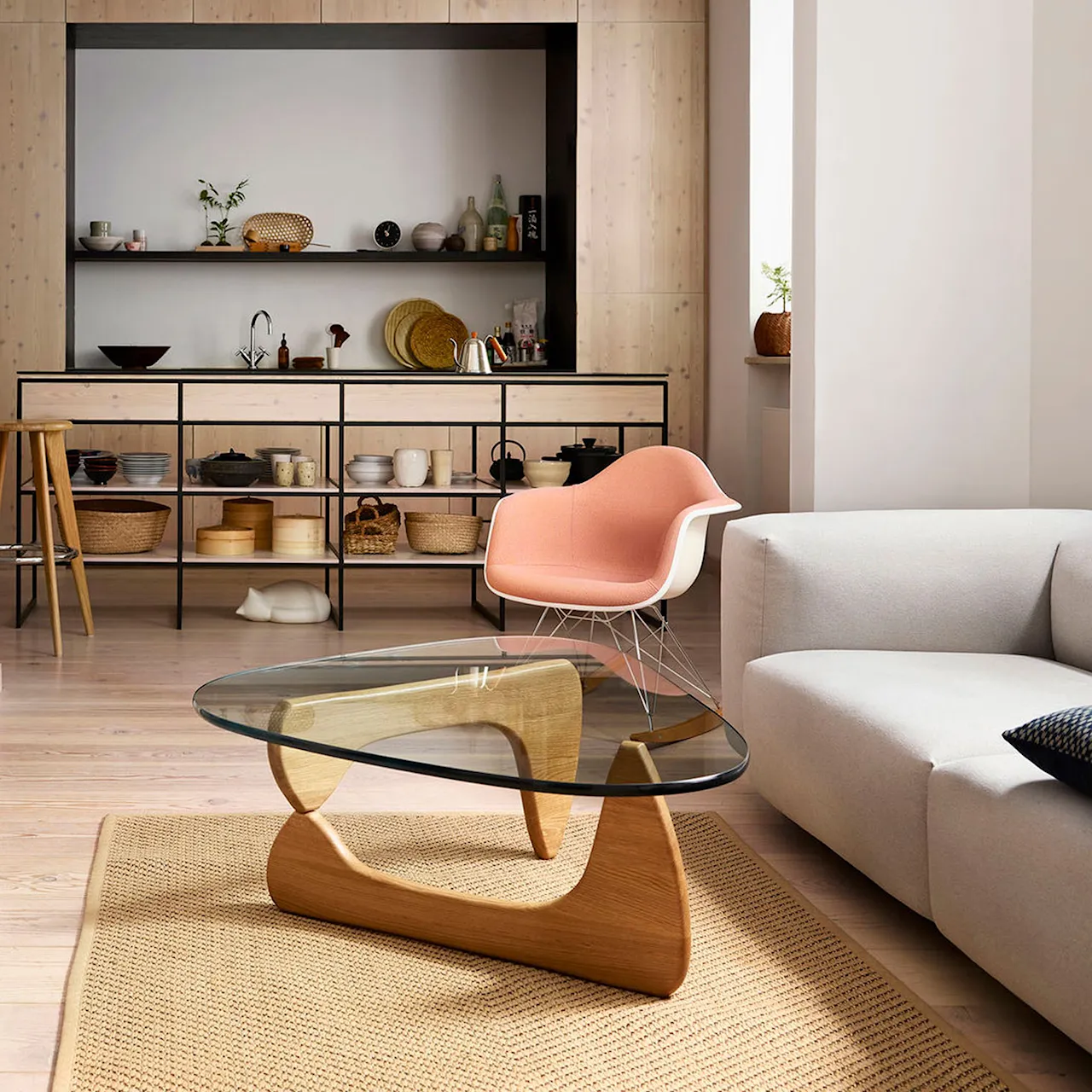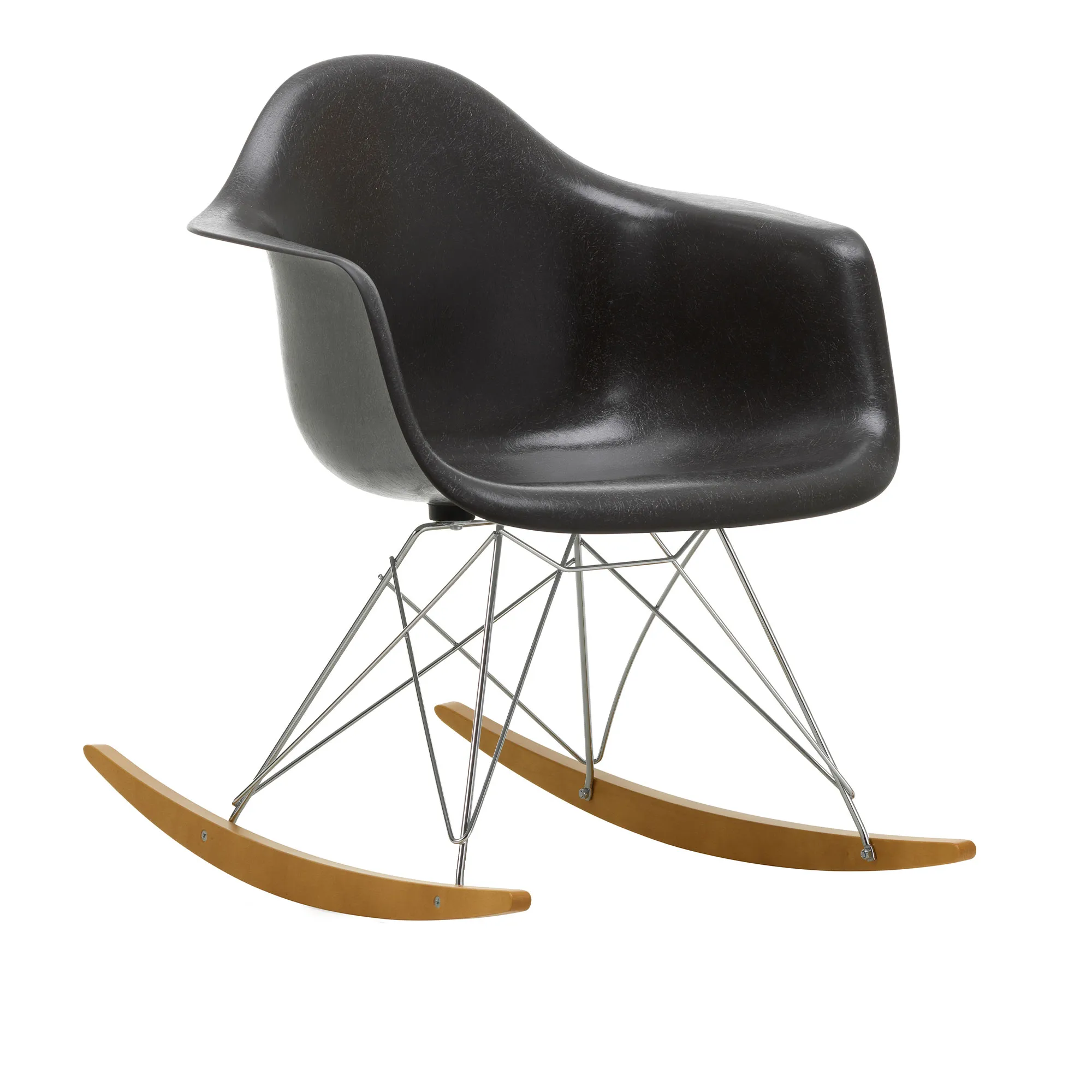
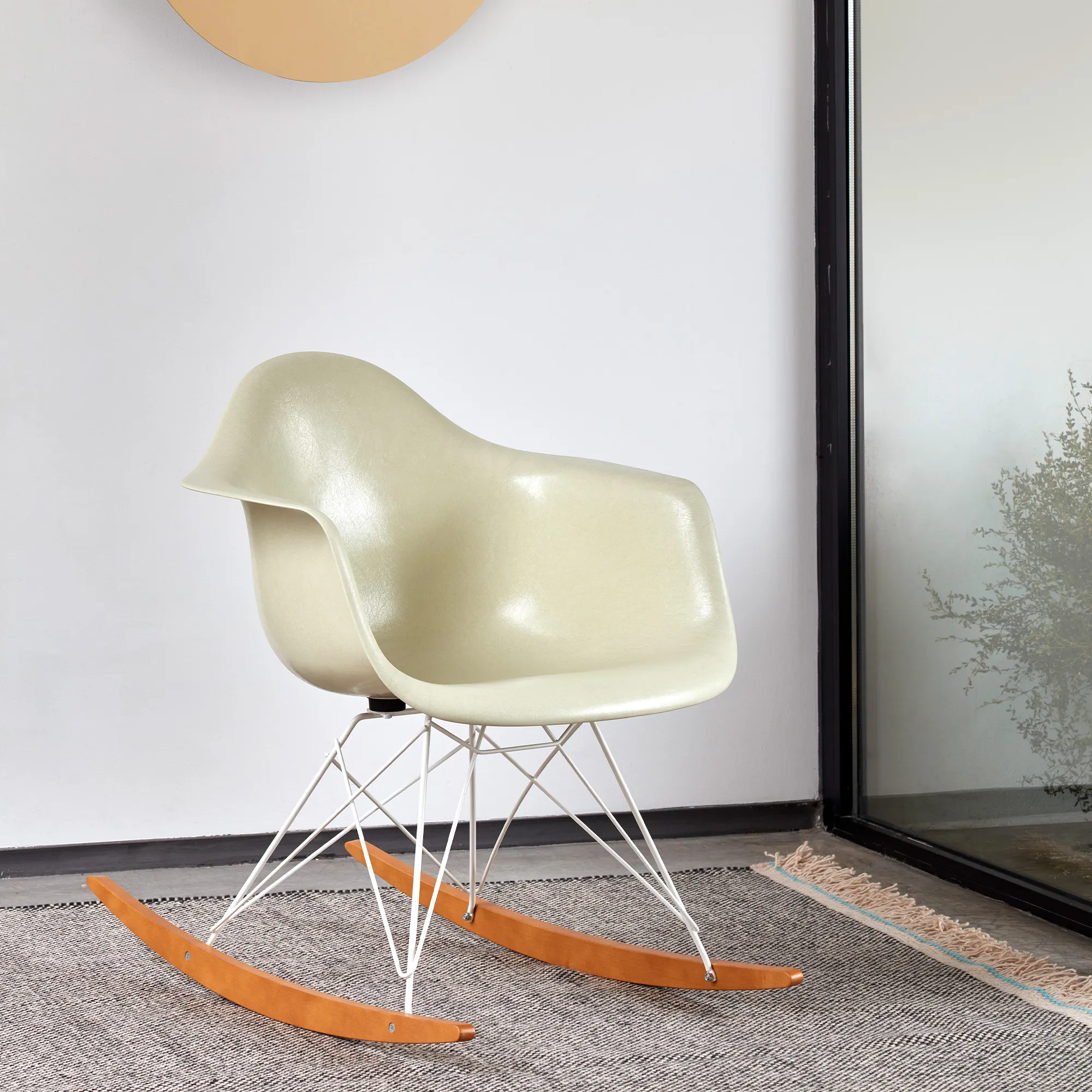
The Eames Fiberglass Armchair RAR from Vitra is one of Charles and Ray Eames' most characteristic designs and a clear part of modern design history. The model was launched in 1950 and combines an organically shaped fiberglass shell with a graphic steel wire base and solid maple runners. The result is a compact rocking chair with a clear sculptural presence and a design language that feels as relevant today as it did when it was introduced.
RAR, an abbreviation for Rocking Armchair Rod Base, was developed as part of the Eames pair's groundbreaking idea of a versatile chair where one and the same shell could be combined with different bases. The original concept was presented as early as 1948 in the Museum of Modern Arts International Competition for Low-Cost Furniture Design in New York. The ambition was to create an ergonomically shaped chair for industrial production, but the original metal solution proved to be too complex and expensive to mass produce. The search for a better material led Charles and Ray Eames to glass-fibre reinforced polyester – a material that was relatively untested in furniture design at the time.
The glass-fibre became crucial to the chair’s expression and success. The material made it possible to shape the seat and back as a continuous, organic shell, while giving the chair a tactile and visually lively surface. The visible fibres, small variations in structure and the subtle shifts in colour give each chair an individual character and a materiality that is more reminiscent of a natural material than an industrially produced surface. In some colours, the shell also has a slight transparency, a feature that links to the earliest original models.
Among the many variants developed within the Eames family, the RAR has a special position. The combination of the enveloping armrest shell, the light steel wire base and the curved wooden runners gives the chair a relaxed but at the same time distinctive expression. Despite its neat proportions, the model offers good comfort and works just as well as a functional piece of seating as a decorative eye-catcher in the room.
Charles and Ray Eames placed great importance on the colouring of the fibreglass shells and together developed a palette that highlighted the organic shape and the special properties of the material. Several of the historical colours can still be found in Vitra's production today and contribute to the chair's strong connection to the original design from the 1950s.
The rocking chair is manufactured today by Vitra with great respect for the original construction and its materiality. The chair is also available in a version with a polypropylene shell, but the fibreglass variant stands out with its lively structure and more tactile expression. For additional comfort, the model can be supplemented with a moulded seat cushion.
30-day return policy on stock items
Follow us on Instagram and subscribe to our newsletter to access exclusive offers, inspiration, and product launches, as well as to get €50 off your first purchase when you spend over €500.