

String shelf
The String shelf was designed in 1949 by Nisse and Kajsa Strinning in Sweden after winning Bonniers’ bookcase competition. The construction with metal wire side panels and movable shelves created a flexible system that quickly gained international recognition. Today, it is produced by String Furniture and is established in both homes and public environments worldwide.
168 products
- + More options
String
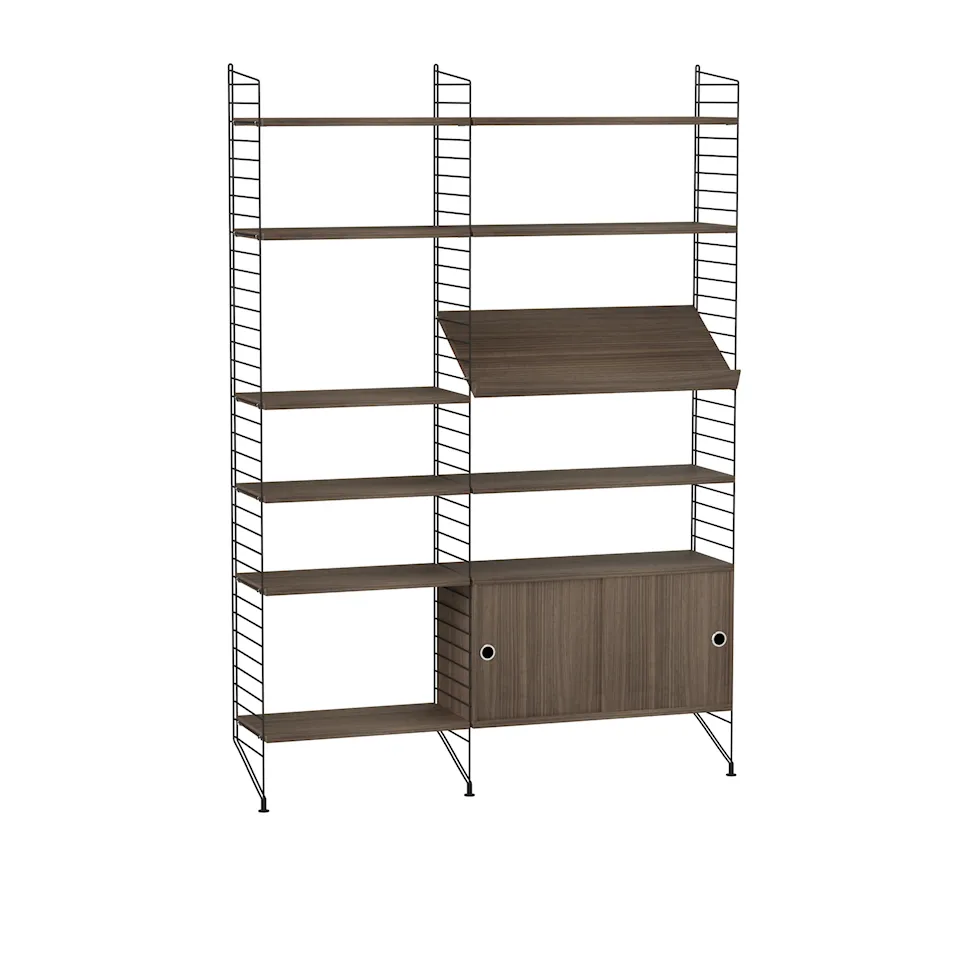
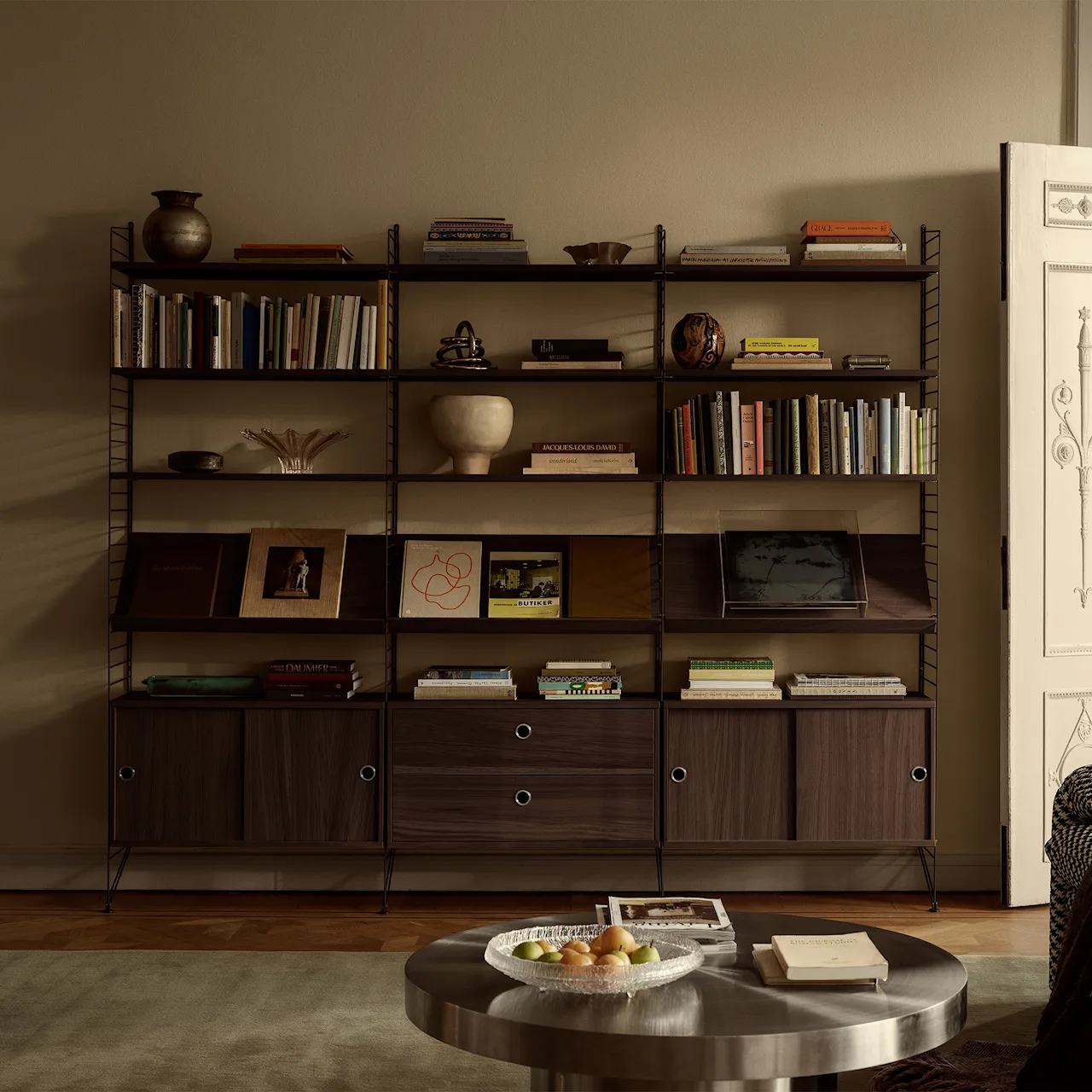
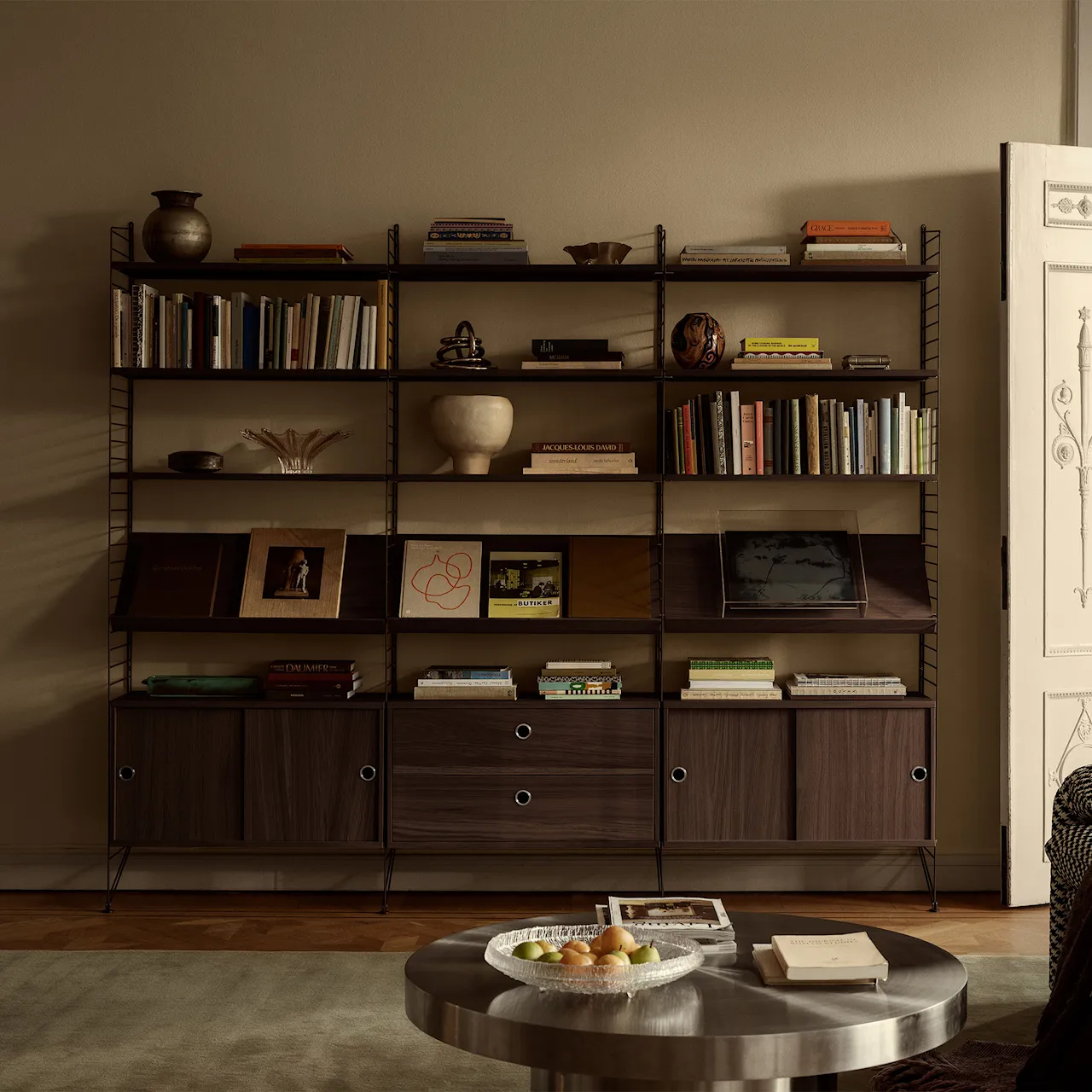
Living room shelving system H walnut/black
€1,923
In stock - + More options
String
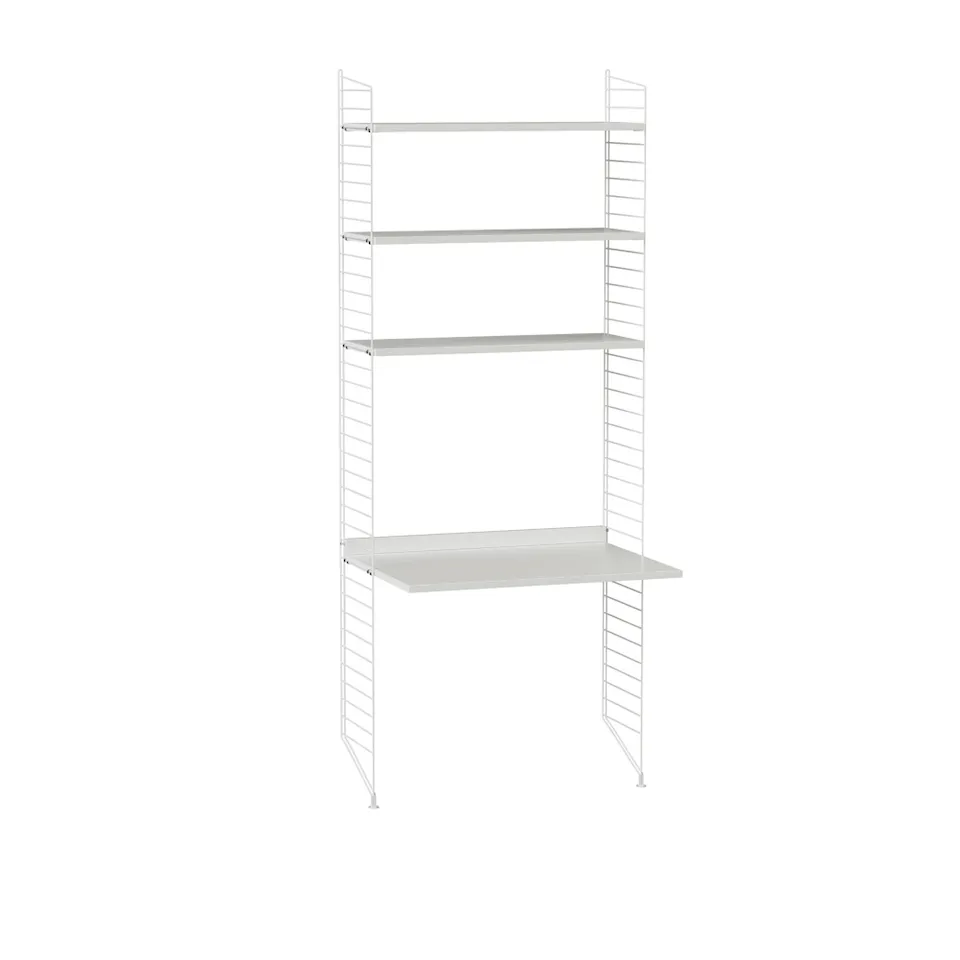
Office shelving system A white
€628
In stock - + More options
String
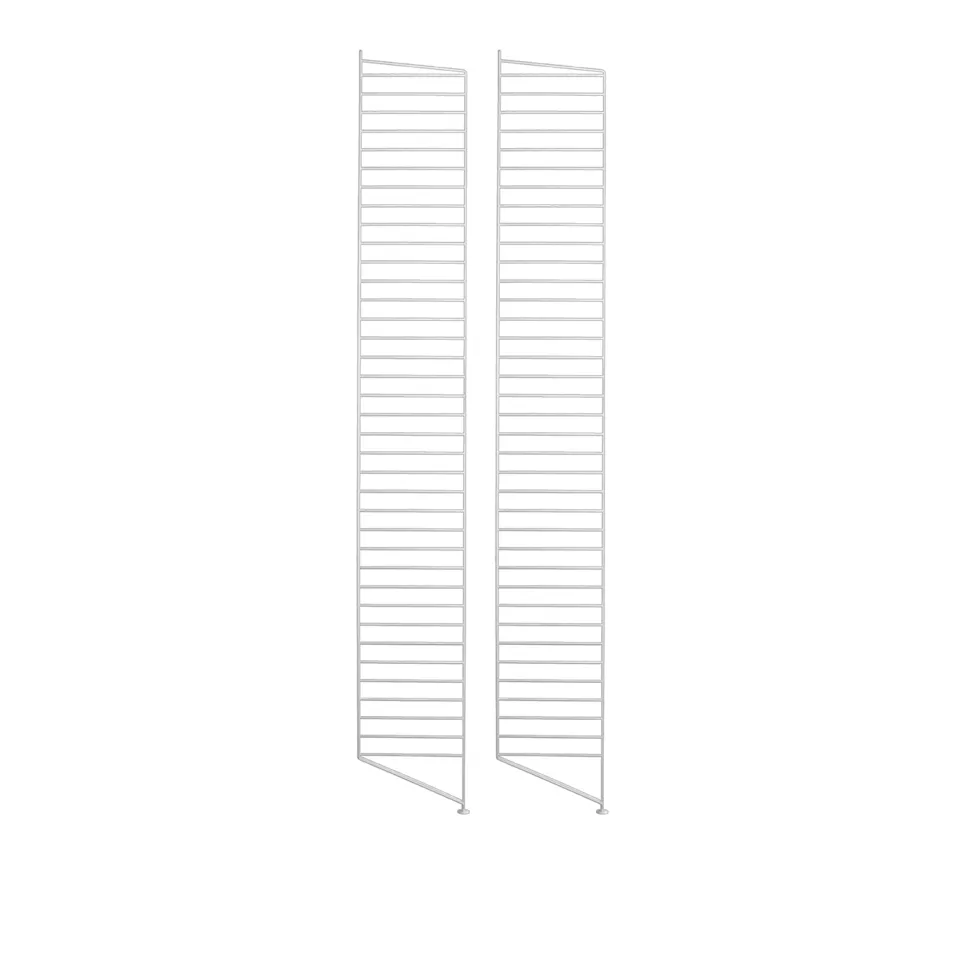
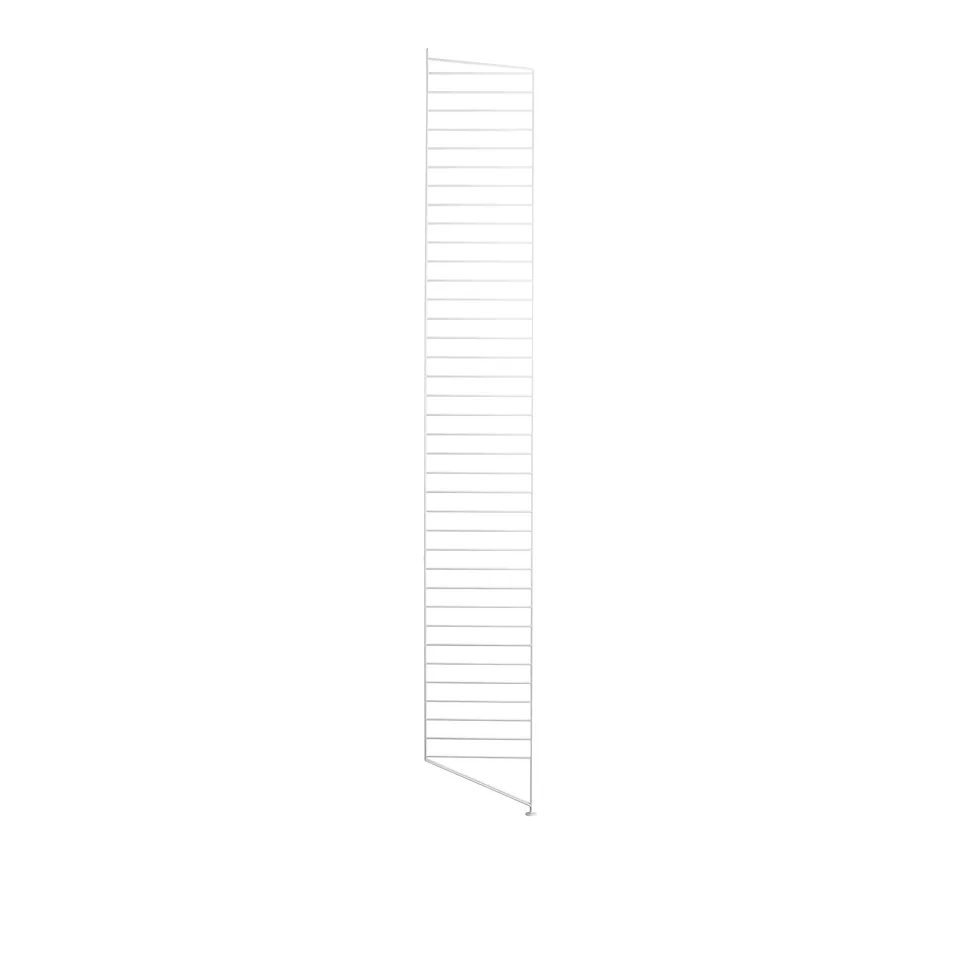
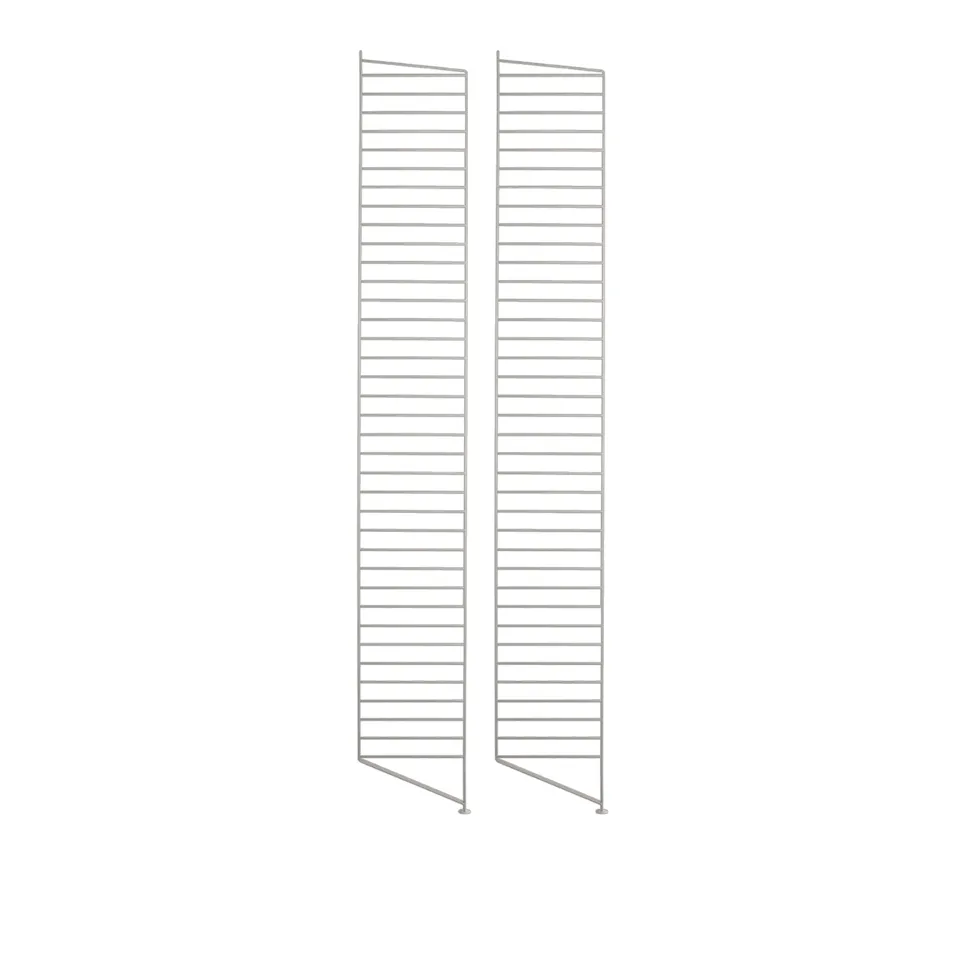
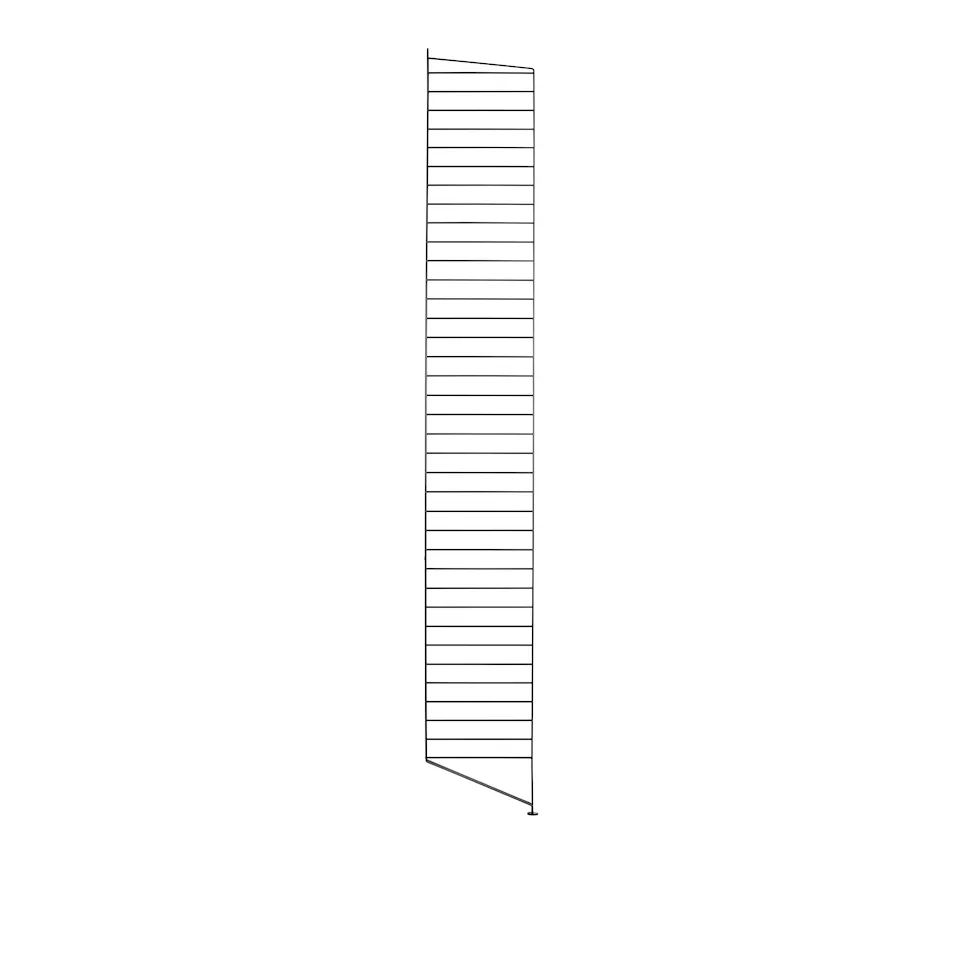
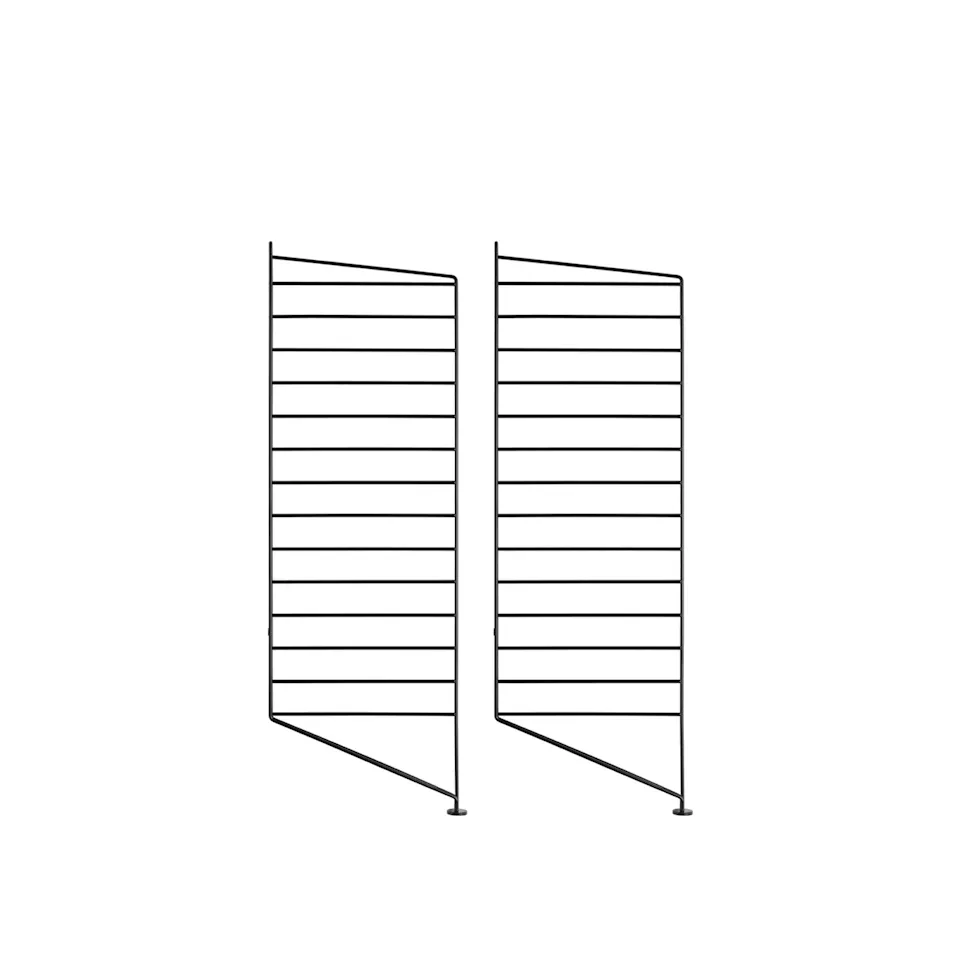
Floor panel 200x30cm 2-pack white
€330
In stock - + More options
String
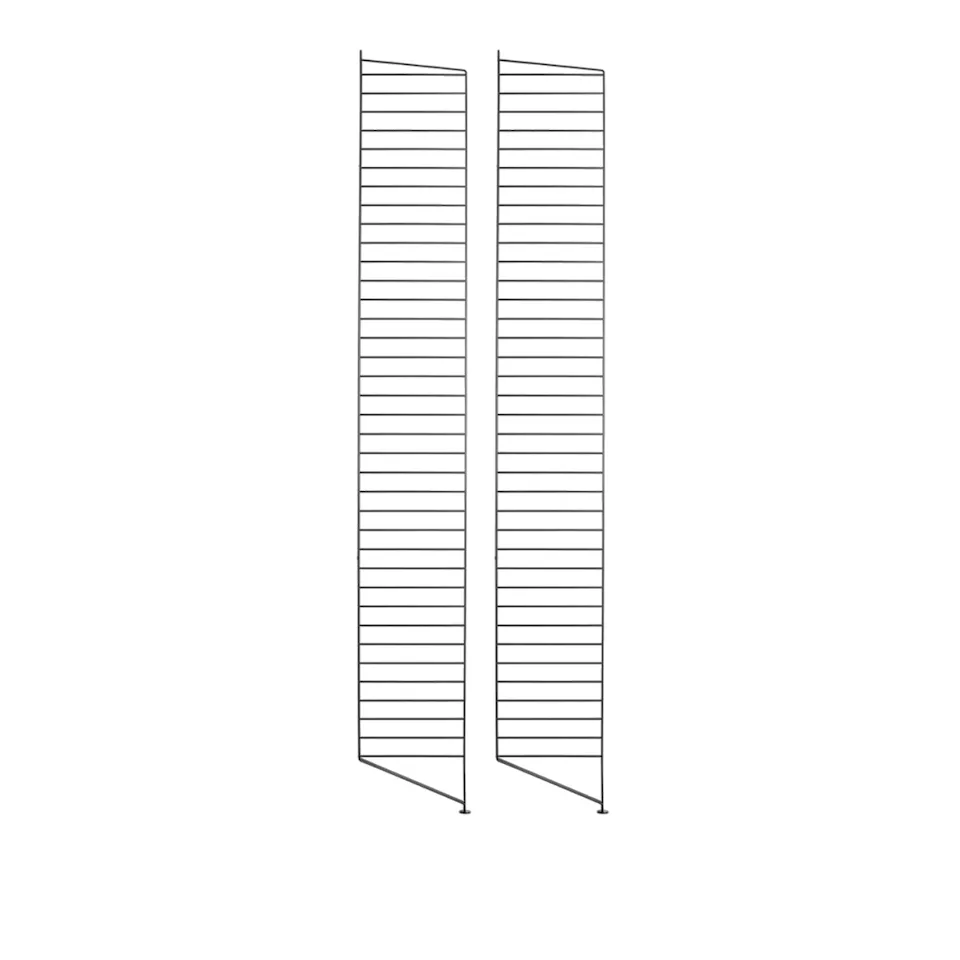
Floor panel 200x30cm 2-pack black
€330
In stock - + More options
String
Floor panel 200x30cm 1-pack white
€190
In stock - + More options
String
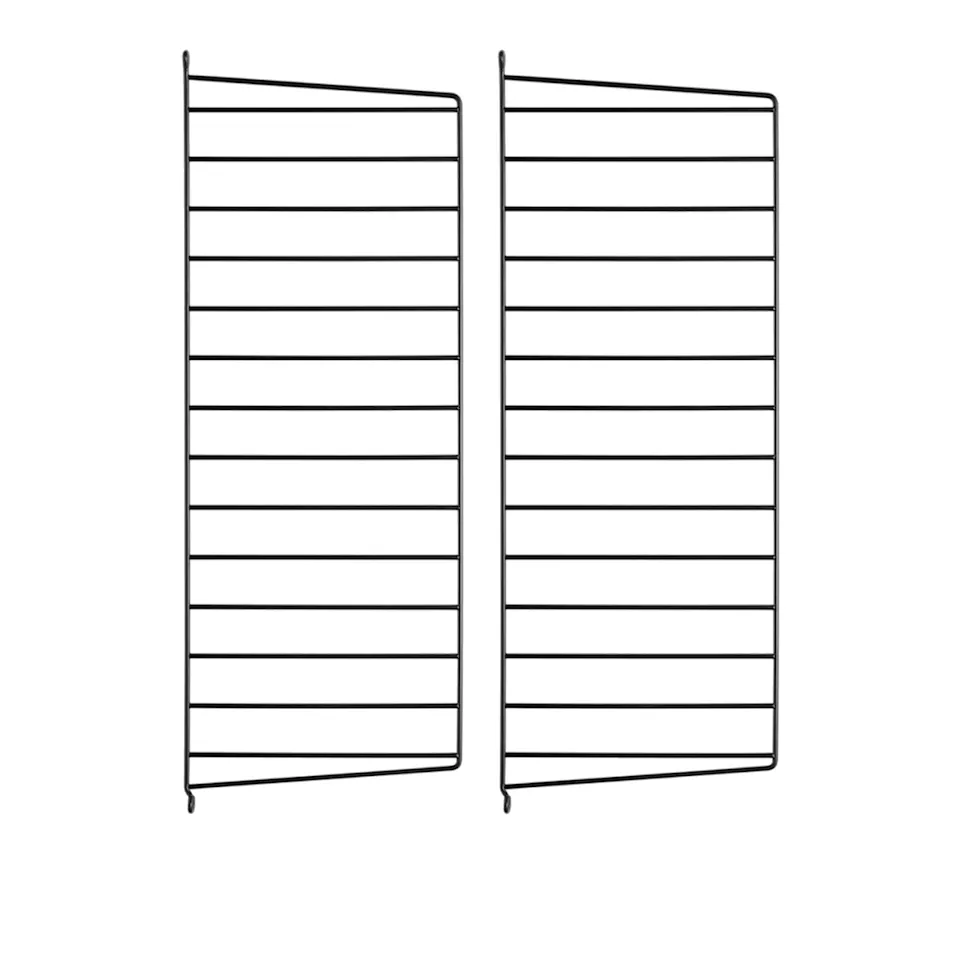
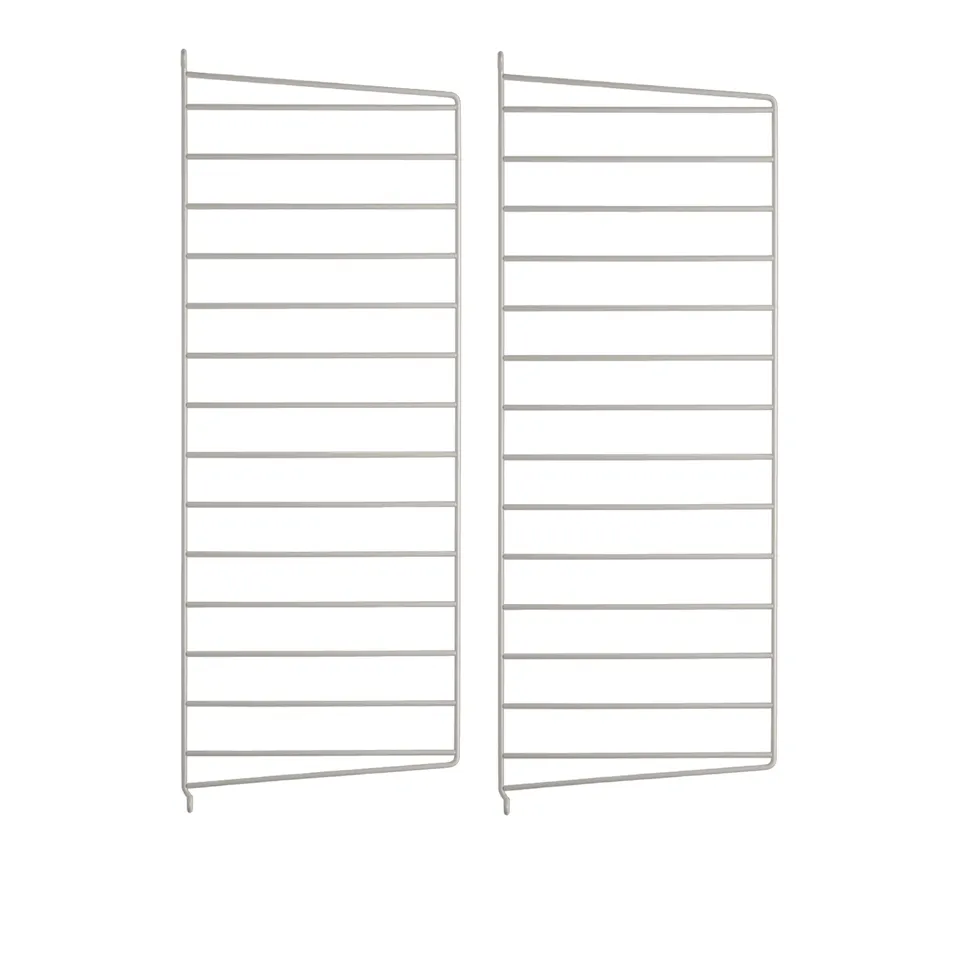
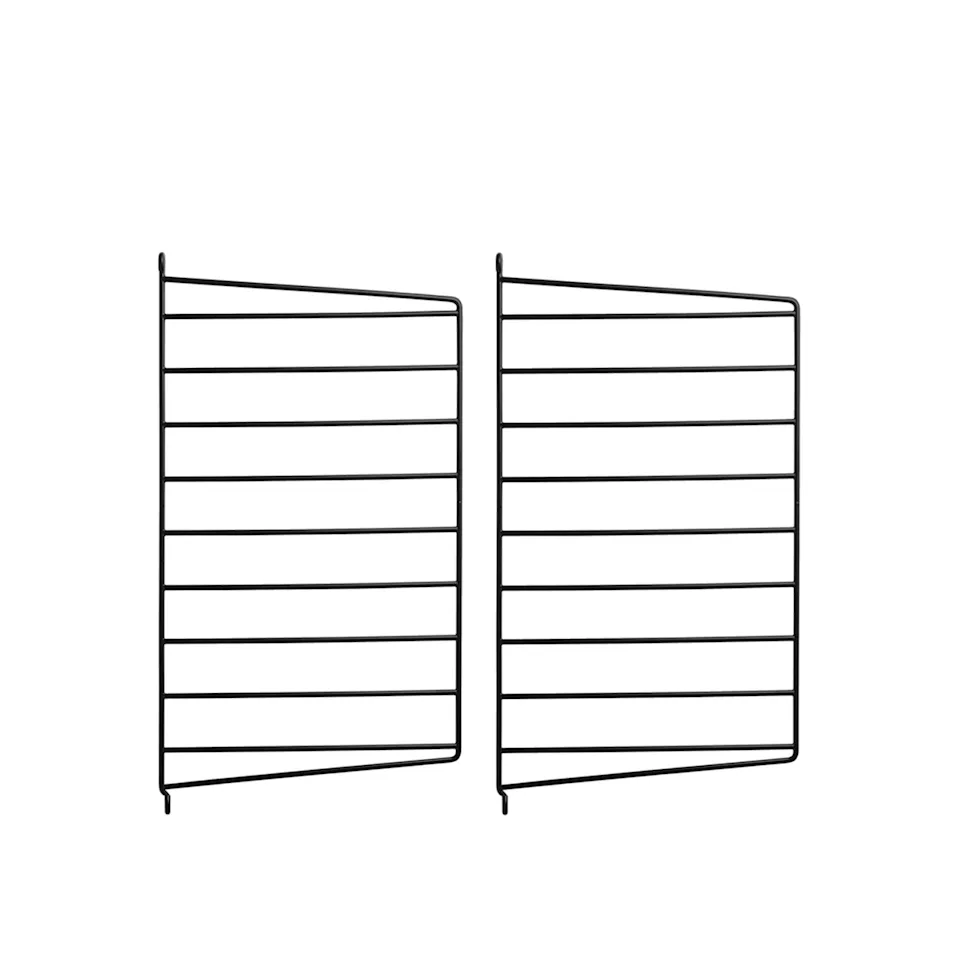
Wall panel 75x30cm 2-pack black
€128
In stock - + More options
String
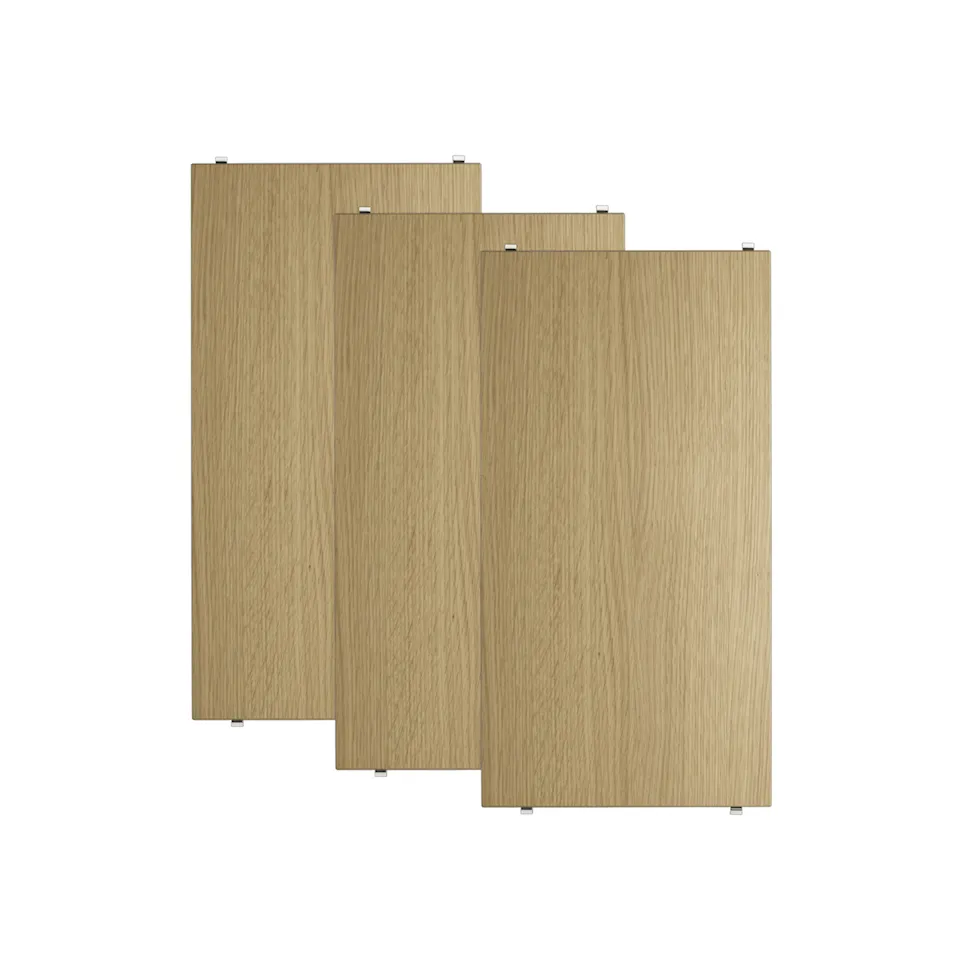
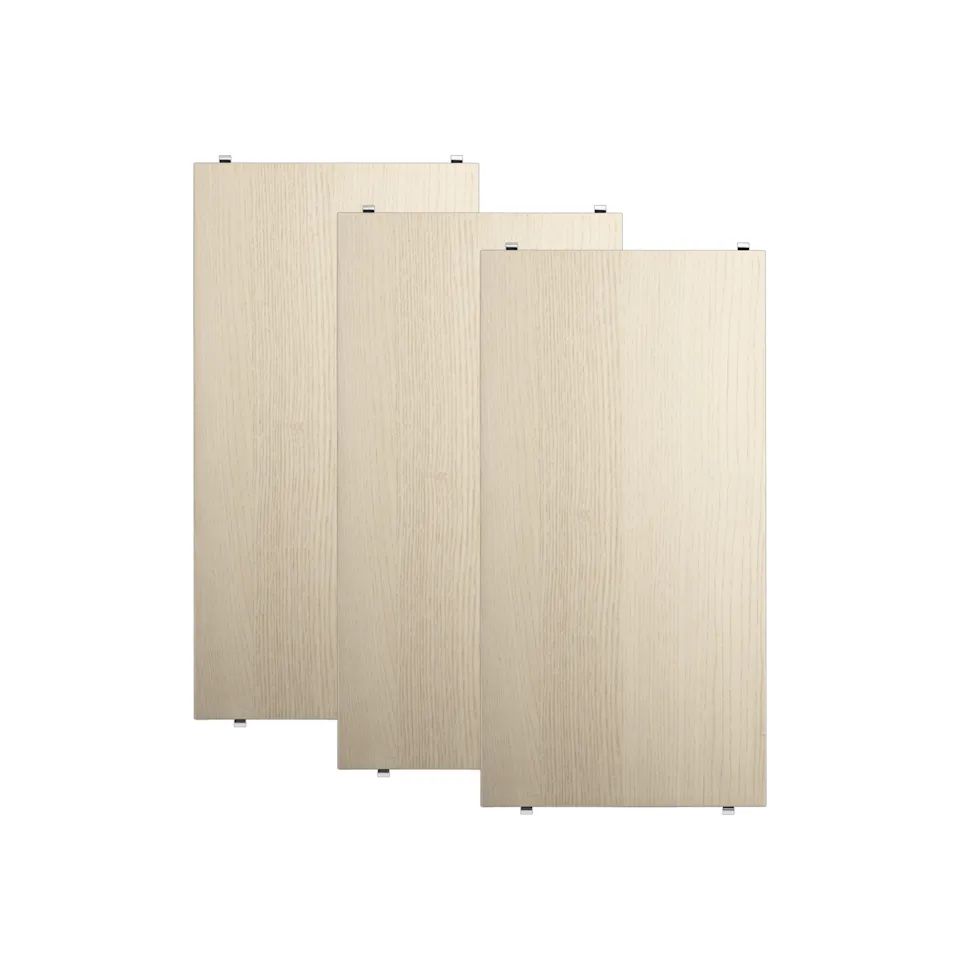
Shelf 58x30cm 3-pack oak
€170
In stock - + More options
String
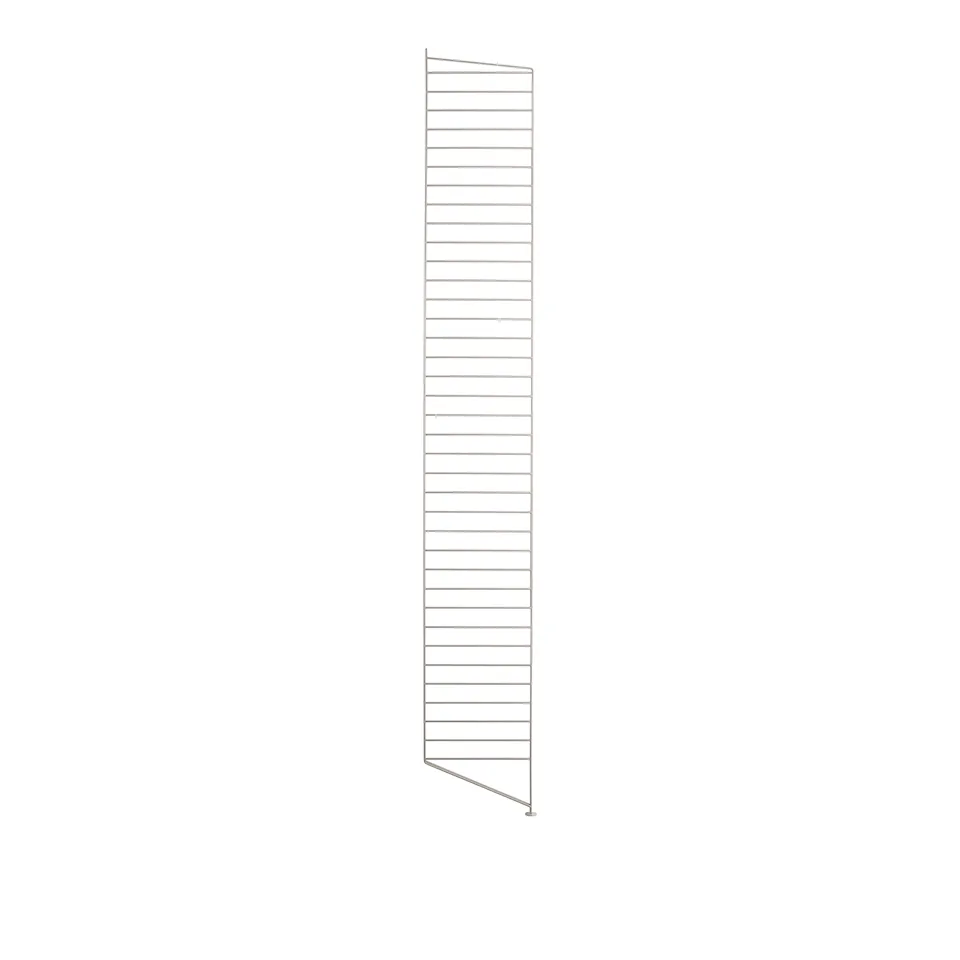
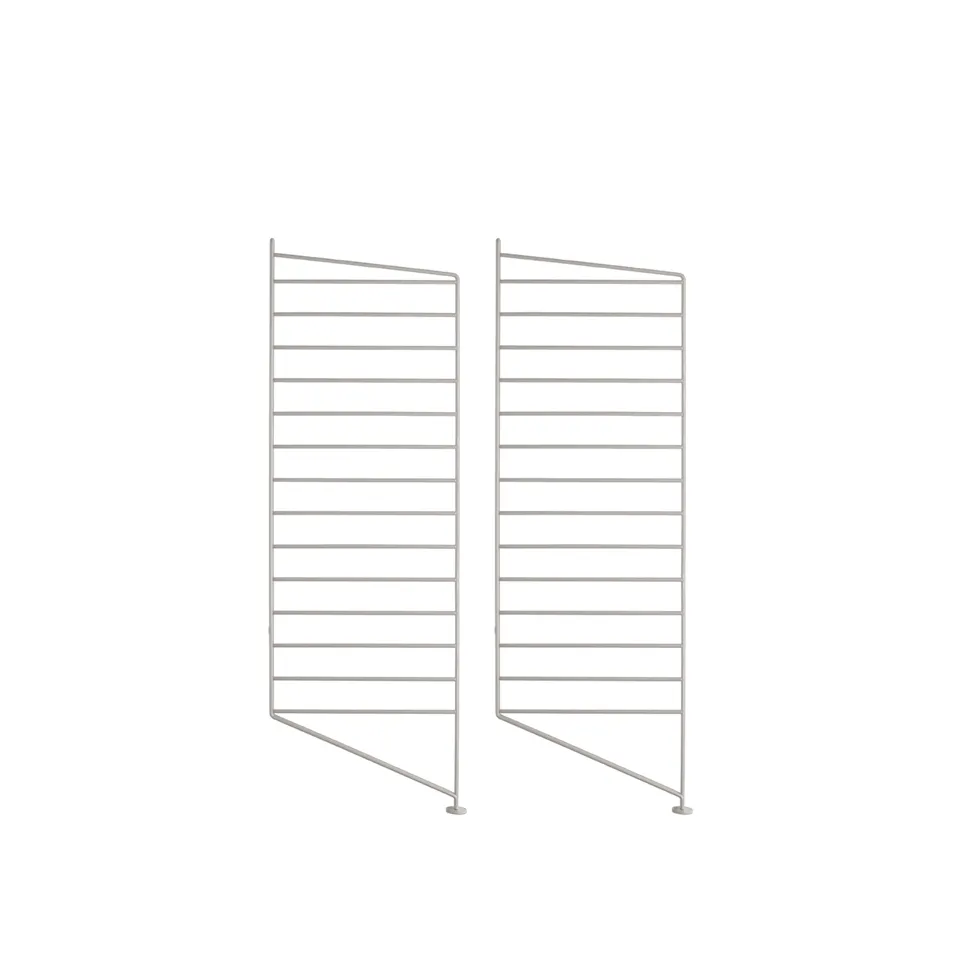
Floor panel 200x30cm 2-pack beige
€330
In stock - + More options
String
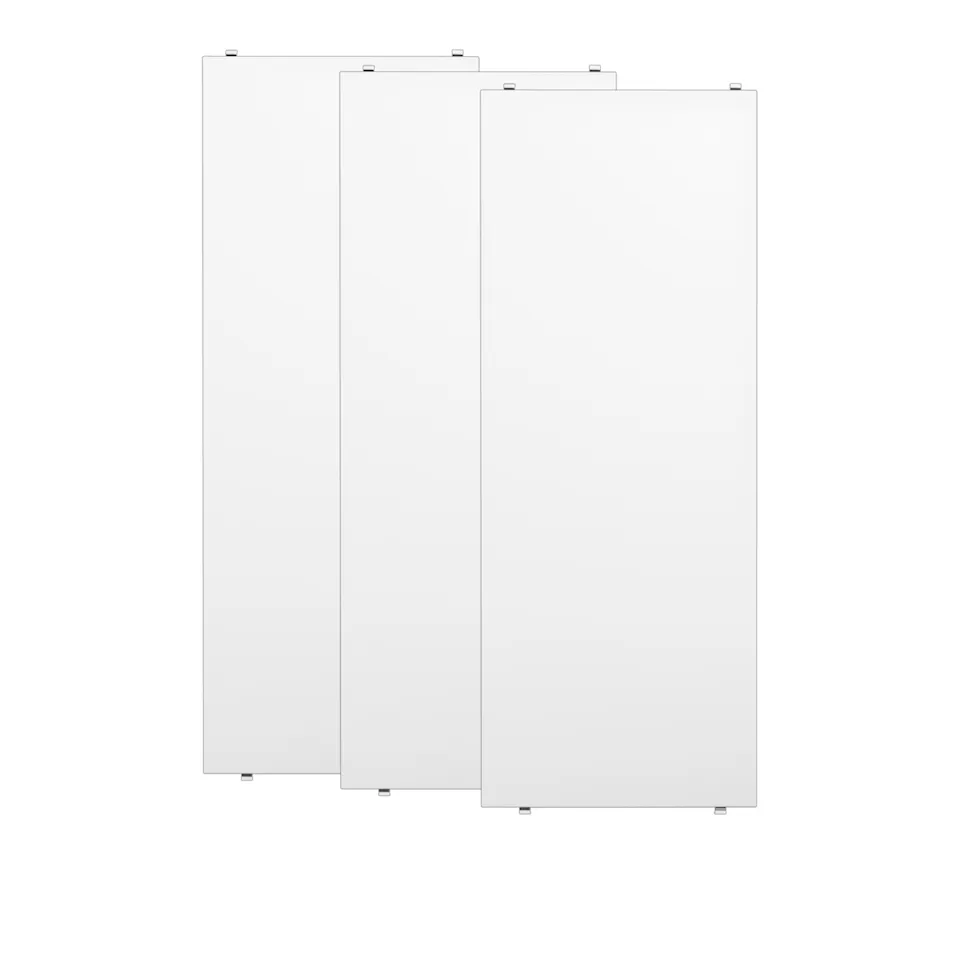
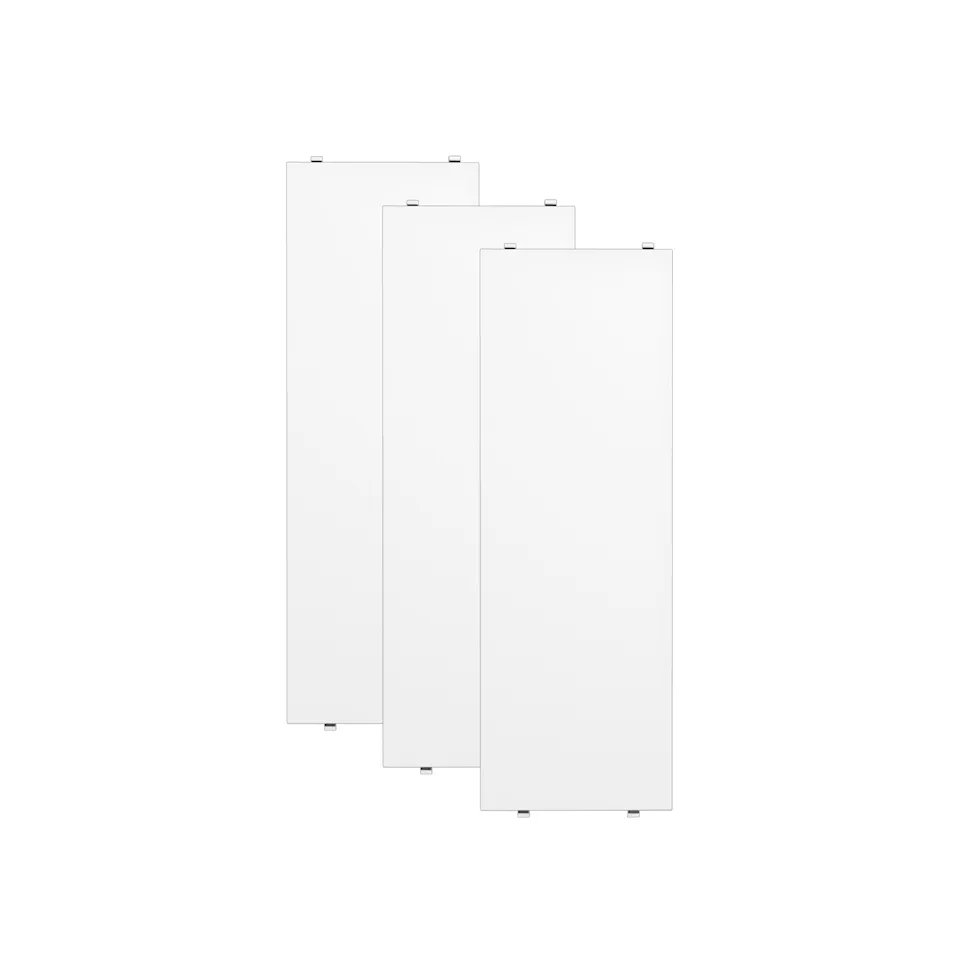
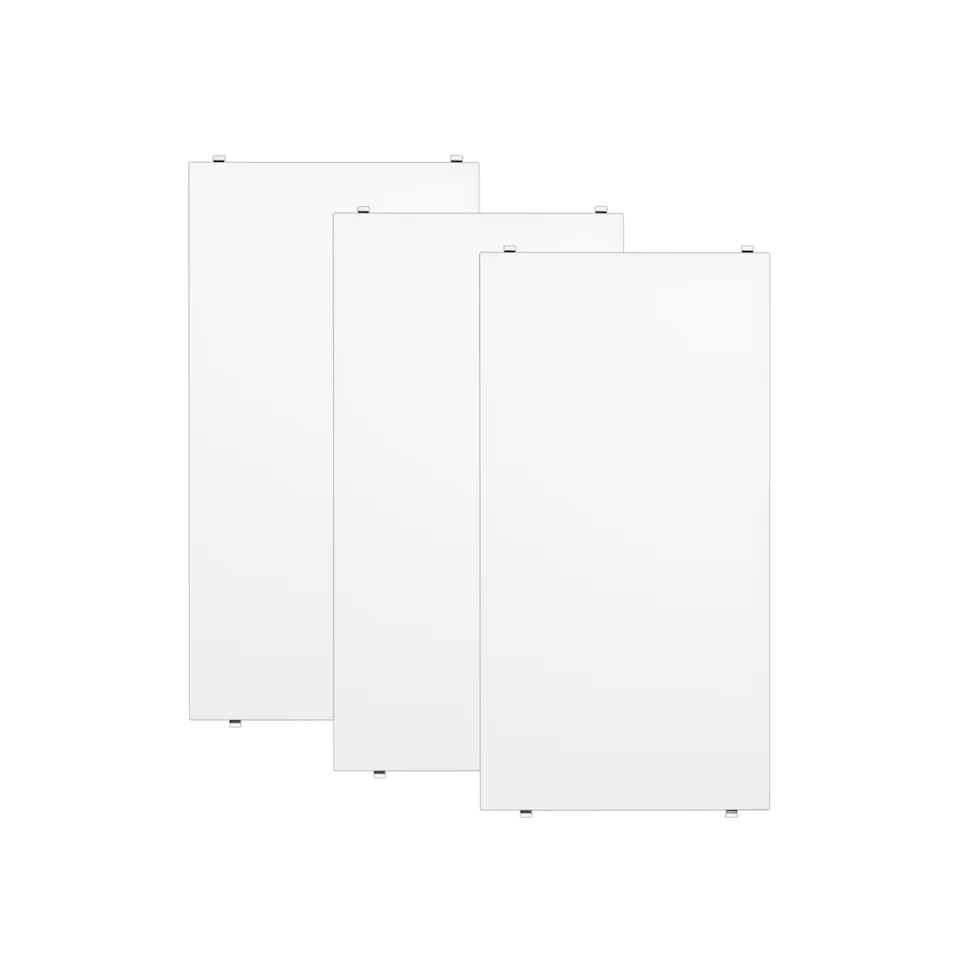
Shelf 78x30cm 3-pack white
€160
In stock - + More options
String
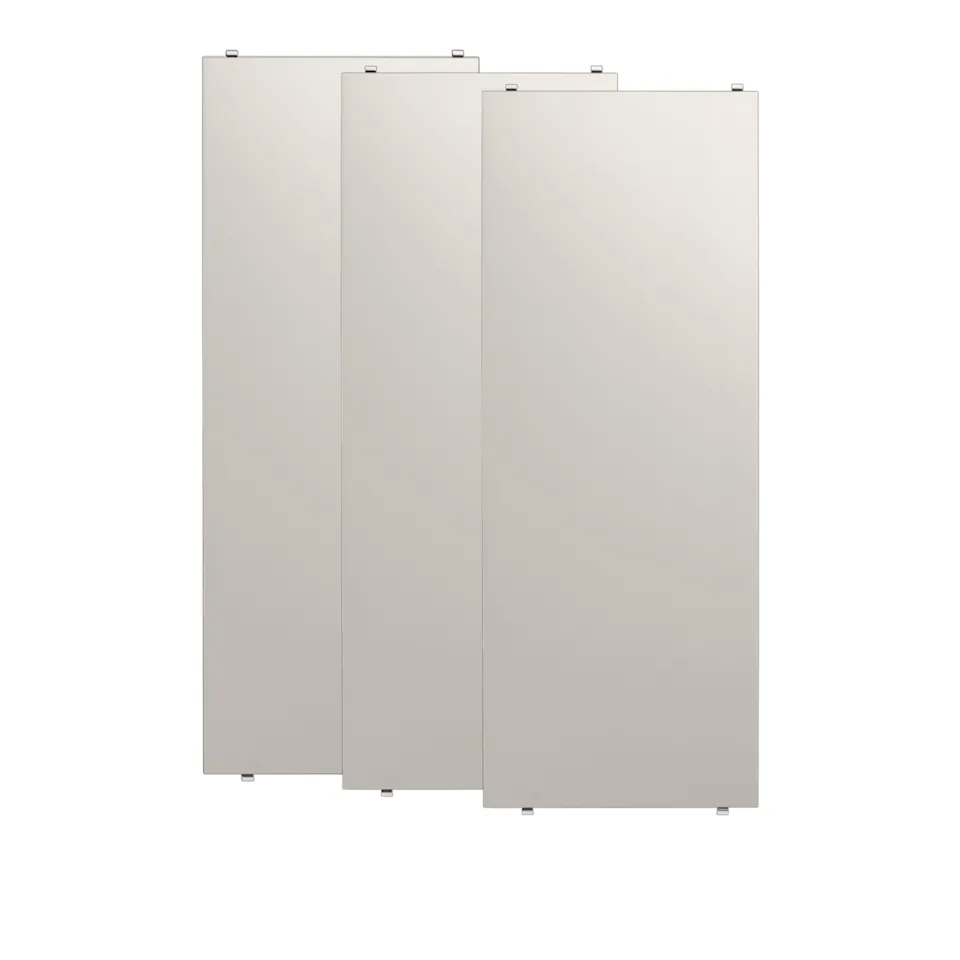
Shelf 78x30cm 3-pack beige
€160
In stock - + More options
String
Shelf 78x20cm 3-pack white
€143
In stock - + More options
String
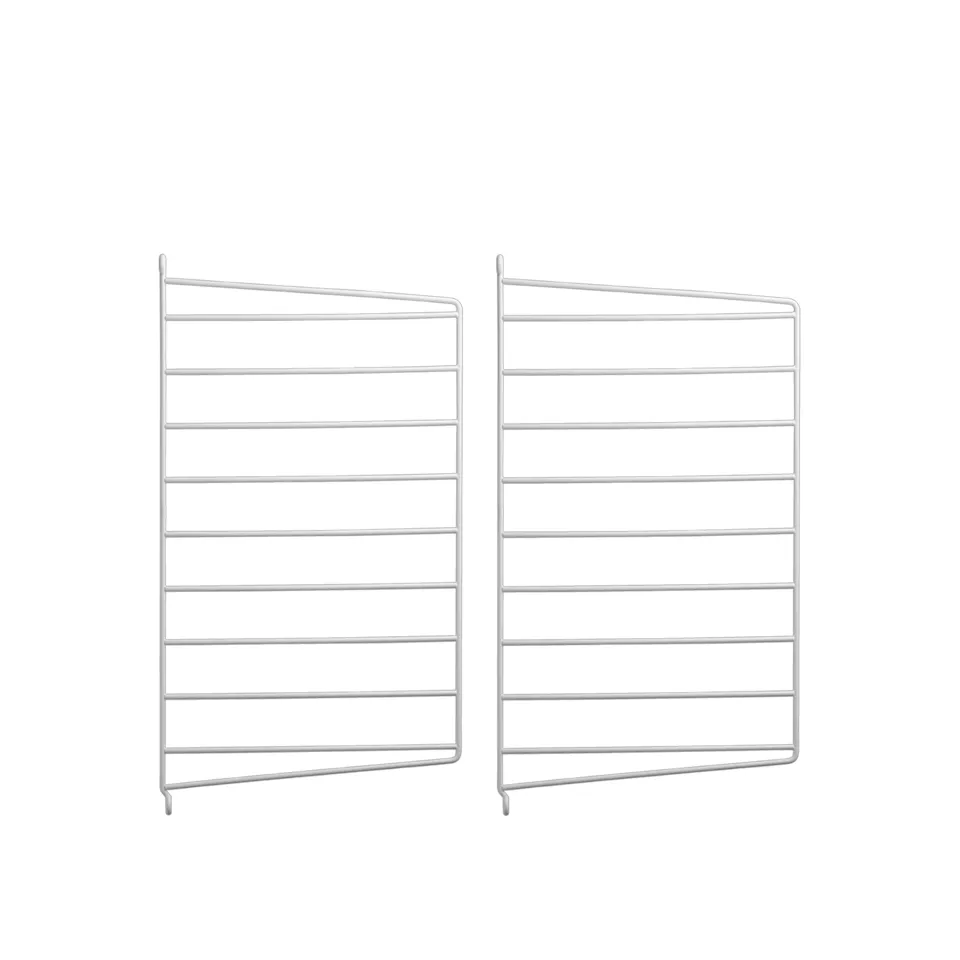
Wall panel 50x30cm 2-pack white
€122
In stock - + More options
String
Floor panel 200x30cm 1-pack black
€190
In stock - + More options
String
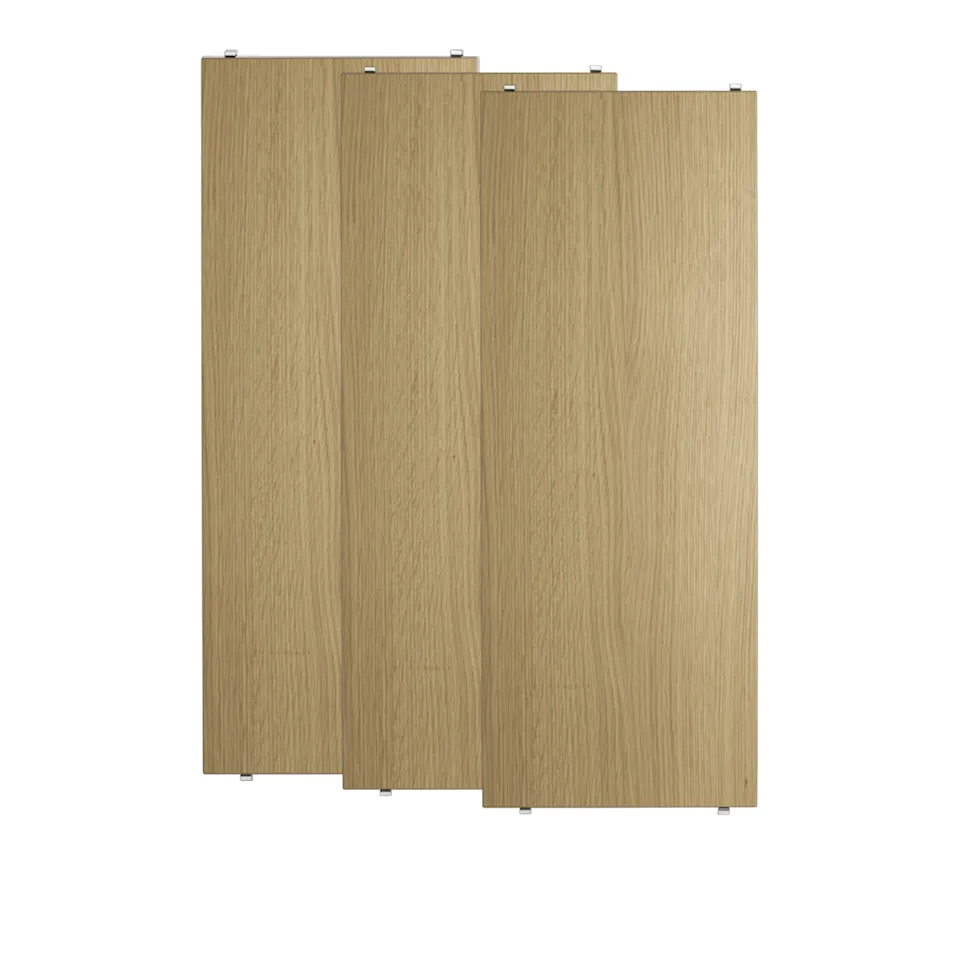
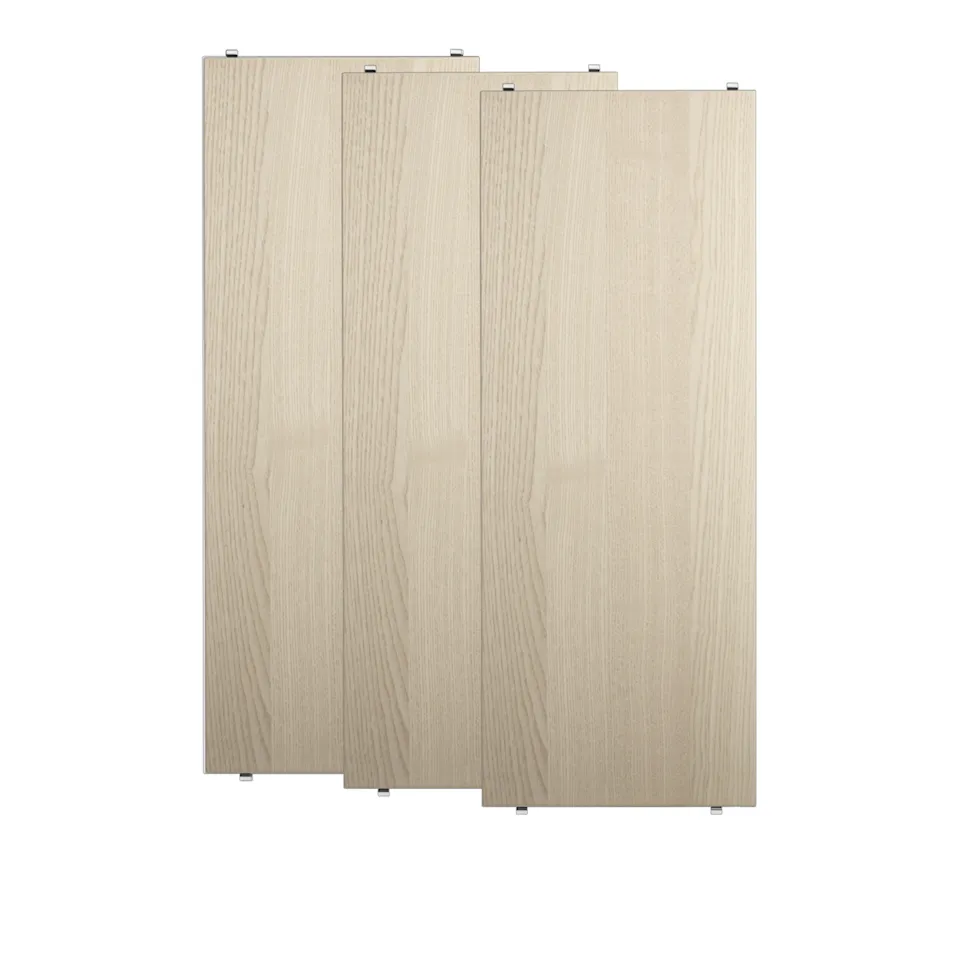
Shelf 78x30cm 3-pack oak
€195
In stock - + More options
String
Floor panel 200x30cm 1-pack beige
€190
In stock - + More options
String
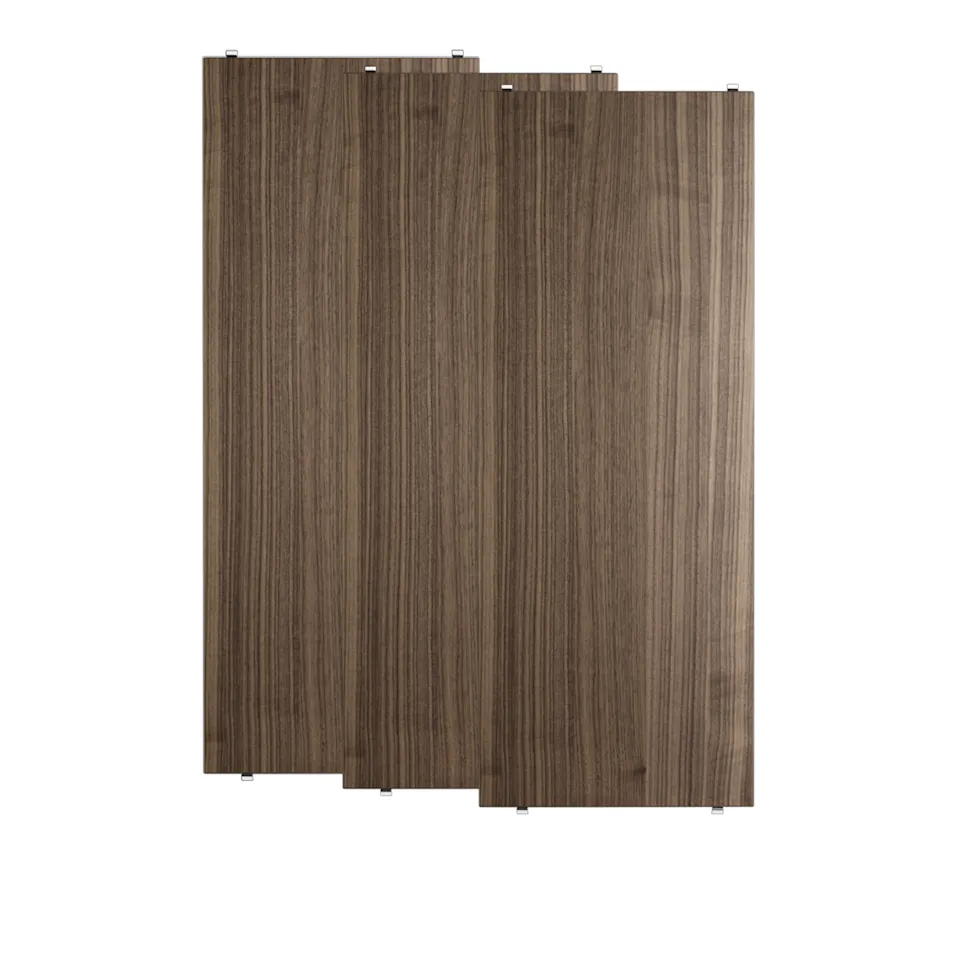
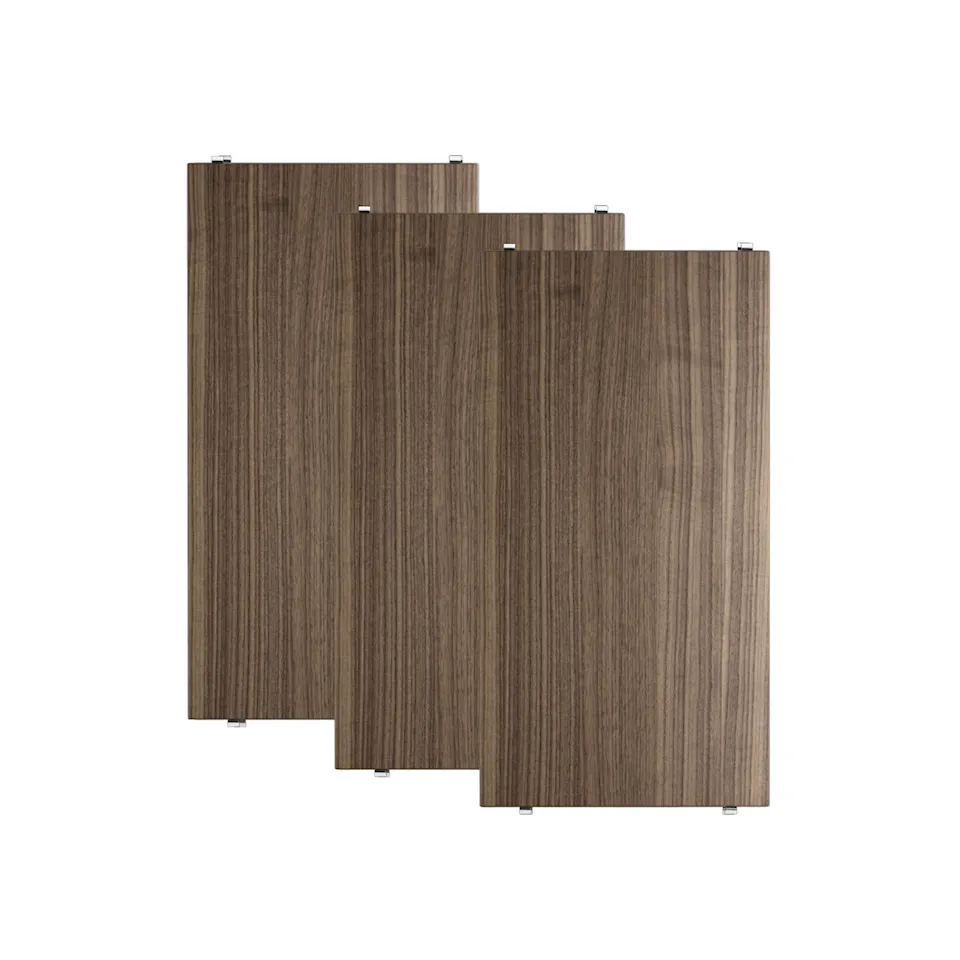
Shelf 78x30cm 3-pack walnut
€235
In stock - + More options
String
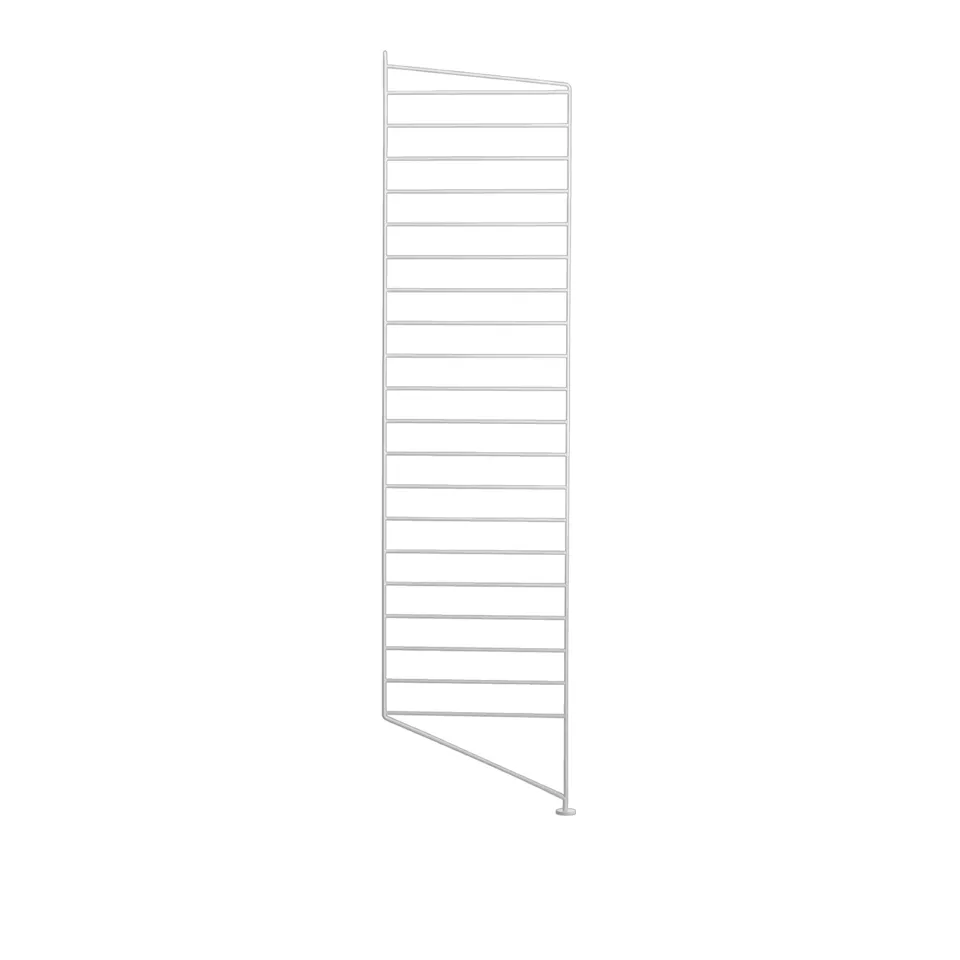
Floor panel 115x30cm 1-pack white
€133
In stock - + More options
String
Shelf 58x20cm 3-pack white
€127
In stock - + More options
String
String Pocket wood oak/white
€195
In stock - + More options
String
Floor panel 85x30cm 2-pack beige
€200
In stock - + More options
String
Shelf 58x30cm 3-pack ash
€170
In stock - + More options
String
Shelf 78x30cm 3-pack ash
€195
In stock - + More options
String
Shelf 58x30cm 3-pack white
€144
In stock - + More options
String
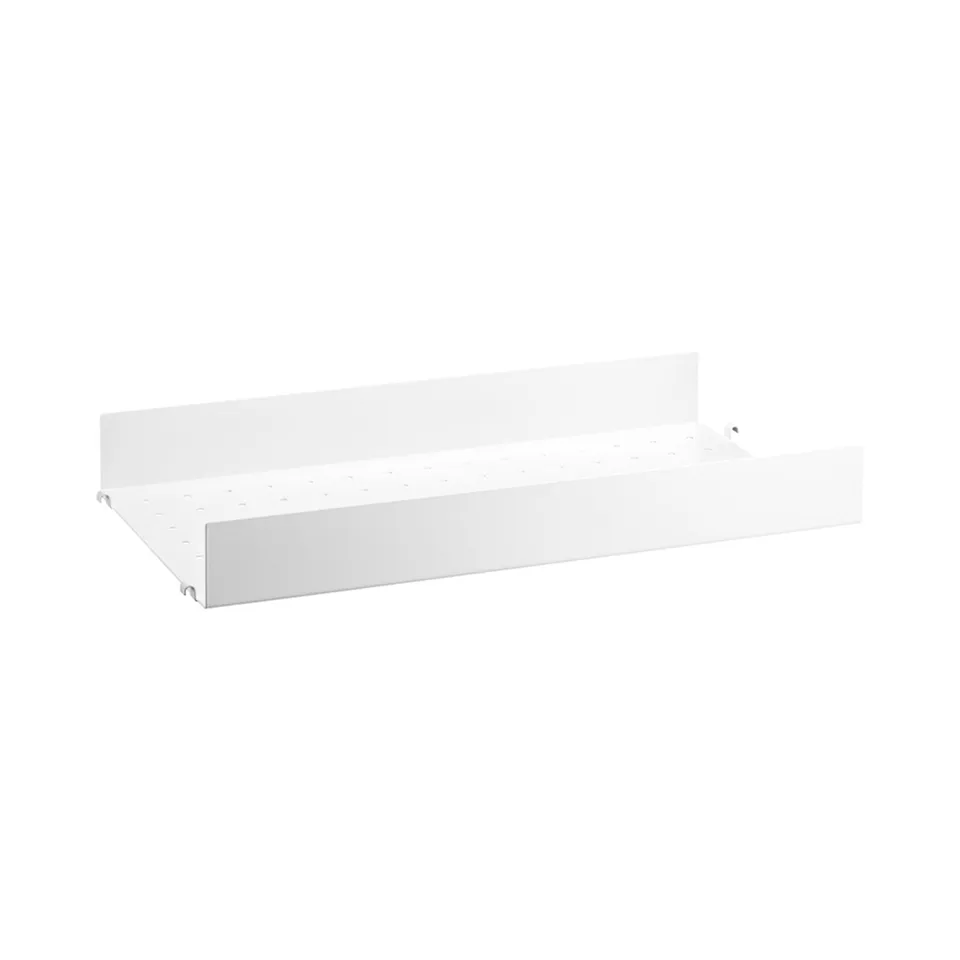
Metal shelf 58x30cm hög kant white
€106
In stock - + More options
String
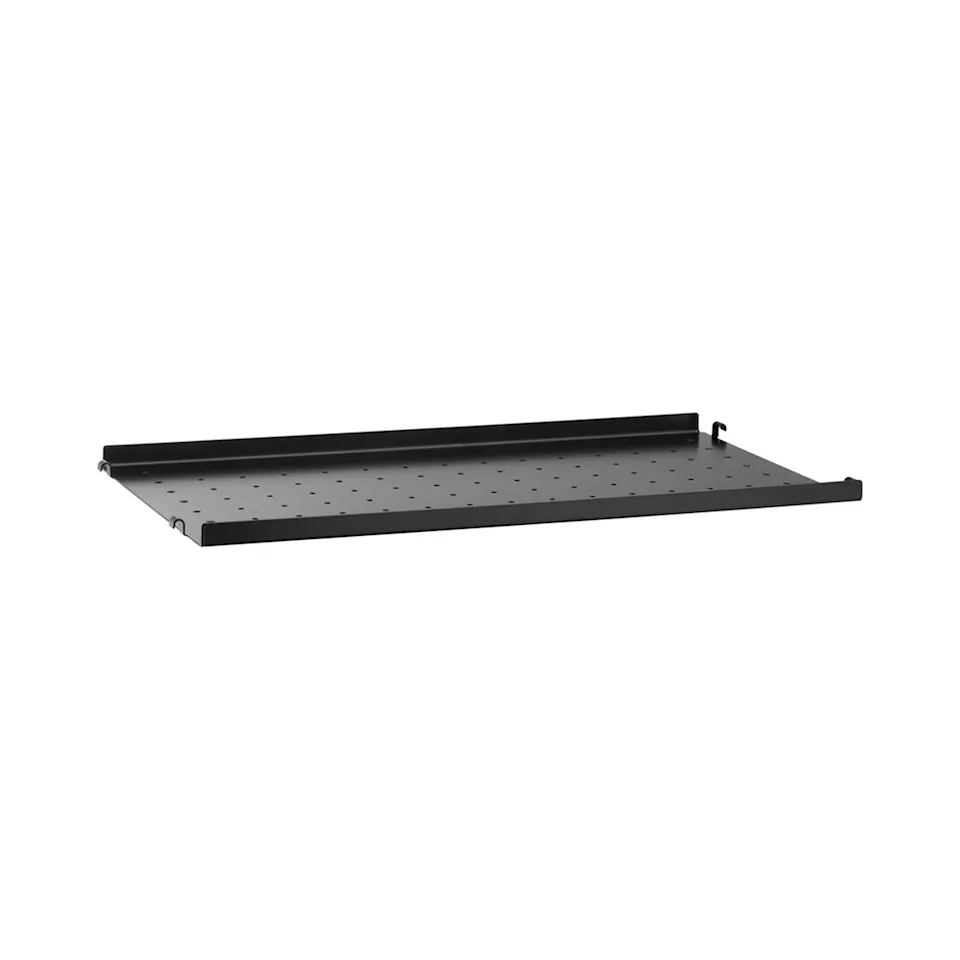
Metal shelf 58x30cm låg kant black
€101
In stock - + More options
String
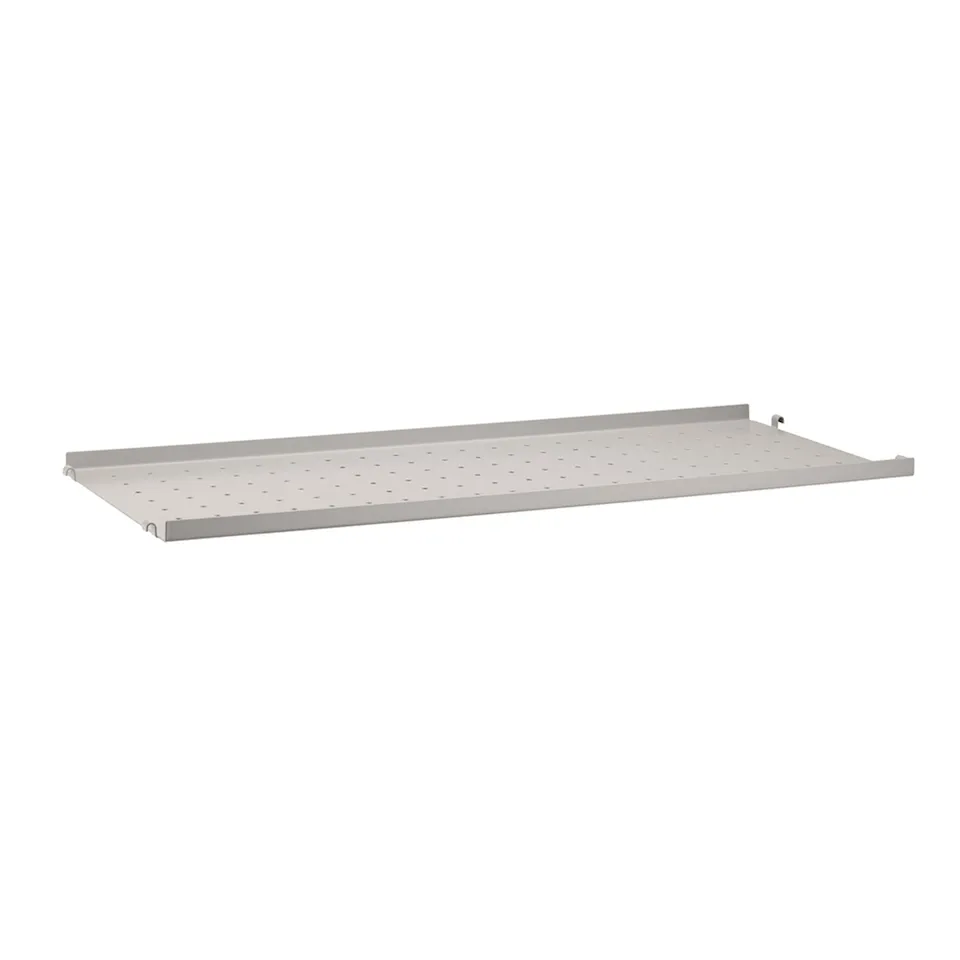
Metal shelf 78x30cm låg kant beige
€110
In stock - + More options
String
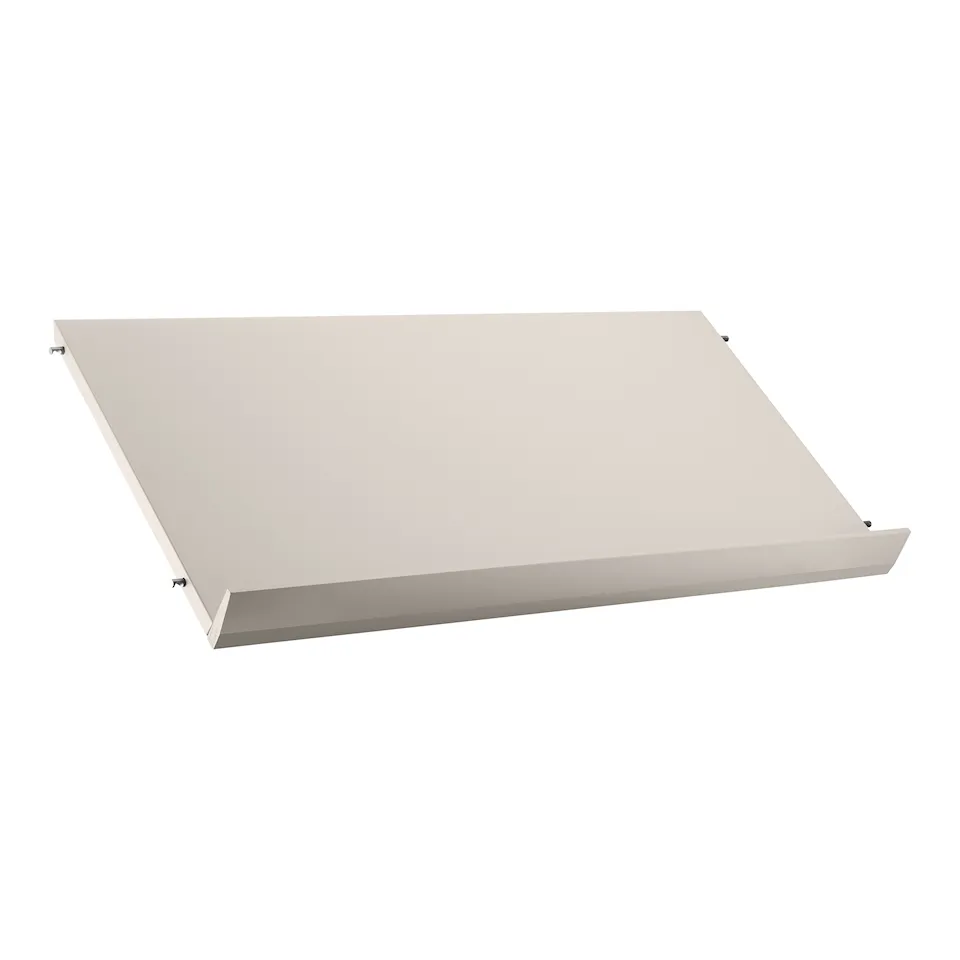
Wooden magazine rack 78x30cm beige
€195
In stock - + More options
String
Wall panel 75x30cm 2-pack beige
€128
In stock - + More options
String
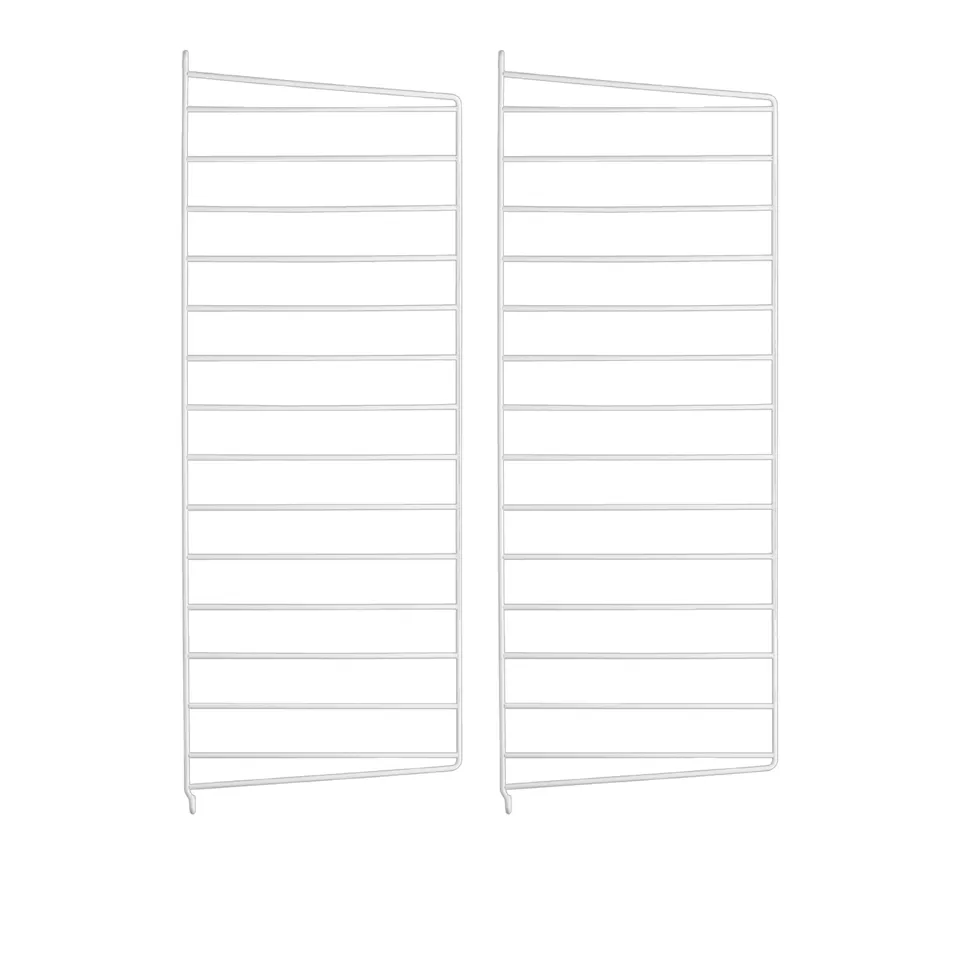
Wall panel 75x30cm 2-pack white
€128
In stock - + More options
String
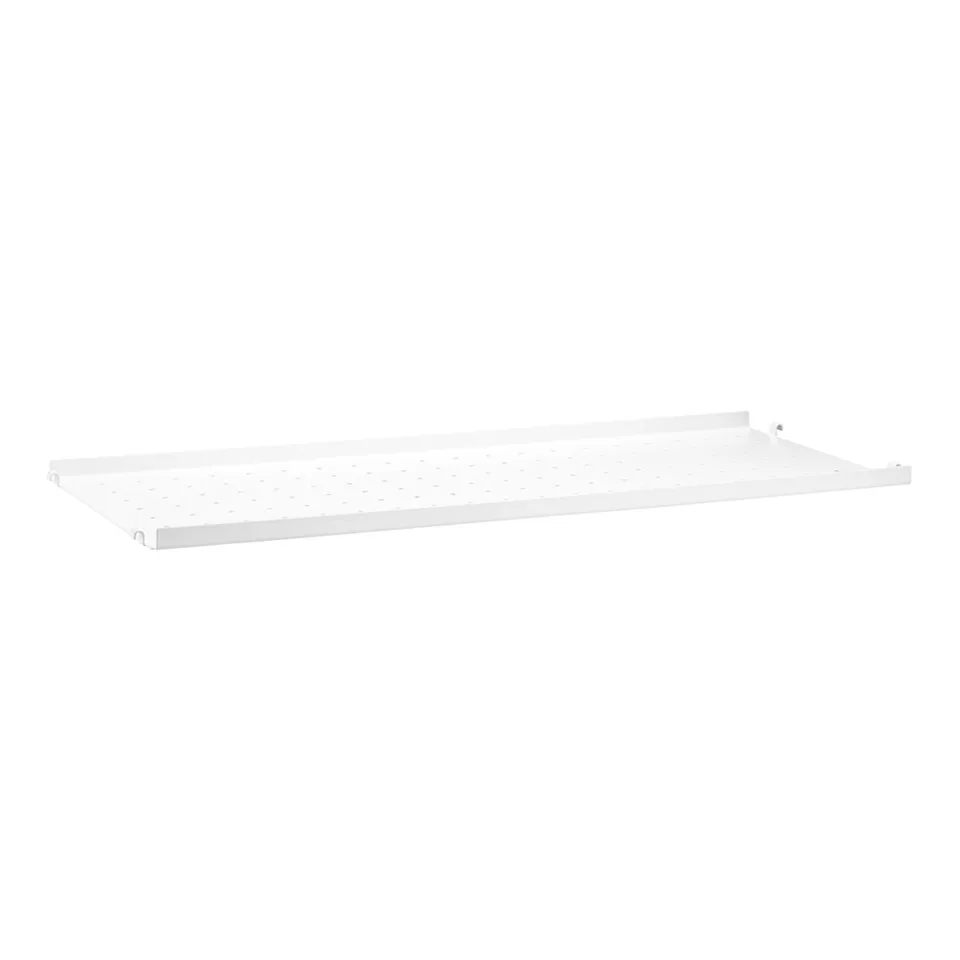
Metal shelf 78x30cm låg kant white
€110
In stock - + More options
String
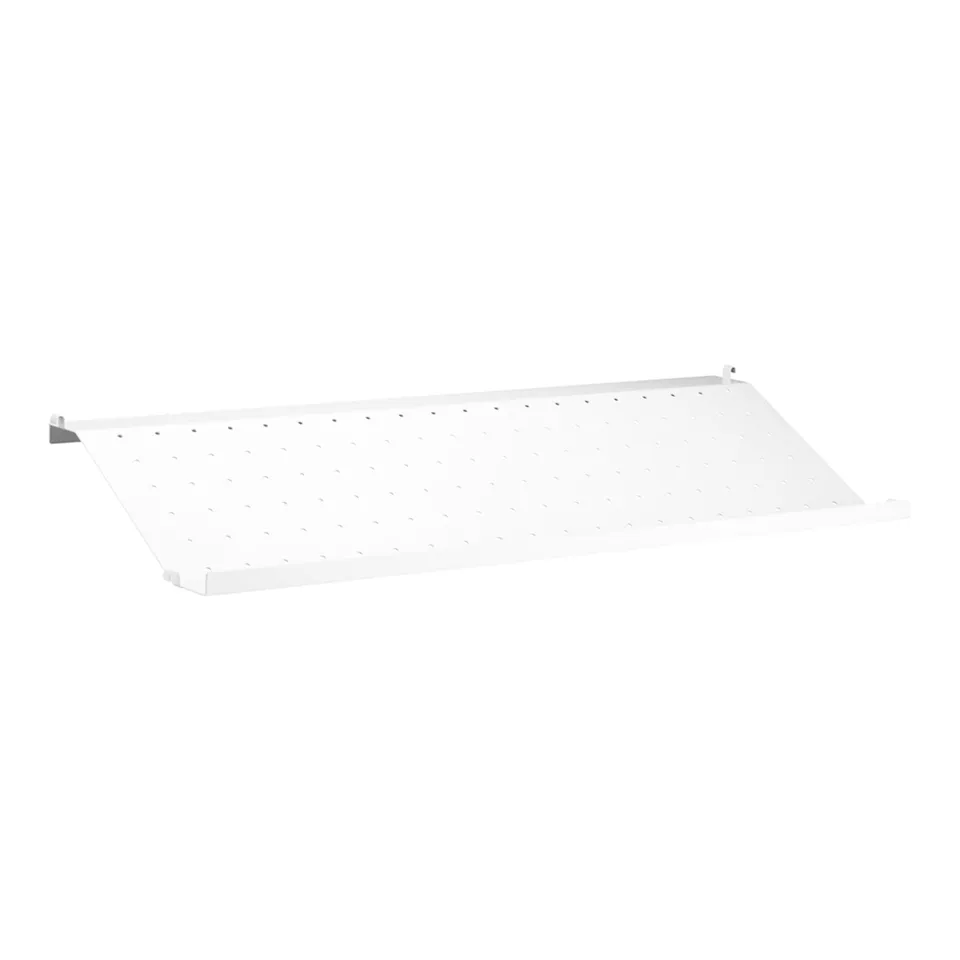
Metal shoe rack 78x30cm white
€106
In stock String
String 1949-2024 Shelf
€239
In stock- + More options
String
Wall panel 75x30cm 1-pack white
€81
In stock - + More options
String
Wall panel 50x30cm 2-pack beige
€122
In stock - + More options
String
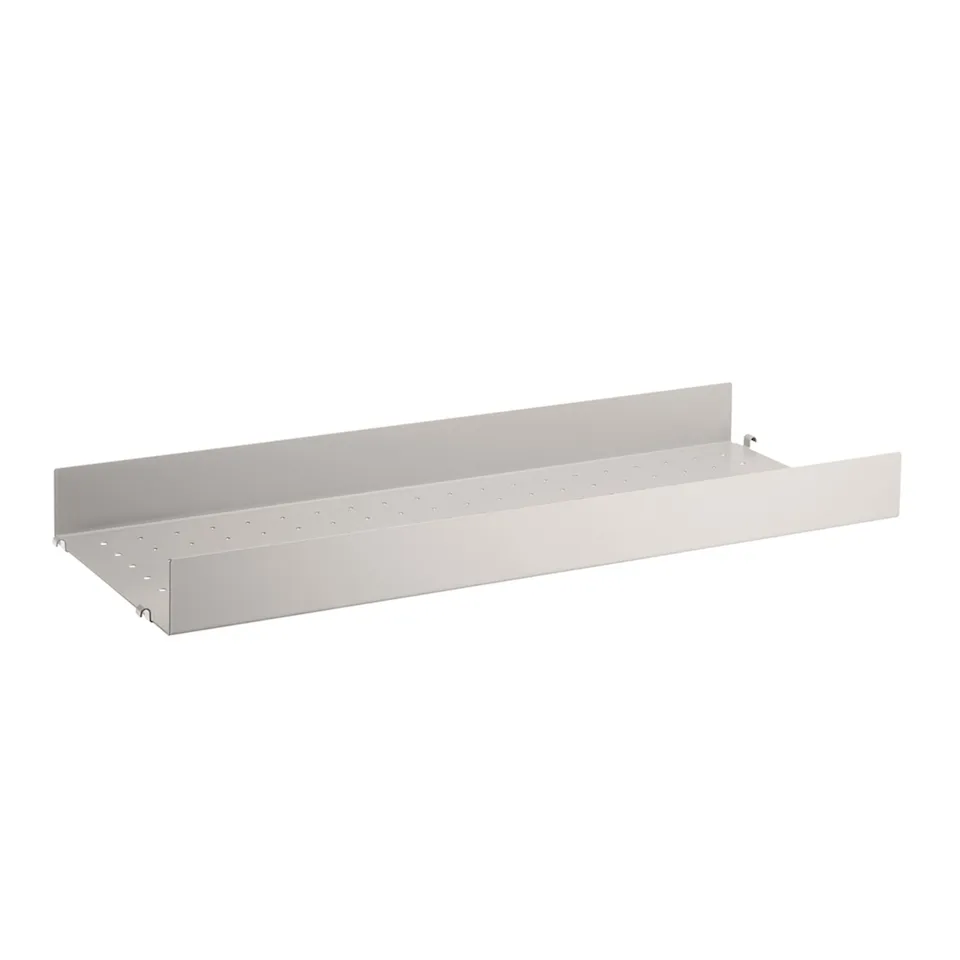
Metal shelf 78x30cm hög kant beige
€111
In stock - + More options
String
Shelf 58x30cm 3-pack walnut
€205
In stock - + More options
String
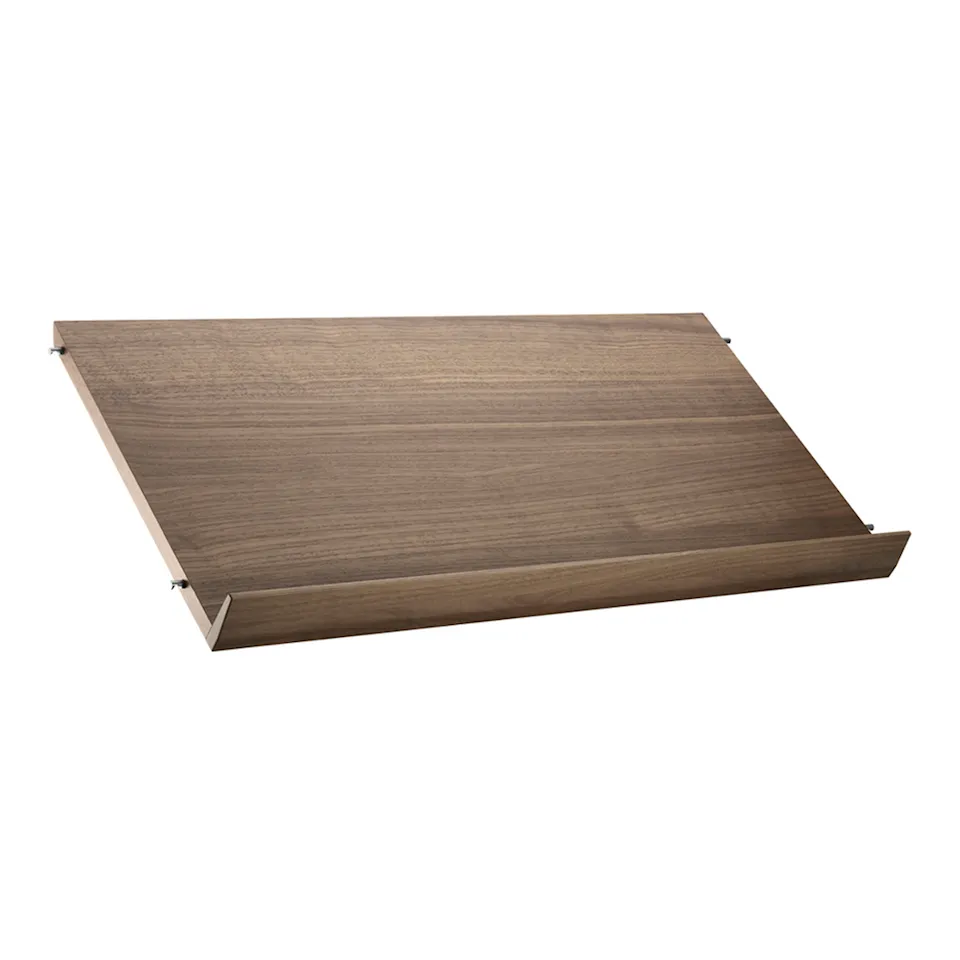
Wooden magazine rack 78x30cm walnut
€245
In stock - + More options
String
Wall panel 50x30cm 2-pack black
€122
In stock - + More options
String
String Pocket wood black-stained ash/black
€195
In stock - + More options
String
Floor panel 115x30cm 2-pack black
€250
In stock - + More options
String
Shelf 58x20cm 3-pack oak
€149
In stock - + More options
String
Floor panel 85x30cm 2-pack black
€200
In stock - + More options
String
String Living room Q Beige
€2,427
In stock - + More options
String
String Living room Q White
€2,427
In stock String
String Freestanding Outdoor Shelf
€814
In stock- + More options
String
String Living room J Beige
€1,996
In stock - + More options
String
String Living room J White
€1,996
In stock - + More options
String
String Living room J Ash/White
€2,182
In stock - + More options
String
String Living room J Oak/White
€2,182
In stock - + More options
String
String Living room J Walnut/White
€2,410
In stock - + More options
String
String Living room J Black
€2,182
In stock - + More options
String
String Living room J Walnut/Black
€2,410
In stock String
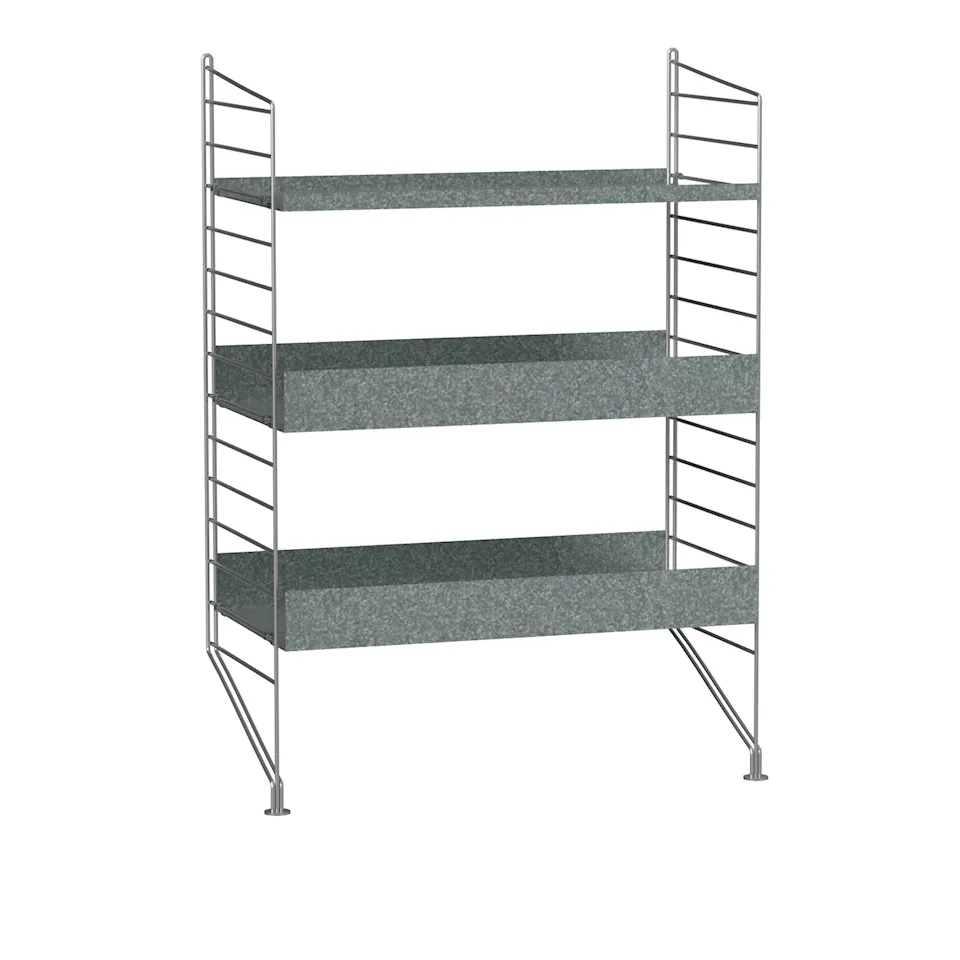
Outdoor shelving system A Galvanized
€971
In stockString
Outdoor shelving system B Galvanized
€522
In stock- + More options
String
Kids room shelving system B beige
€885
In stock - + More options
String
Children's room shelving system B white
€885
In stock - + More options
String
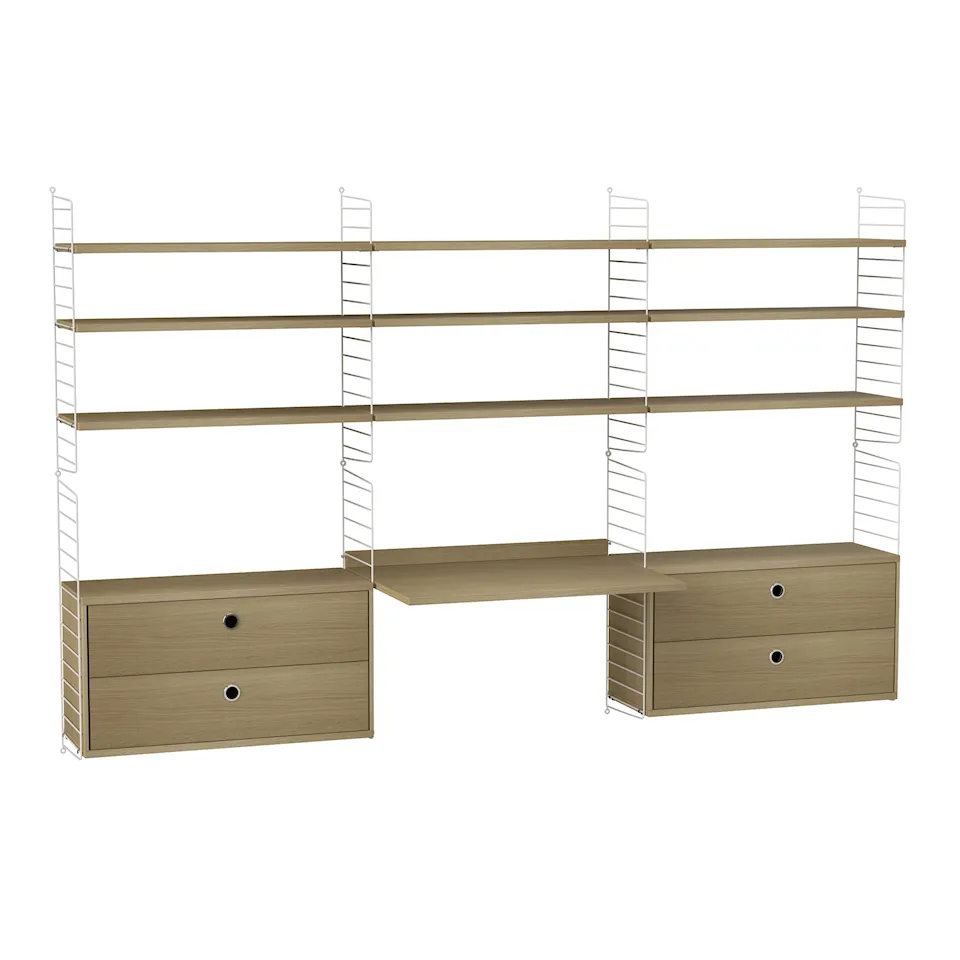
Office shelving system F White
€2,230
In stock - + More options
String
Office shelving system F black
€2,484
In stock - + More options
String
Office shelving system F oak/white
€2,489
In stock - + More options
String
Office shelving system F walnut/black
€2,778
In stock











String Shelf
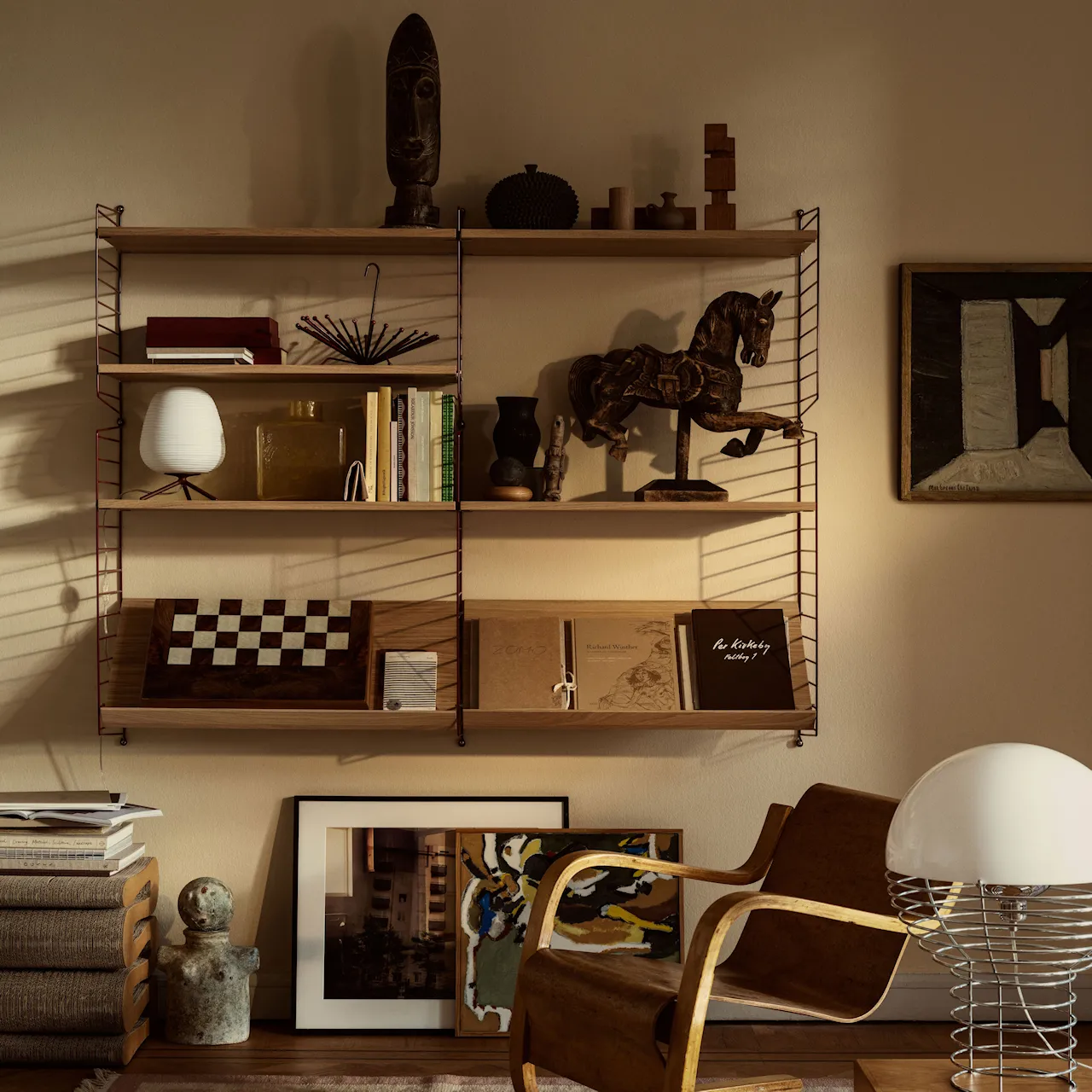
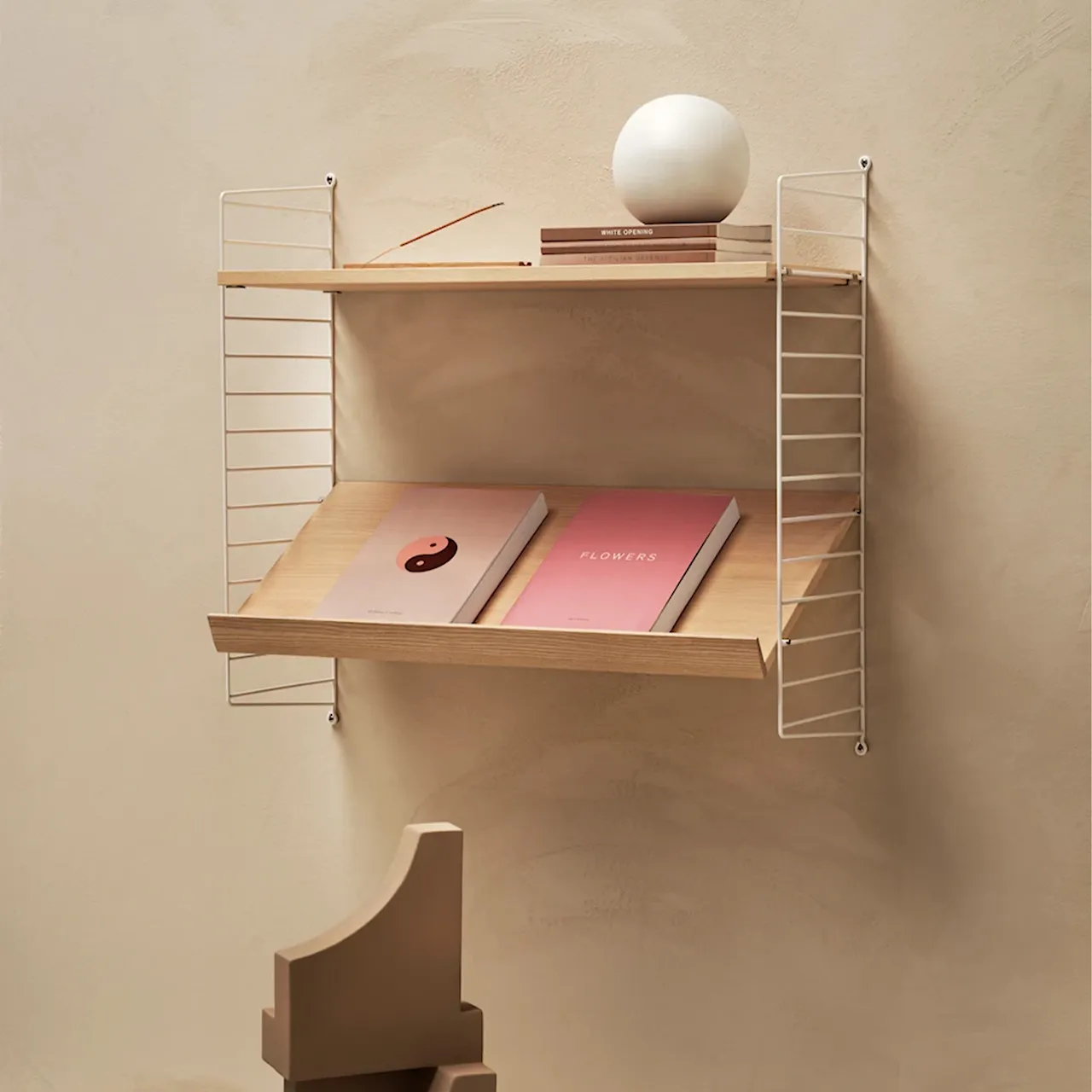
The String shelf is one of the most iconic pieces in Scandinavian design. Since its launch in 1949, it has been praised for its simple construction, light expression, and timeless functionality. What began as an entry in a bookshelf competition has grown into a global icon that still graces homes and public spaces around the world.
Origin and History
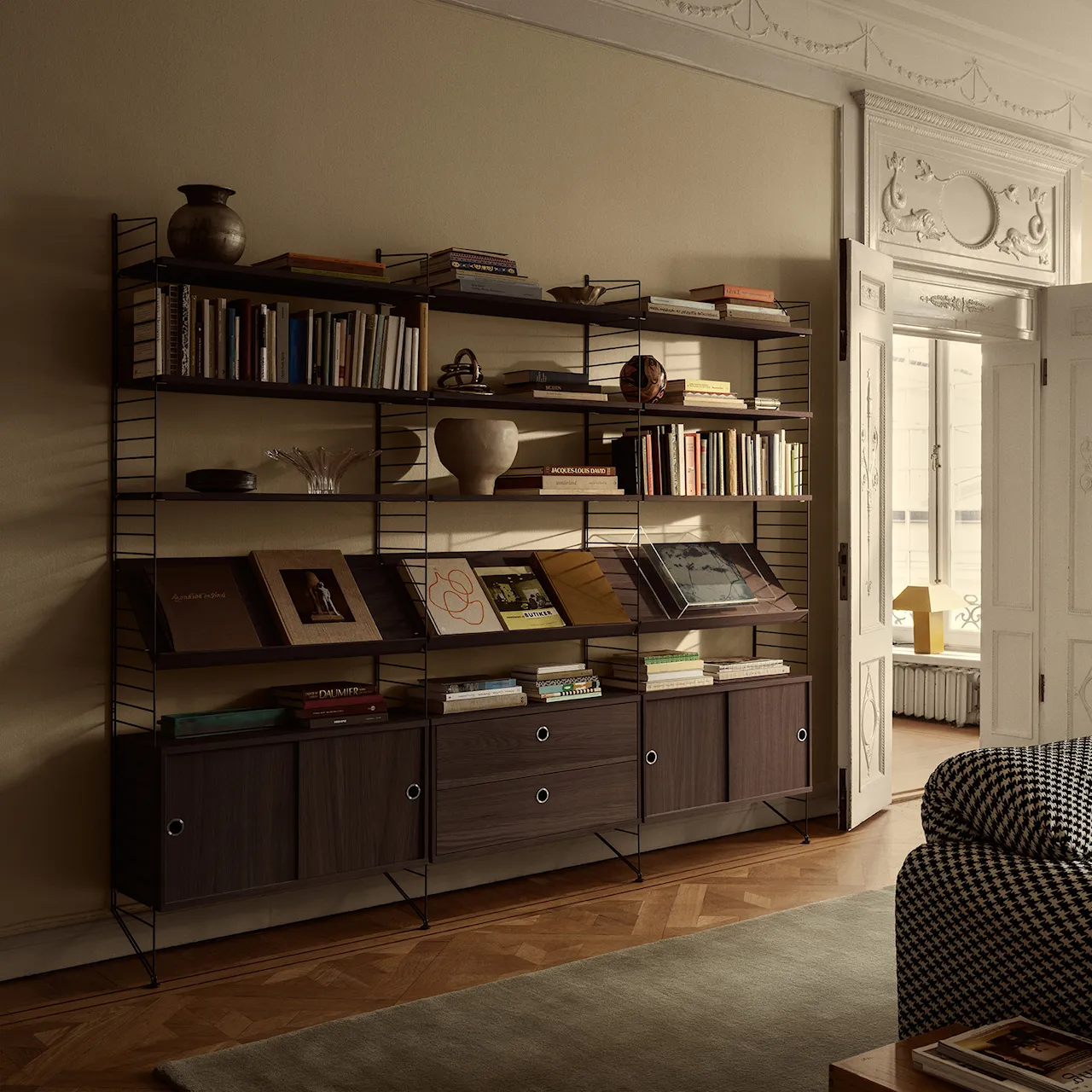
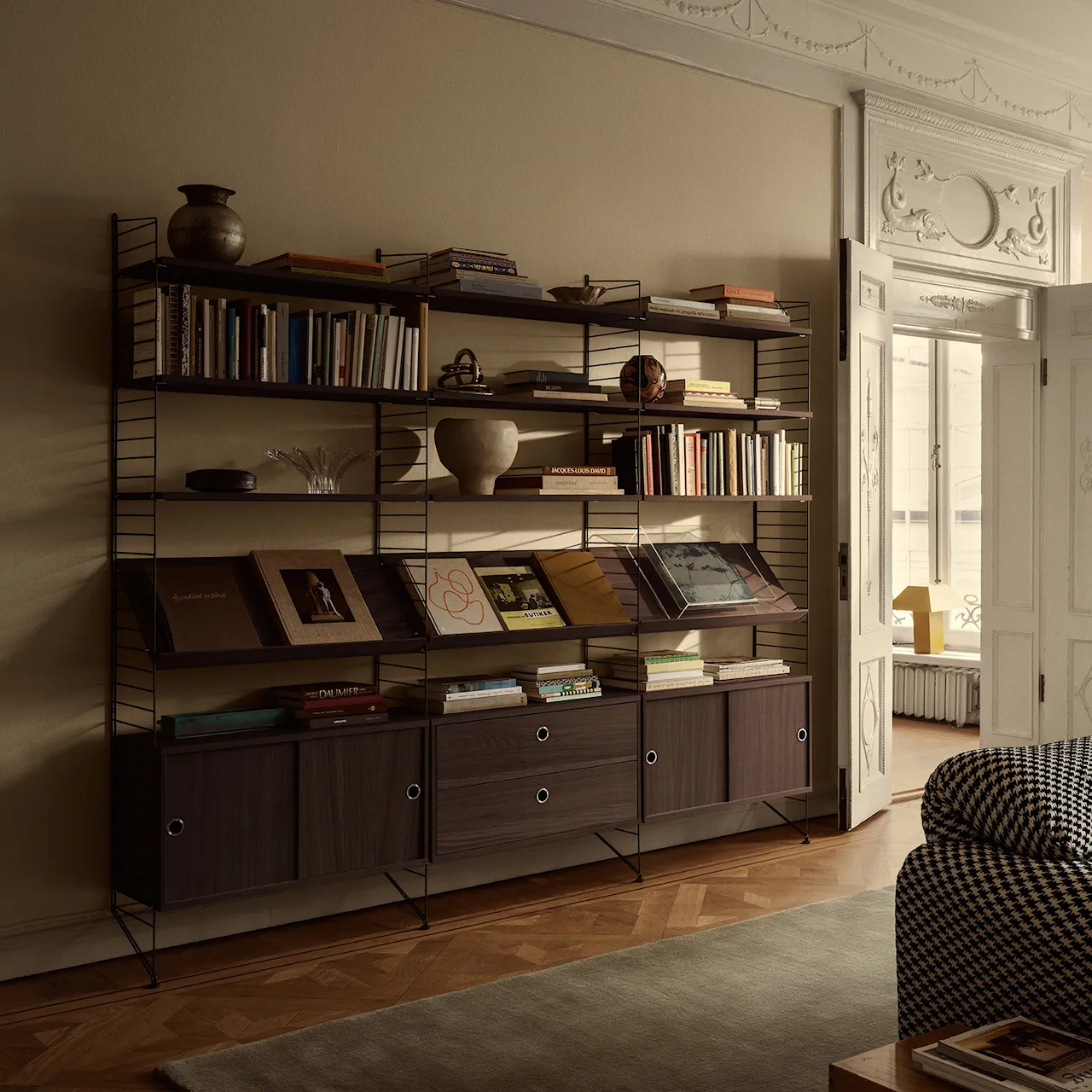
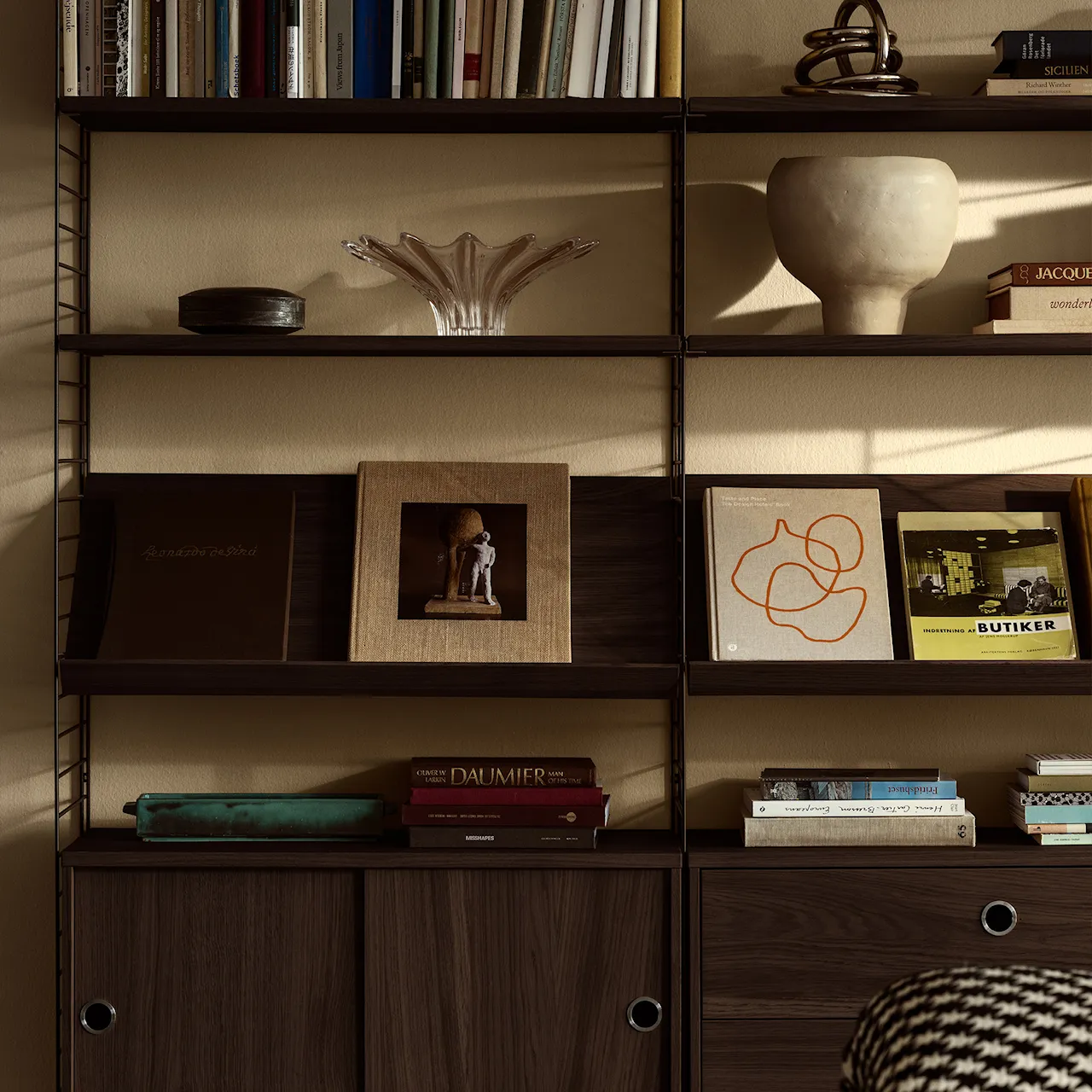
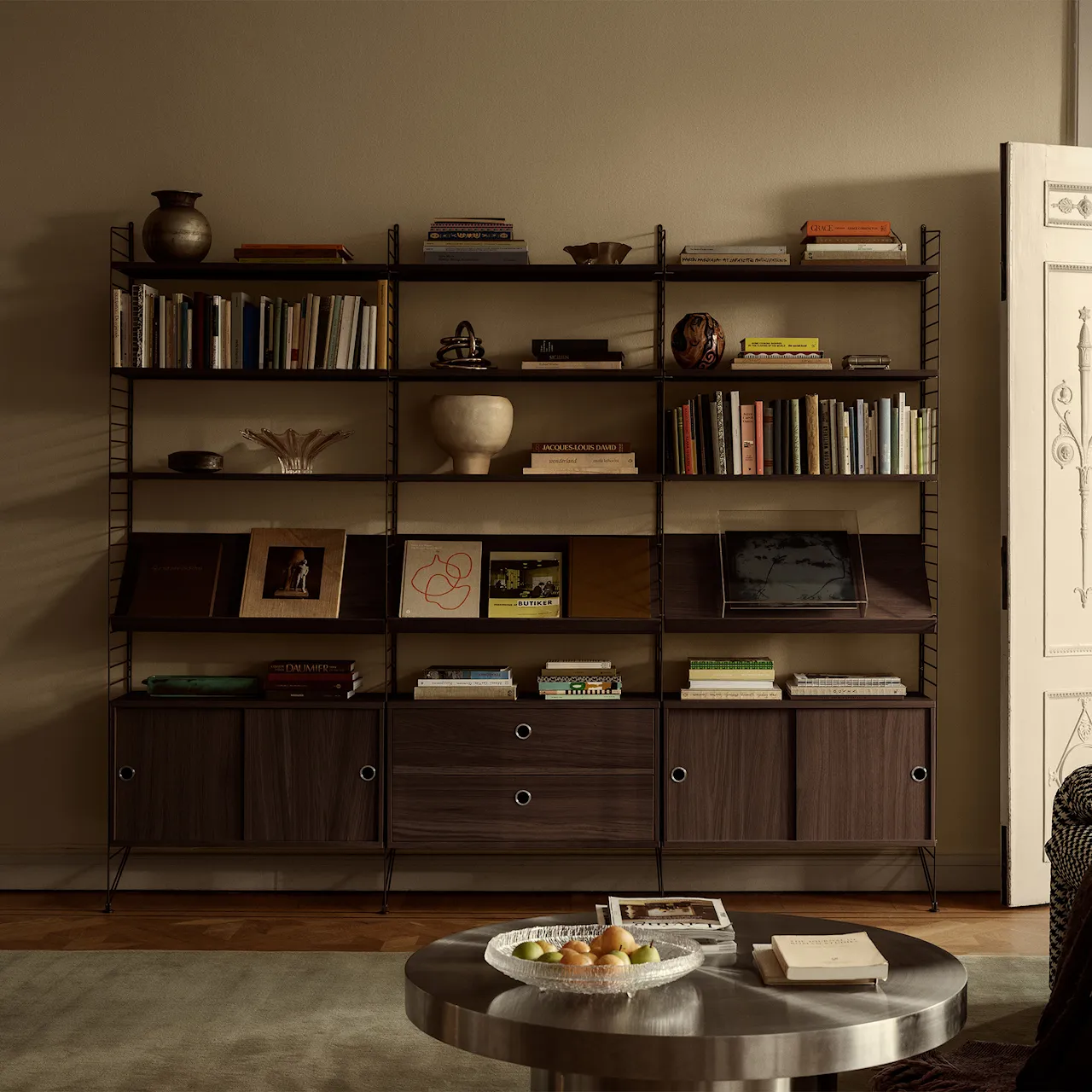
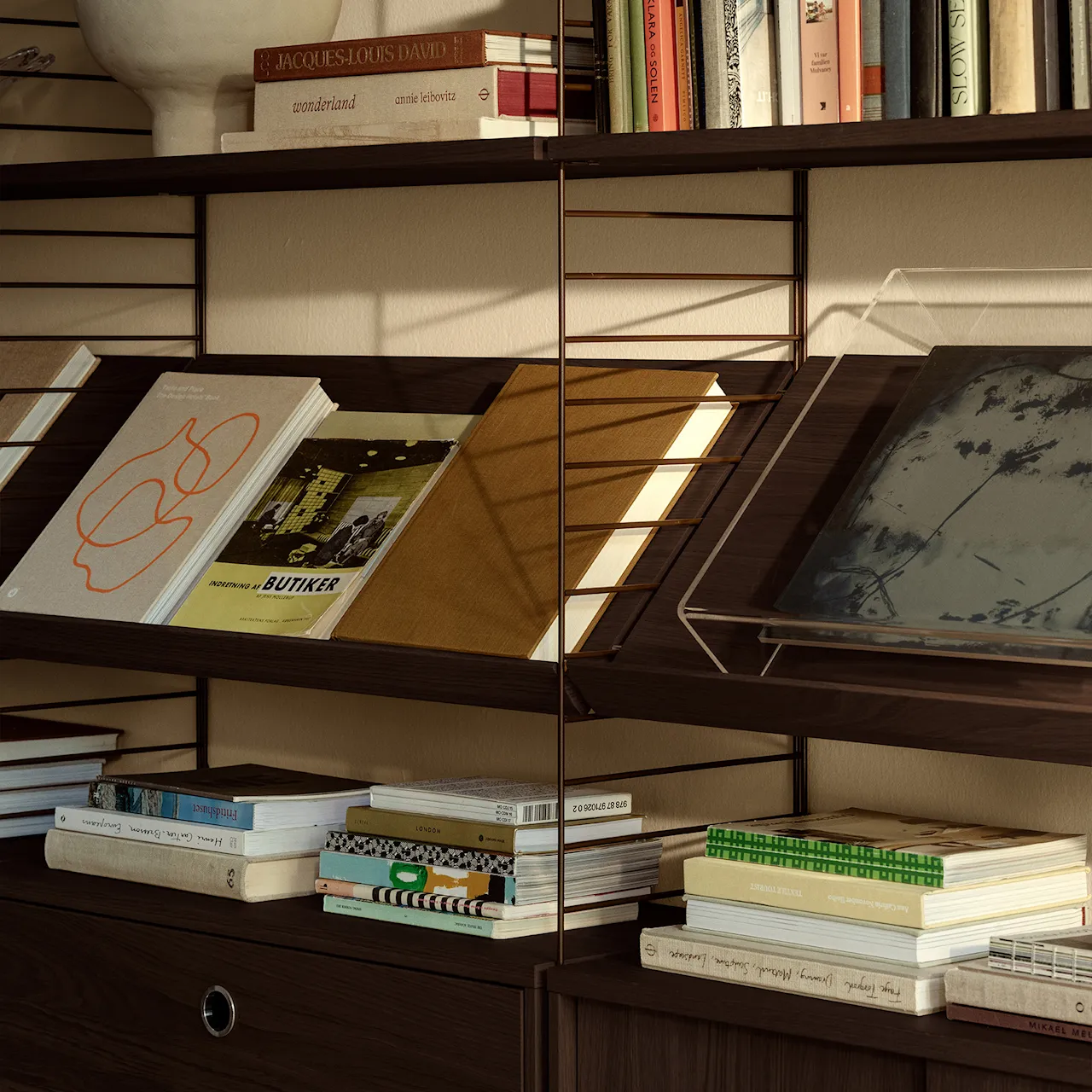
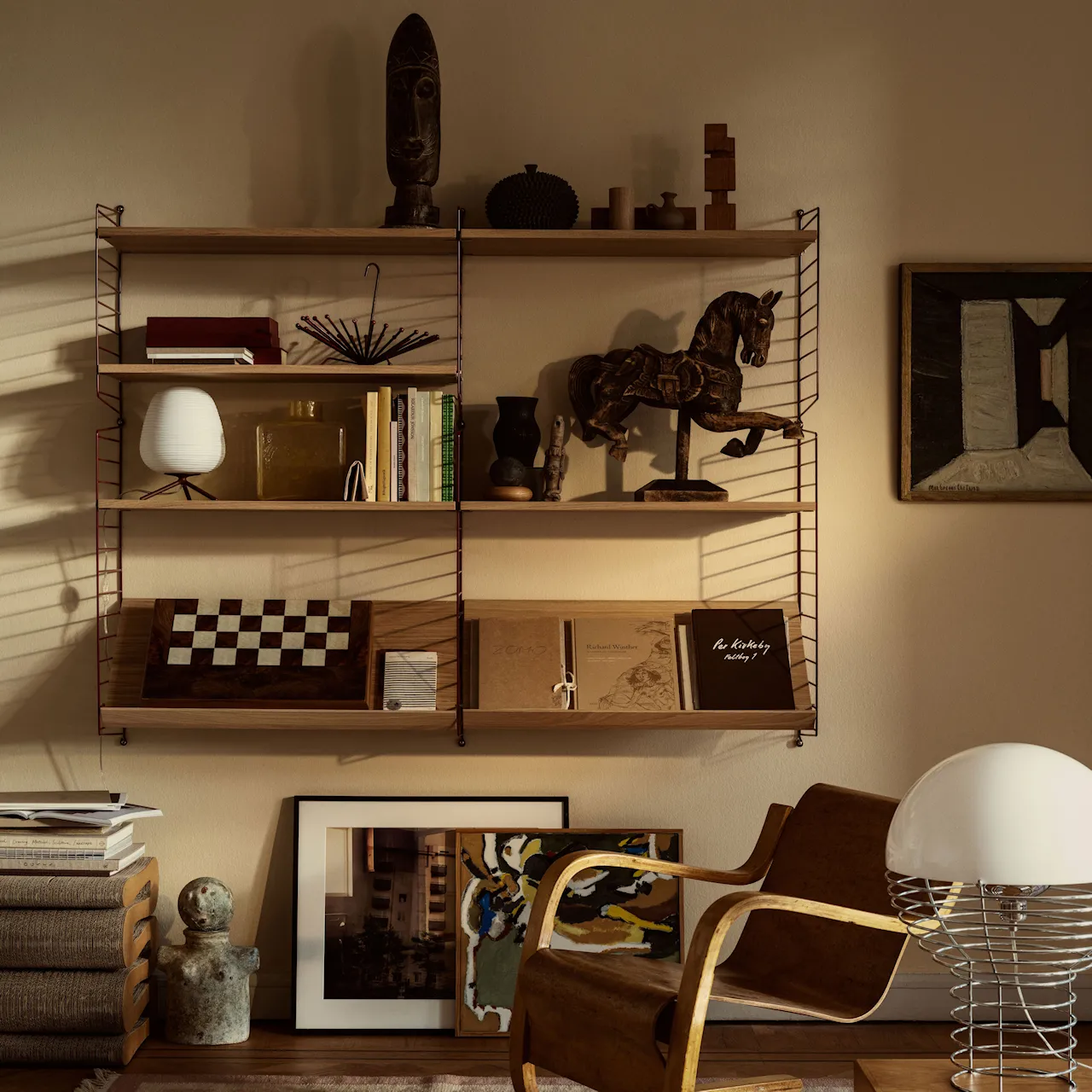
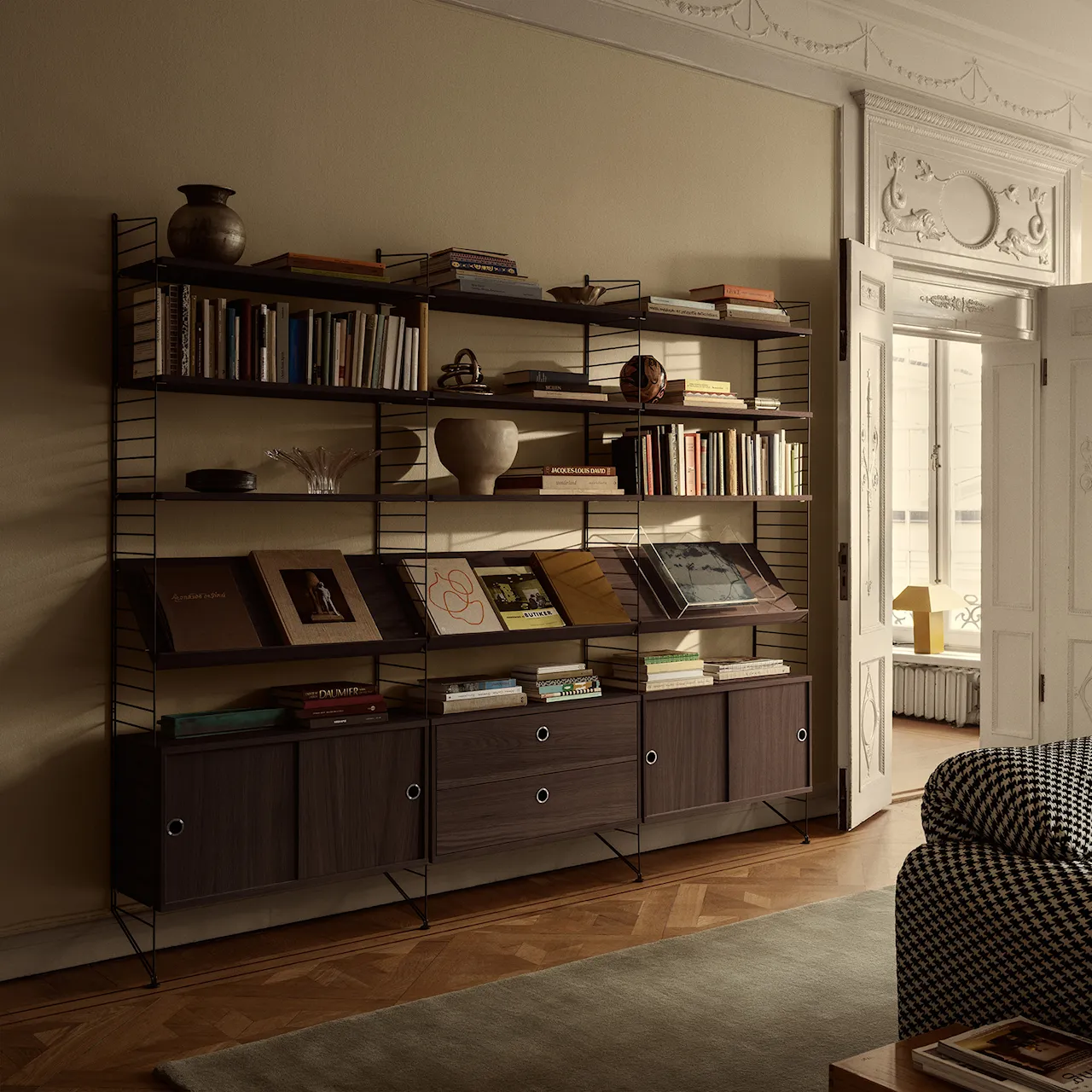
The idea for the String shelf was born out of an everyday need. In the late 1940s, Bonniers public library organized a competition to create a bookshelf that was easy to assemble, affordable to ship, and simple to adapt. Architect Nisse Strinning and his wife Kajsa Strinning entered and won with their design – two sleek wire side panels combined with movable wooden shelves. The result was a construction that was as practical as it was aesthetically pleasing, and it quickly found its place in modern homes.When the Strinnings developed the shelf, they based it on real life. It had to be easy to assemble, simple to expand, and adaptable. The movable shelves and the distinctive wire panels made the system modular and flexible. In the 1940s, this was a completely new way of thinking about furniture – and those same principles are what make the shelf relevant even today.The result was a piece that was quickly appreciated and still represents the same level of functionality and aesthetics. Its storage solution has always aligned with the needs of the times and demonstrates how practical interior design can be both clever and beautiful.The String shelf is known for its airy expression. The thin wire panels create a graphic frame, while still allowing space for the contents. Books, ceramics, glassware, or personal objects are highlighted in a way few other shelving systems can match. The shelf becomes both backdrop and display – a stage where the contents take the lead role.This balance is what makes the String shelf work in both minimalist homes and more classic interiors.
Key Milestones in the History of the String Shelf
1952 – Library at the UN Headquarters
The String shelf gained its first major international recognition when it was selected for the library at the United Nations headquarters in New York. Being featured in one of the world’s most iconic buildings demonstrated that Scandinavian design had global relevance.
1954 – Awarded in Milan
Two years later, the String shelf received a gold medal at the Milan Triennale. The award highlighted the shelf’s innovative construction and cemented its status as one of the most groundbreaking pieces of its time.
1955 – H55 in Helsingborg
At the H55 exhibition, Nisse and Kajsa Strinning presented new modules and functions, including cabinets and desks. This marked the beginning of the shelf’s evolution from a simple bookcase into a fully flexible system.
1979 – A Part of Swedish Design History
When the Nationalmuseum in Stockholm added the String shelf to its permanent collection, it confirmed the design’s cultural importance. The shelf had gone from a functional household item to a recognized design classic.
2004 – String Furniture is Founded
The relaunch under the name String Furniture brought new life to the shelf system. The focus was on preserving the legacy of Nisse and Kajsa Strinning while expanding the system with more colors, materials, and accessories for modern needs.
2020 – Long Life Design Award
The String shelf was honored with the Japanese Long Life Design Award. This award is given to products that retain their relevance and quality over time – a fitting recognition for a shelf that has endured for more than seven decades.
Flexibility Across Generations
One of the greatest strengths of the String shelf is its flexibility. It can be built on a small or large scale, adapted to different needs, and grow with you throughout life.
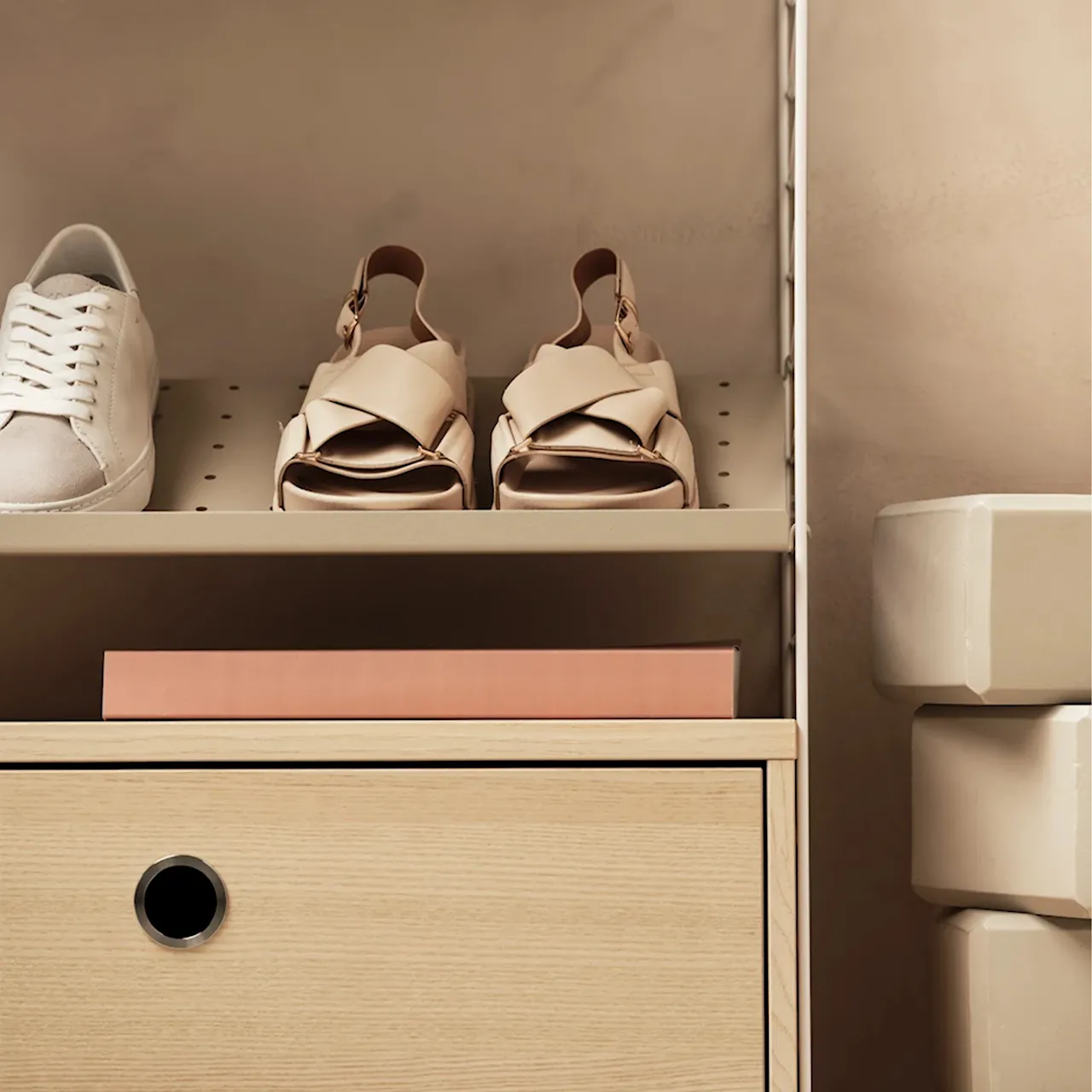
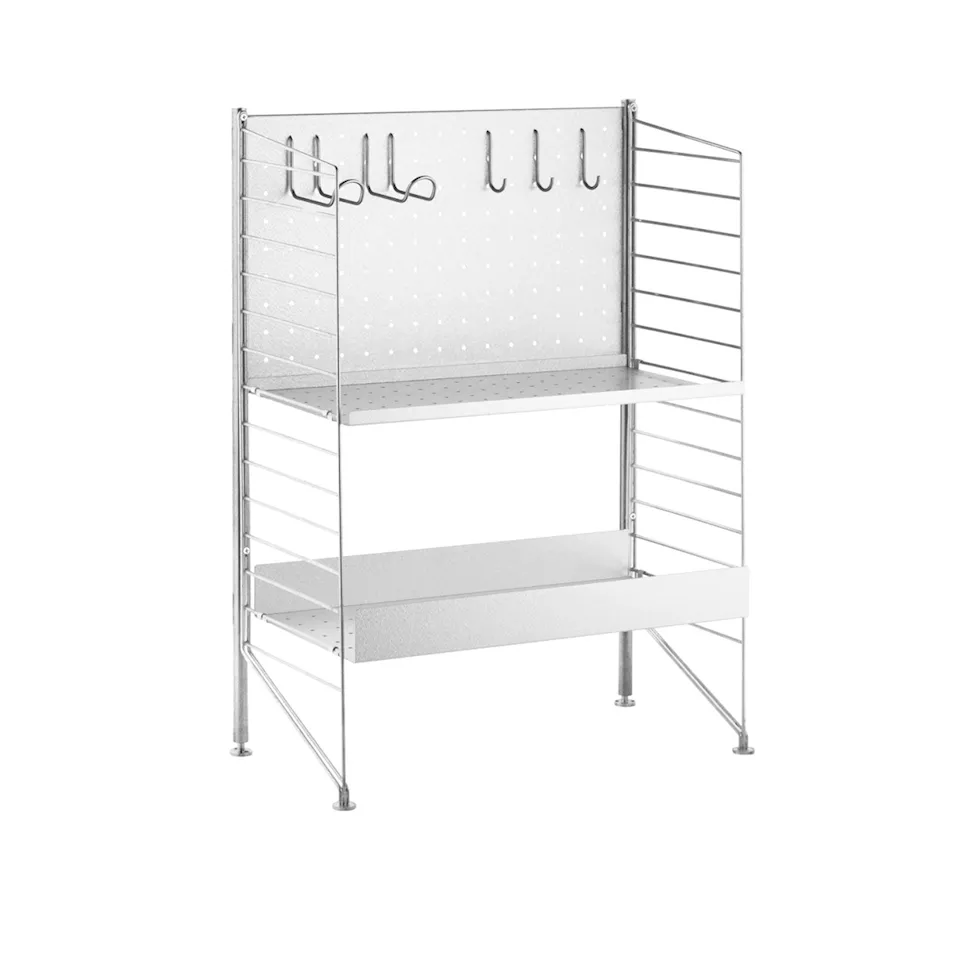
In the hallway, it can be combined with hooks, shelves, and shoe racks.
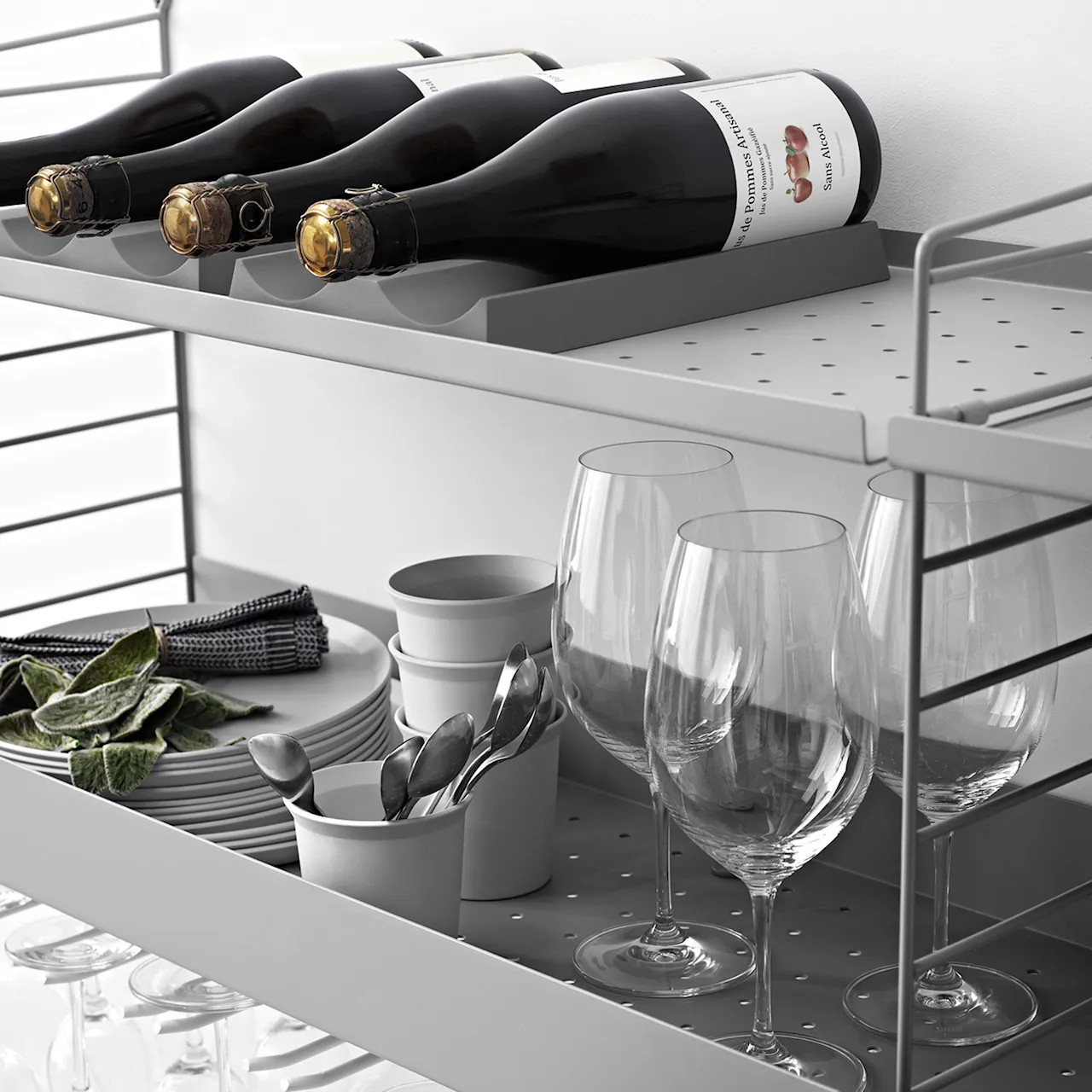
In the kitchen, it works as open storage for dinnerware, spices, and cookbooks.
In the home office, it becomes a workstation with a desk surface and extra storage.
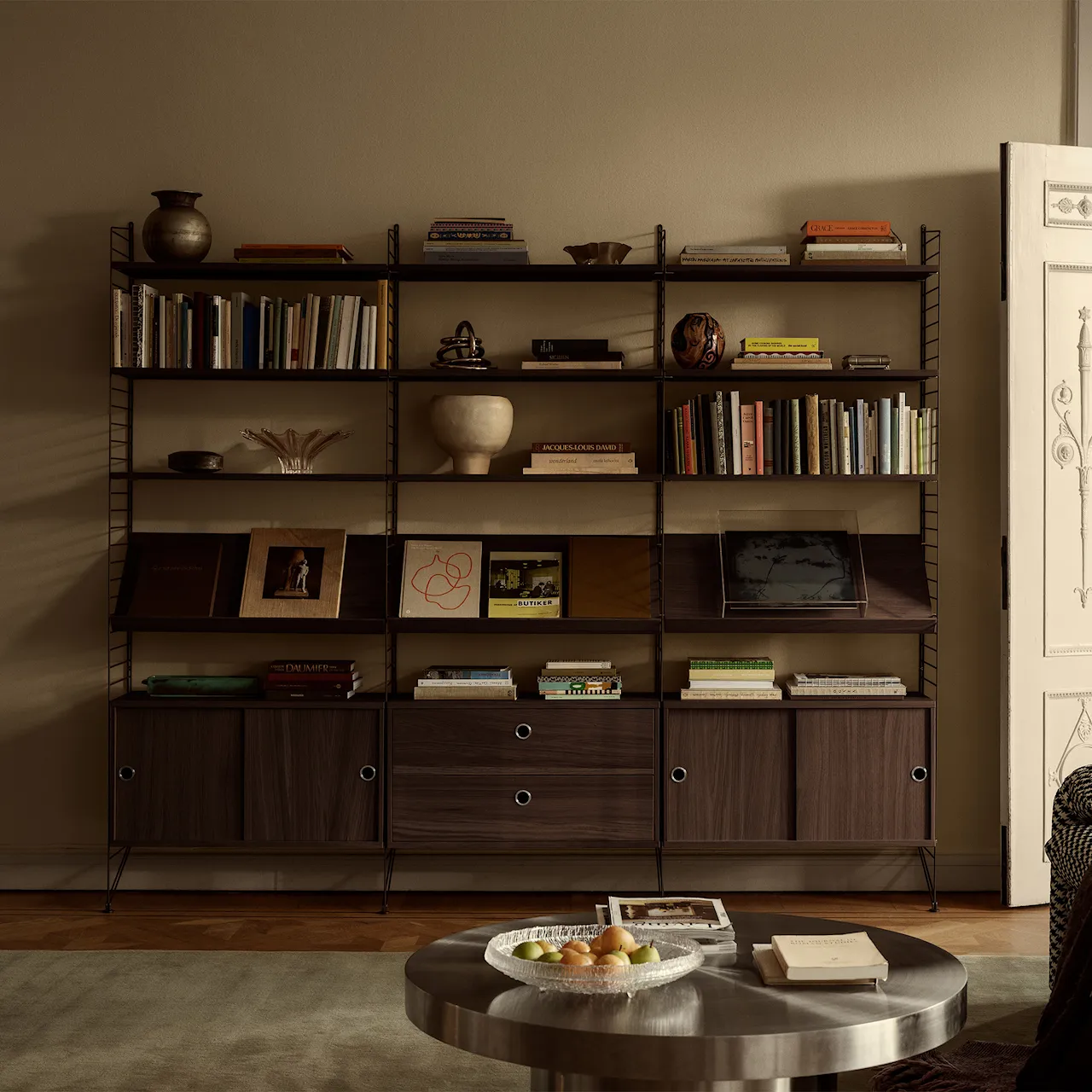
In the living room, it functions as a bookcase or media unit.
In the bedroom, it can serve as a wardrobe or flexible surface.
The modular system means the shelf isn’t tied to a single function or room. You can mix and match different parts and expand as your needs change. Its adaptable construction ensures it can remain relevant for decades.
Materials and Finishes
The String shelf is available in a variety of materials and colors, making it easy to customize:
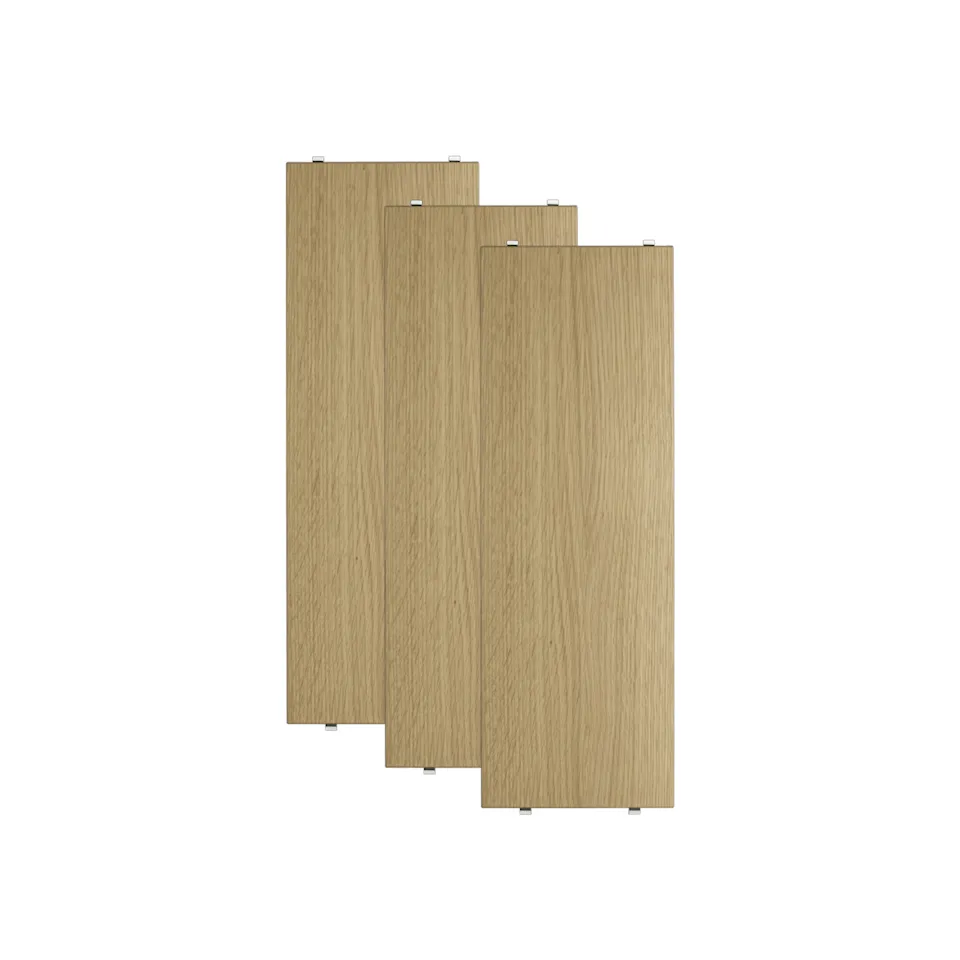
Veneer in oak, ash, or walnut for a warm, classic look.
Lacquered shelves in white, grey, or black for a minimalist aesthetic.
Metal shelves for high loads or environments with moisture.
Galvanized versions that can be used outdoors.
The wide range allows you to choose parts that match both your needs and your style. For those who want flexibility, String Furniture offers a shelving system that works in different rooms and evolves over time.The system can be built both vertically and horizontally, with various modules, colors, and depths. Most shelves come in 20 or 30 cm depths, allowing you to adapt the shelf to both small and large spaces without compromising function or design.
String Pocket – The Small Classic
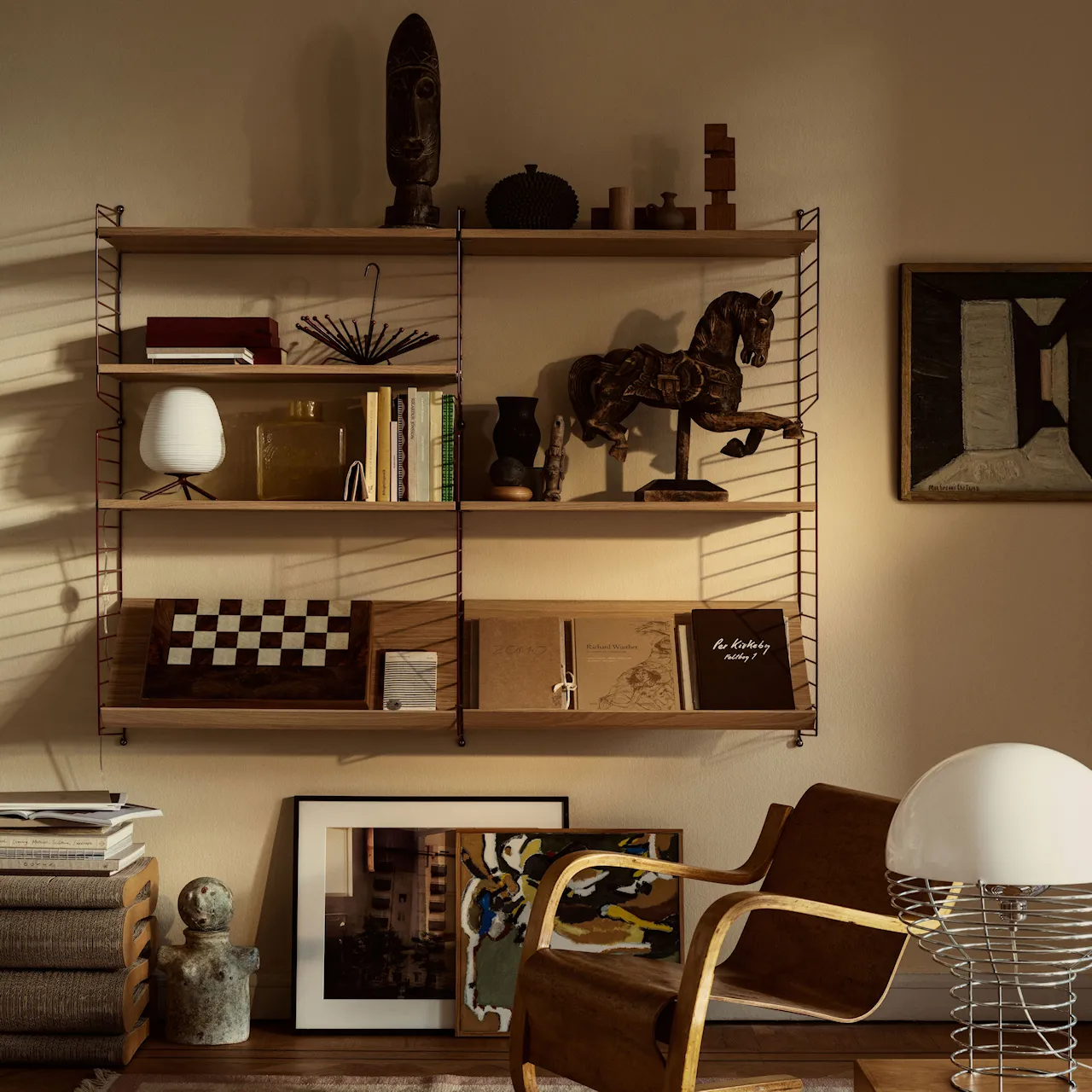
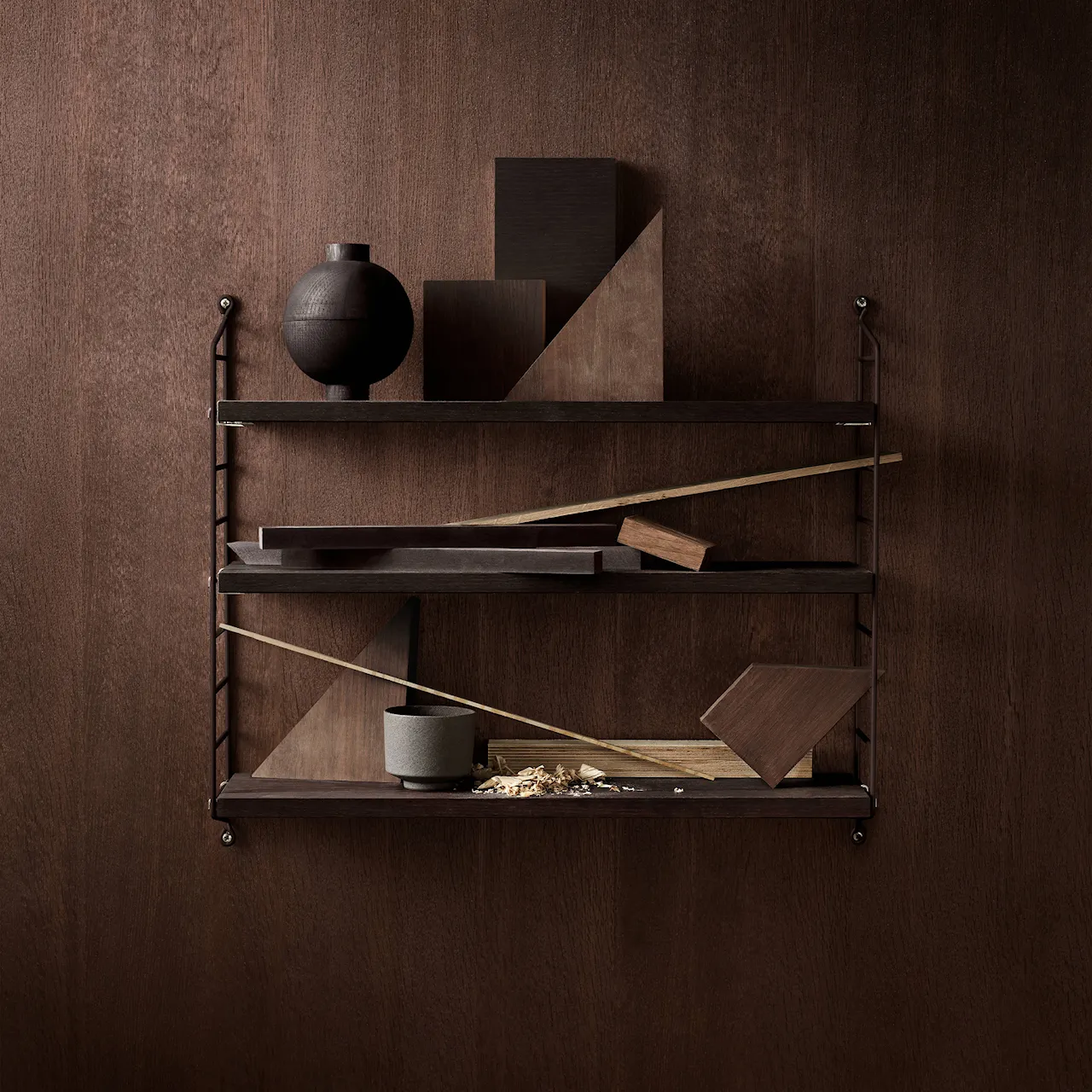
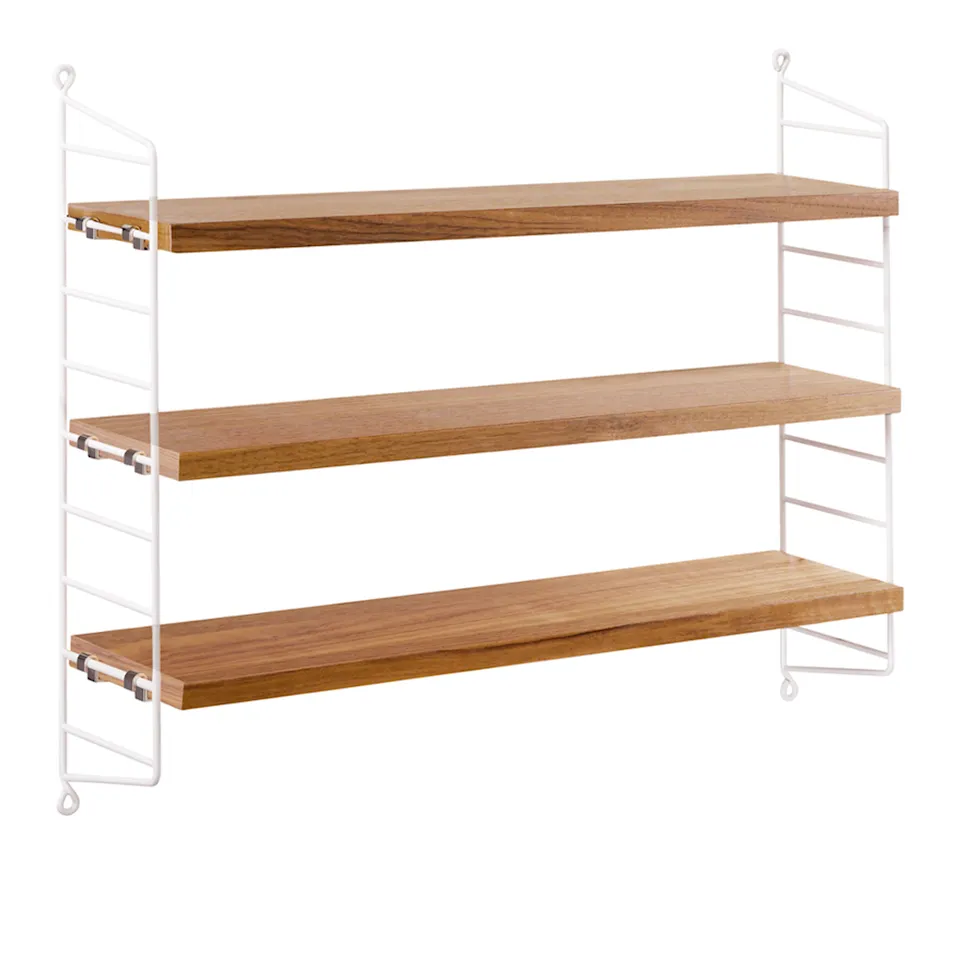
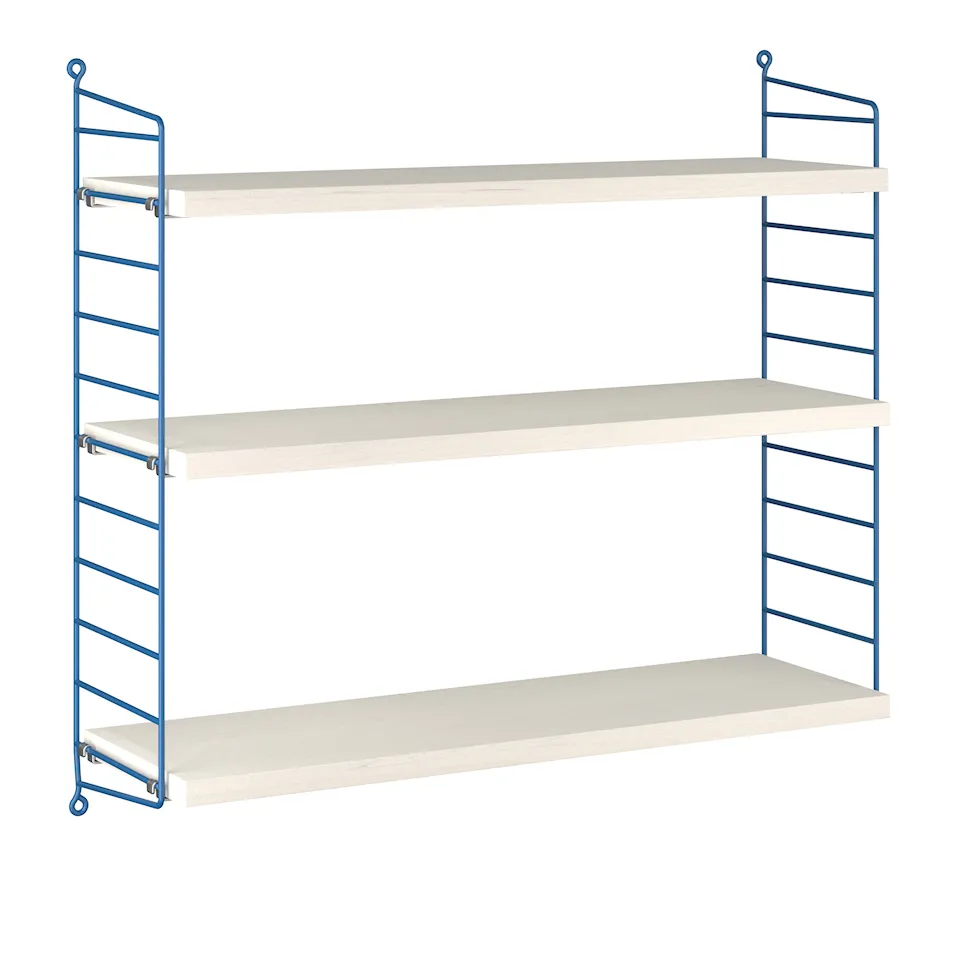
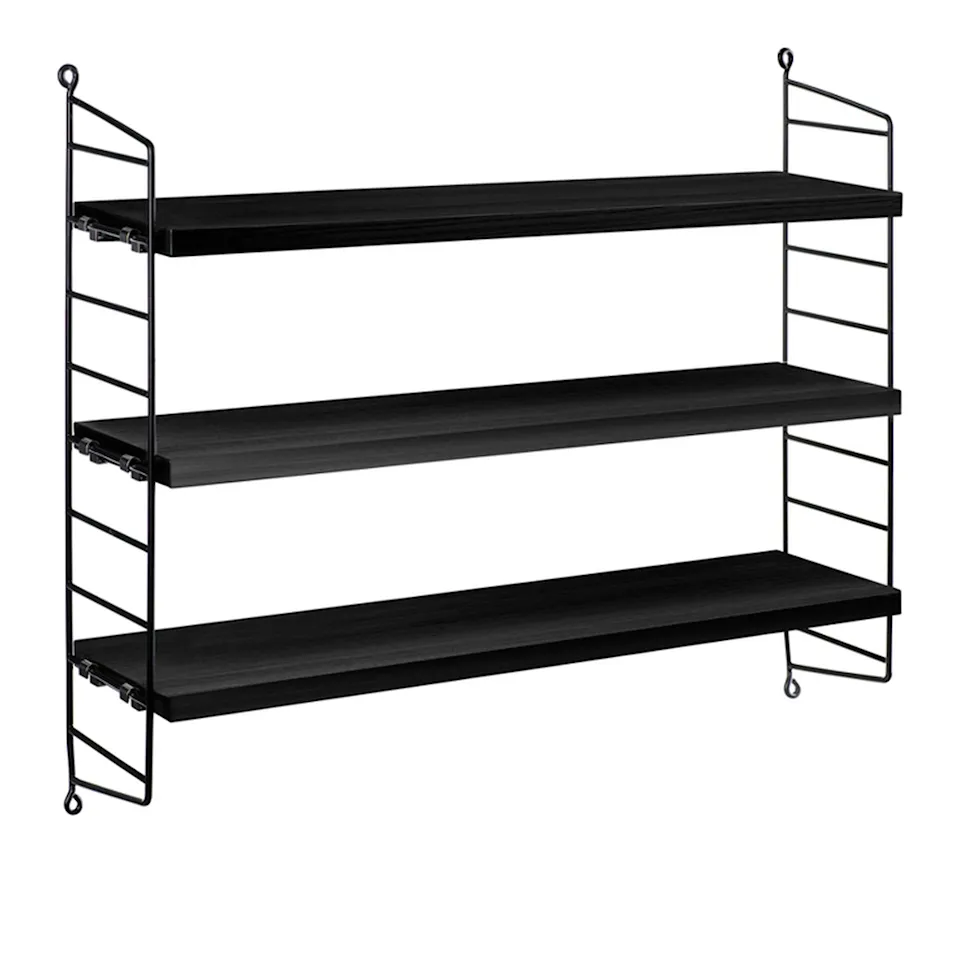
In 2005, String Pocket was introduced as a tribute to the original design. The model consists of two side panels and three shelves – a compact version that fits perfectly in kitchens, bedrooms, or entryways. Despite its small size, it carries all the hallmarks that have made the String shelf famous.
An Icon
The String shelf became an international design classic not just because of its functional features. It represents an era in Swedish design where simplicity, durability, and accessibility were key values.During the 2000s, the shelf saw a resurgence as interest in Scandinavian design grew globally. Today, the String shelf can be found in homes and public spaces around the world – from Tokyo and New York to Paris and Stockholm.The shelf is still produced according to the same core idea as in 1949. The difference is a broader range and the addition of new accessories and colors that make the system even more flexible. Yet it has never lost its original identity.That the String shelf is still used and appreciated around the world is proof of the strength of Nisse and Kajsa Strinning’s vision. They created more than a furniture piece – they established a principle of simplicity, flexibility, and function that will always be relevant.
Frequently Asked Questions About String Shelves
What’s the difference between String Pocket and the larger shelving system?
String Pocket is a compact model with fixed dimensions. The modular system, on the other hand, can be expanded with various components, shelves, cabinets, and accessories to create unique solutions.
How much weight can a String shelf hold?
A shelf typically supports 15–25 kilograms, depending on the material and mounting. For heavier items like books or dinnerware, metal shelves are recommended.
How is a String shelf installed?
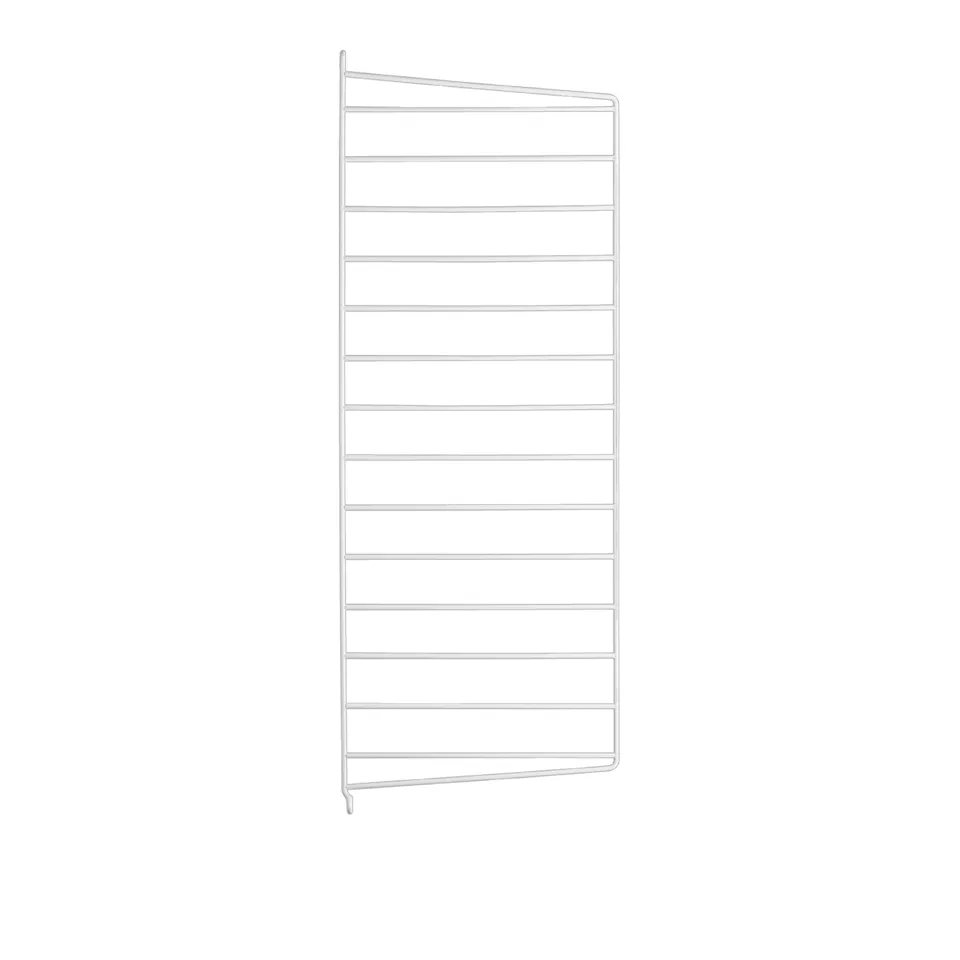
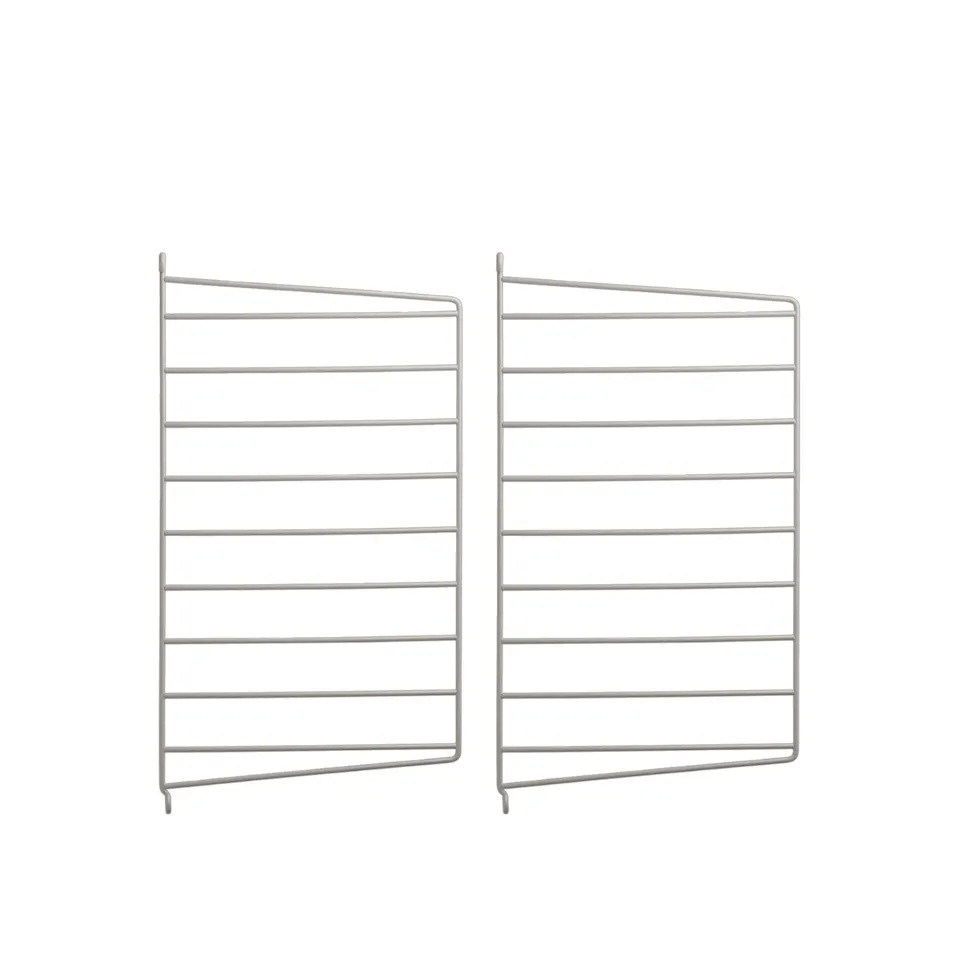
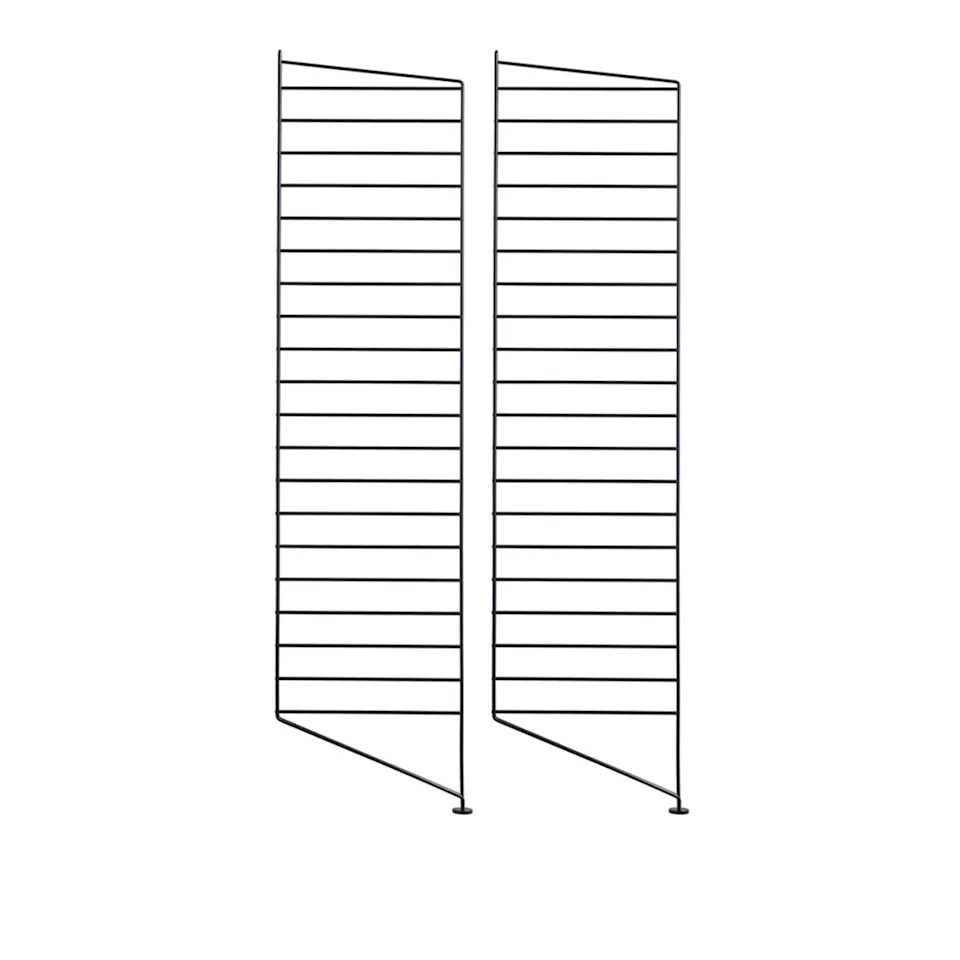
The system is known for its simplicity. The side panels are mounted to the wall, and the shelves hook into place. With floor panels, the shelf can also stand freely.
Can String shelves be used in kitchens and bathrooms?
Yes, special metal shelves are designed for high-load or humid environments, making the system suitable for kitchens, bathrooms, and even outdoor use.
What does a String shelf cost?
Prices vary depending on size, material, and selected components. A String Pocket is an affordable entry-level option, while larger combinations are a long-term investment.
What components are available?
In addition to panels and shelves, there are cabinets with doors, drawers, wine racks, desktops, hooks, and other accessories. The system is made to evolve with your needs.
Is the String shelf sustainable?
Yes, it’s built for longevity. Because it can be reconfigured and expanded, you rarely need to replace the entire unit. This durability is one of the reasons it remains so beloved.
The String Shelf in Your Home
Choosing a String shelf means choosing a piece of furniture that can grow and adapt with you. It may start as a small section and evolve into a full wall solution. It can move from kitchen to office, from hallway to living room – without losing its function or aesthetic.Explore the range at NO GA and find a solution that reflects your style and needs. The String shelf is more than a furniture piece – it’s an icon that continues to define what timeless design truly means.