

Armchairs
Armchairs are designed for daily use and are based on a combination of function, ergonomics, and material properties. The construction provides support for arms, back, and seat, contributing to a stable sitting position. The range includes armchairs with varying materials, proportions, and expressions, developed for use in several types of environments.
66 products
- + More options
Källemo
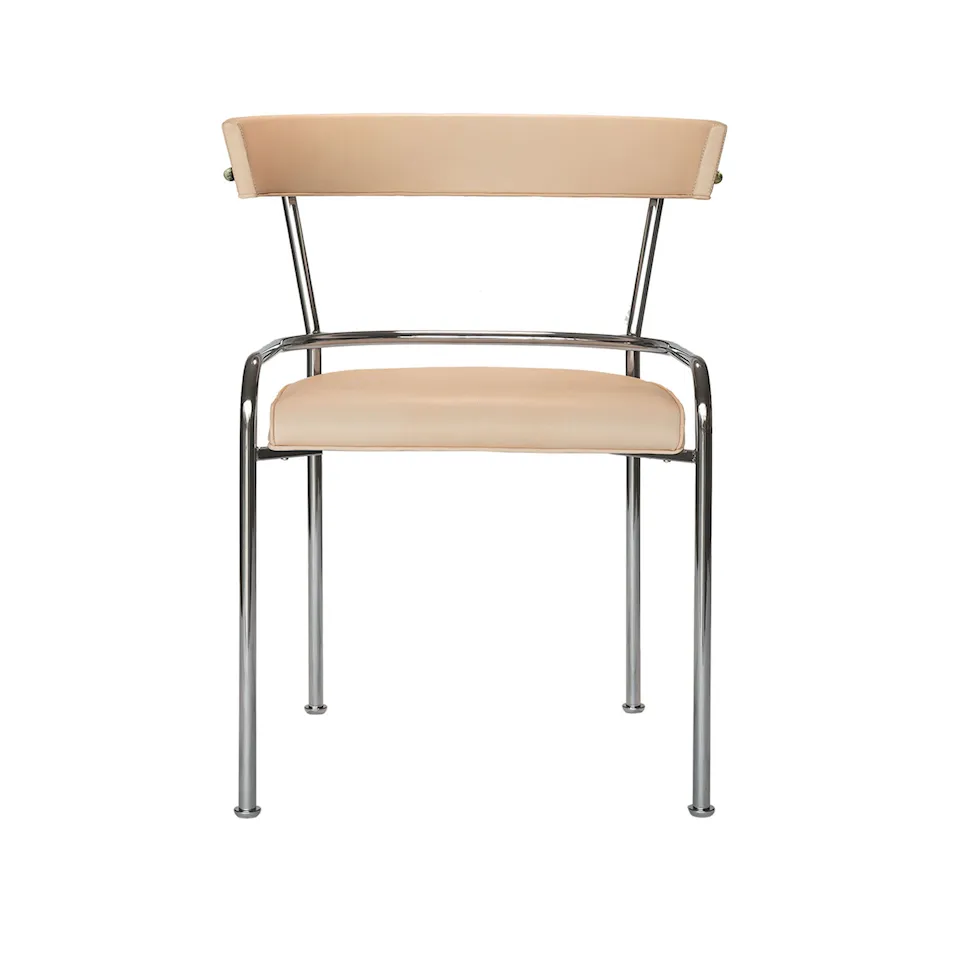
GA-1 armchair
€1,683
- Code: STOOL60+ More options
Carl Hansen
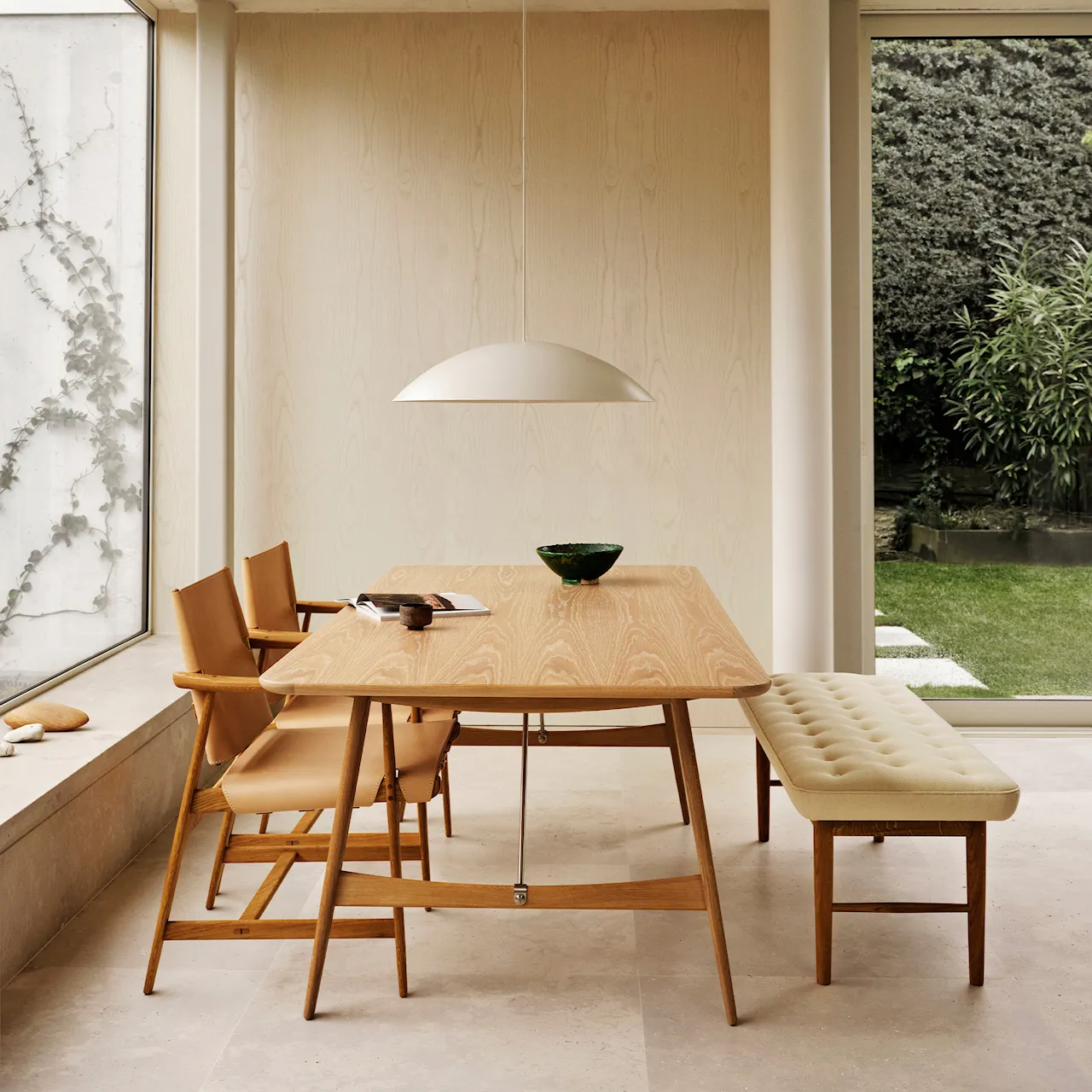
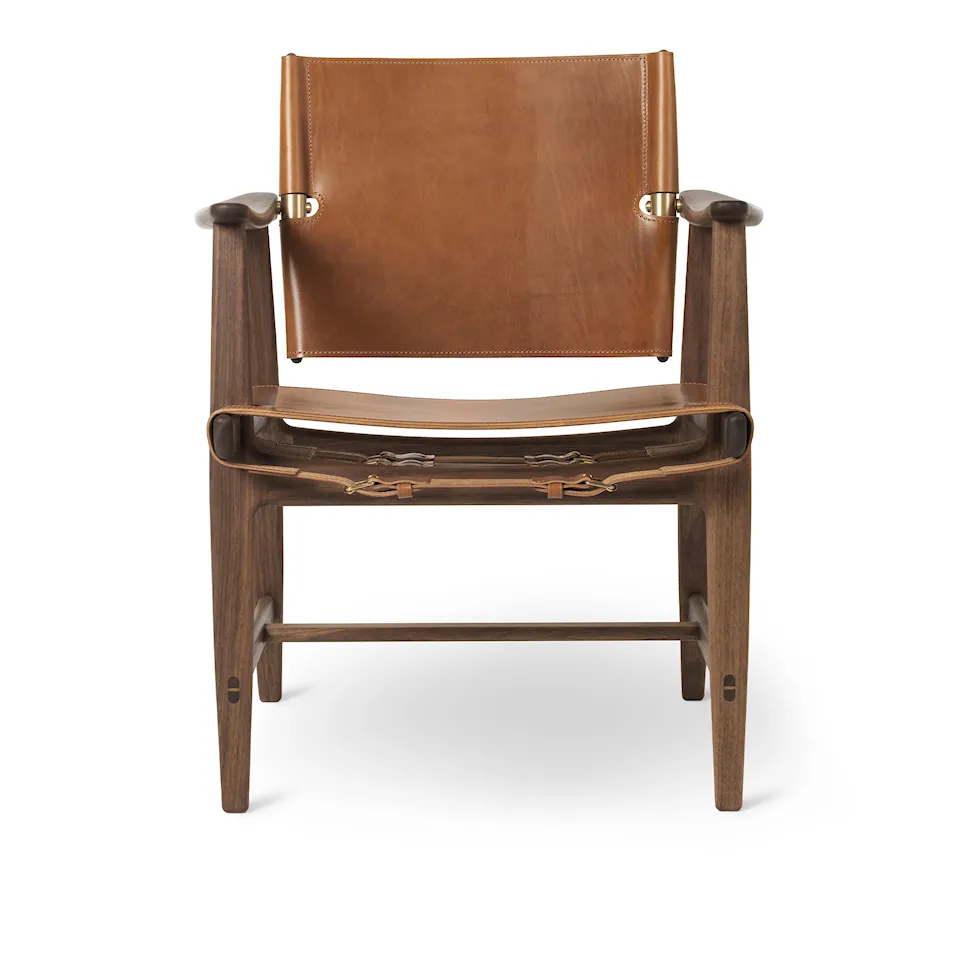
BM1106 Huntsman Chair
From €2,929€3,468
- Code: STOOL60
Carl Hansen
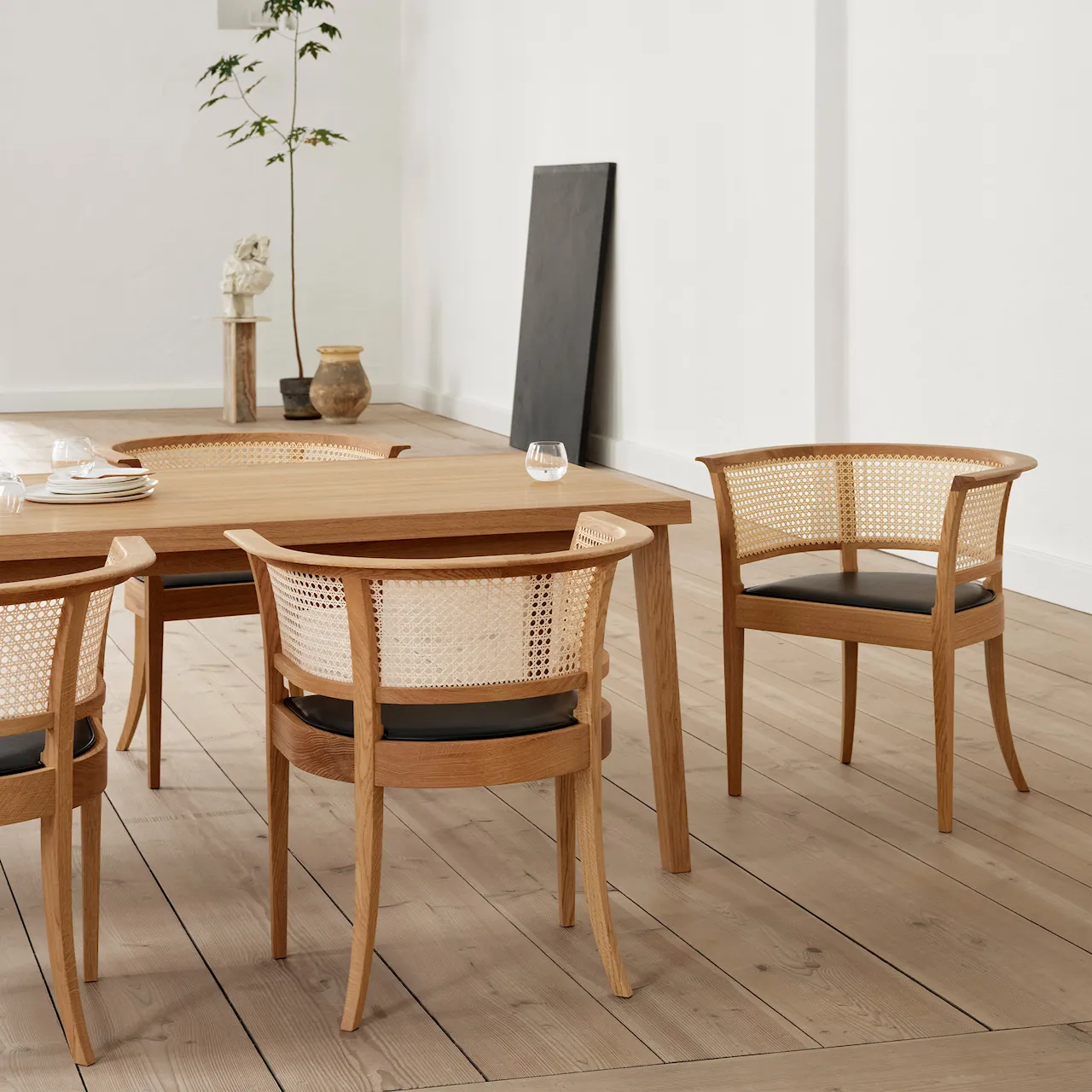
KK96620 Faaborg Chair
€5,016
- Code: STOOL60+ More options
Carl Hansen
VLA61 Monarch Chair
From €3,082€3,626
- Code: STOOL60+ More options
Carl Hansen
CH24 Wishbone Chair Walnut/Natural Cord
From €1,425€1,677
- Code: STOOL60+ More options
Carl Hansen
CH24 Wishbone Chair Beech/Black Cord
From €889€1,046

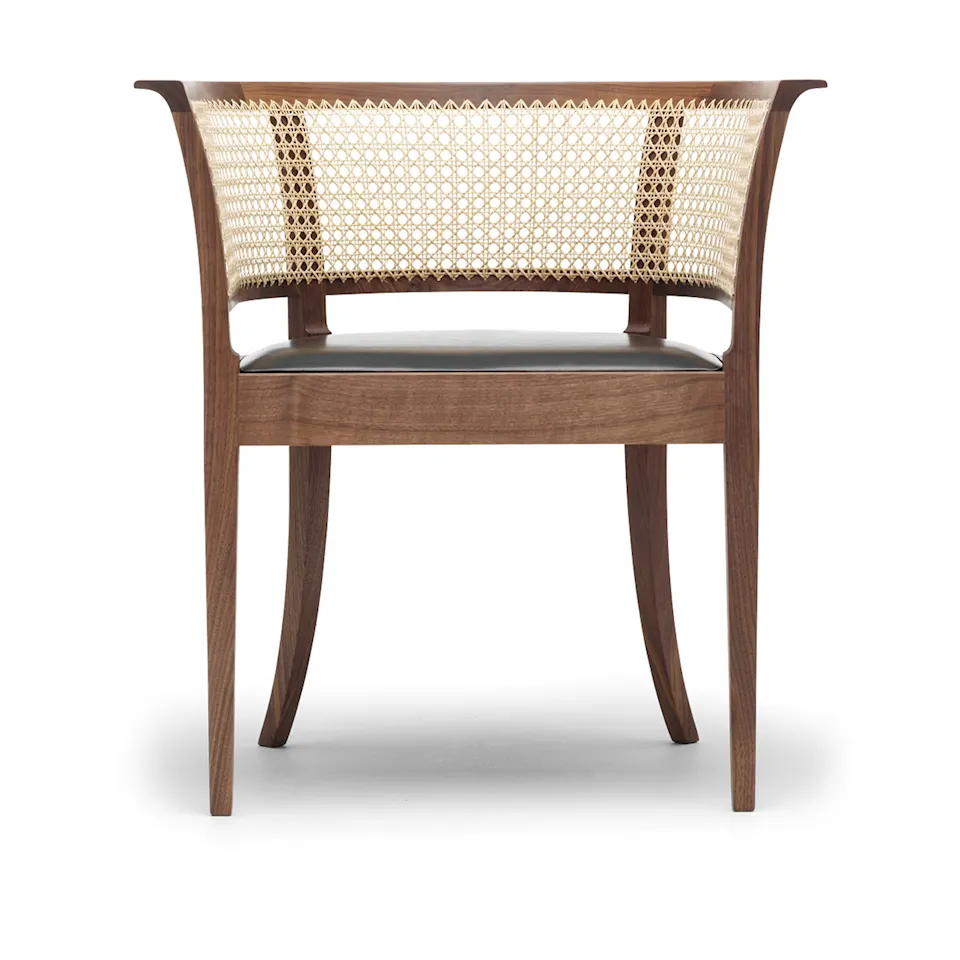

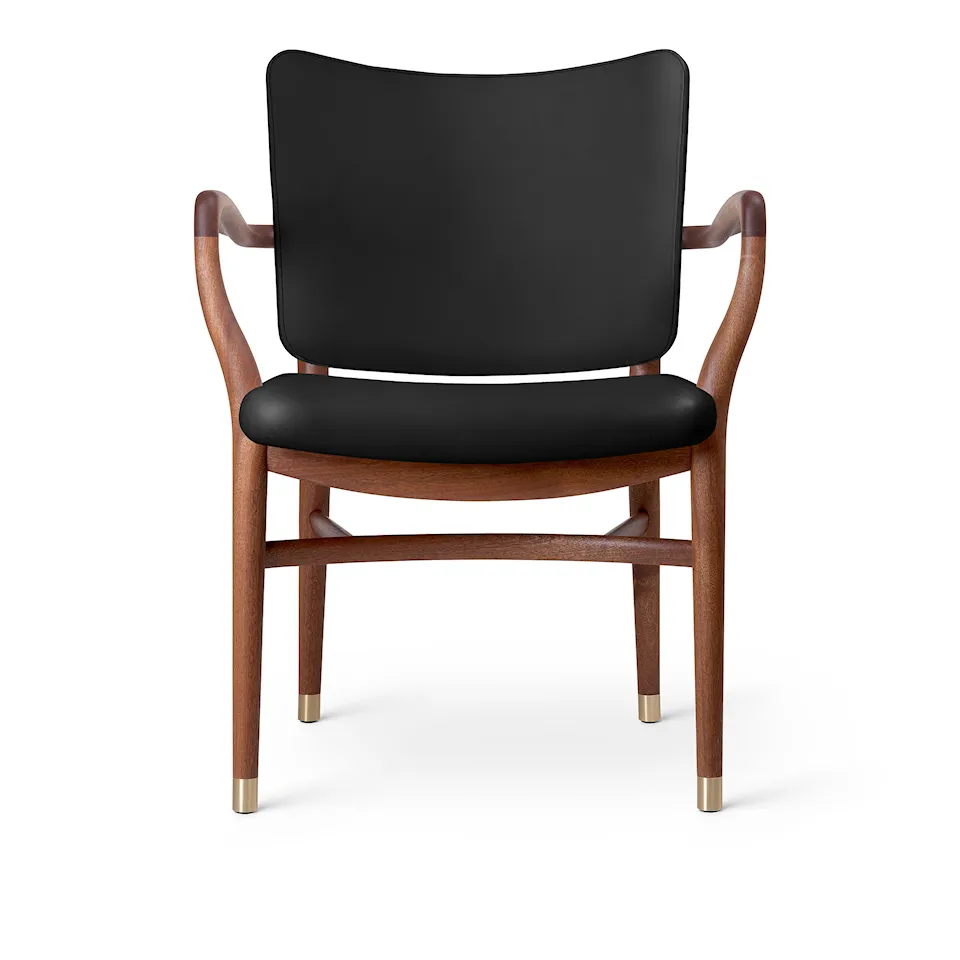

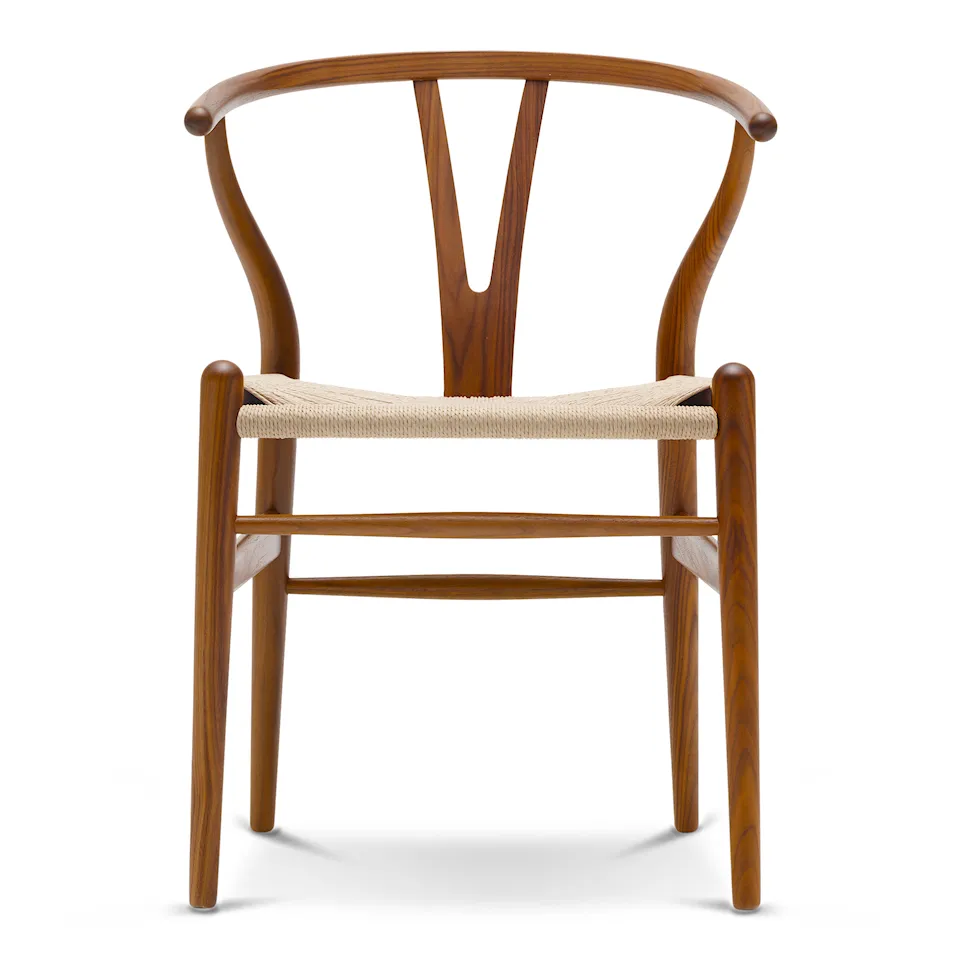

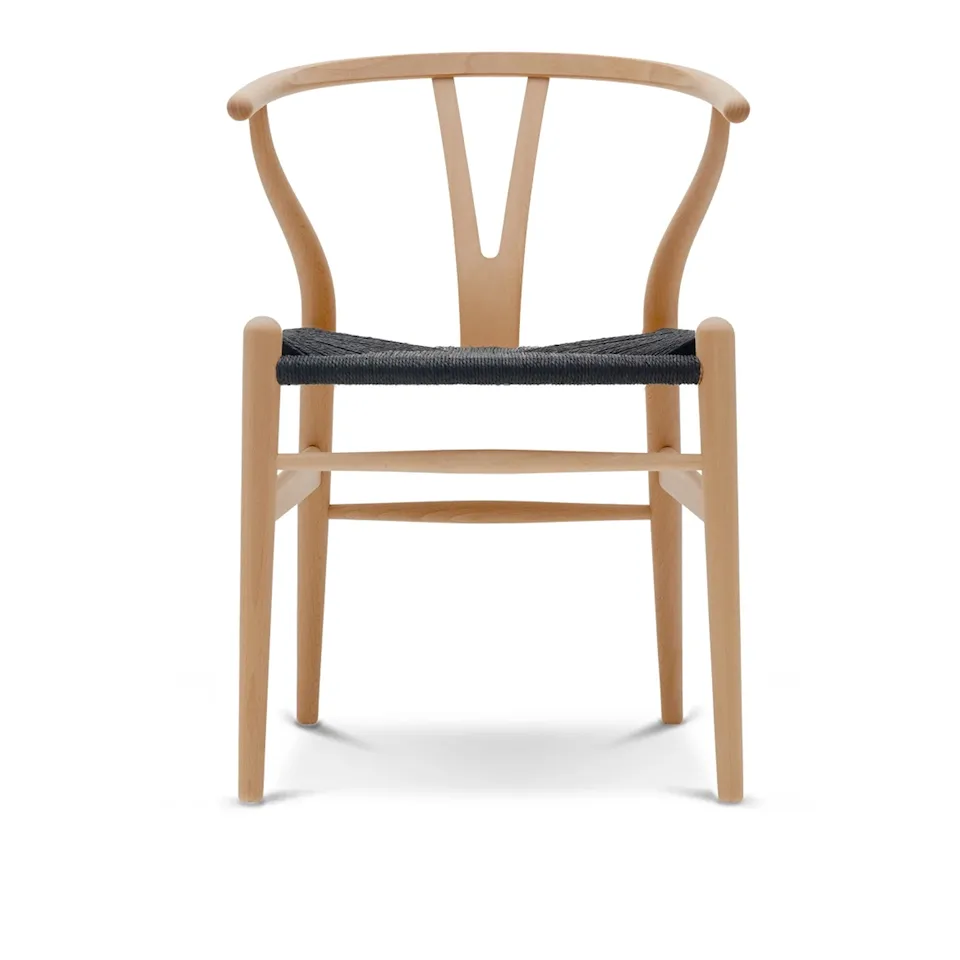
Armchairs – materials, construction, and use
Armchairs are designed to provide stable support through a clearly defined seat, back, and armrests. The construction is based on a balance between load-bearing capacity, proportion, and material selection. Wooden armchairs constitute a central part of the range. Solid wood types such as oak, walnut, and teak are used for their structural properties and their ability to maintain form over a long period. The wood is treated with surface finishes such as oiled, lacquered, or soaped surfaces, depending on the construction and area of use. In many models, the wood is self-supporting and forms both the load-bearing frame and the visual expression.
Metal primarily appears in steel or aluminum and is often used as a reinforcing or load-bearing component. In some constructions, metal functions as a contrasting element to wood or seat material, where the respective properties of the materials are utilized to create a balanced and robust whole.
Seats and backrests can be made from textile, woven materials, or leather. The Ambassad armchair from Källemo is an example on a leather dining chair where core leather is used in the seat, mounted with rivets as an integrated part of the construction. Padding made of dimensionally stable foam is used to distribute weight evenly and provide consistent support during prolonged sitting.
Design chairs and design heritage
PP Møbler represents a Danish furniture tradition based on advanced woodworking techniques and carefully proportioned constructions. The PP250 Valet Chair, designed by Hans J. Wegner, is based on an architectural wooden structure where armrests and backrest are integrated into a cohesive form. The chair was introduced as a further development of Wegner's work with functional seating furniture and also includes a practical storage solution.
Vitra is represented, among others, by the Fauteuil Direction, designed by Jean Prouvé. The construction is based on a clear division between load-bearing steel components and form-bearing wooden components. The result is a graphic and proportioned chair where material choices are directly linked to function and load.
The armchair's function in the room
Armchairs are used at dining tables, desks, and in public or private environments where prolonged sitting occurs. The construction is developed to provide support through the height of the armrests, the recline of the backrest, and a proportioned seat. This distinguishes the armchair from the side chair and makes it suitable for situations where ergonomics and stability are prioritized.
As a furniture type, the armchair has a clear spatial presence. Volume, silhouette, and materiality contribute to how the chair interacts with the surrounding architecture. In constructions with a self-supporting frame or prominent armrests, the chair becomes part of the room's structural entirety.